


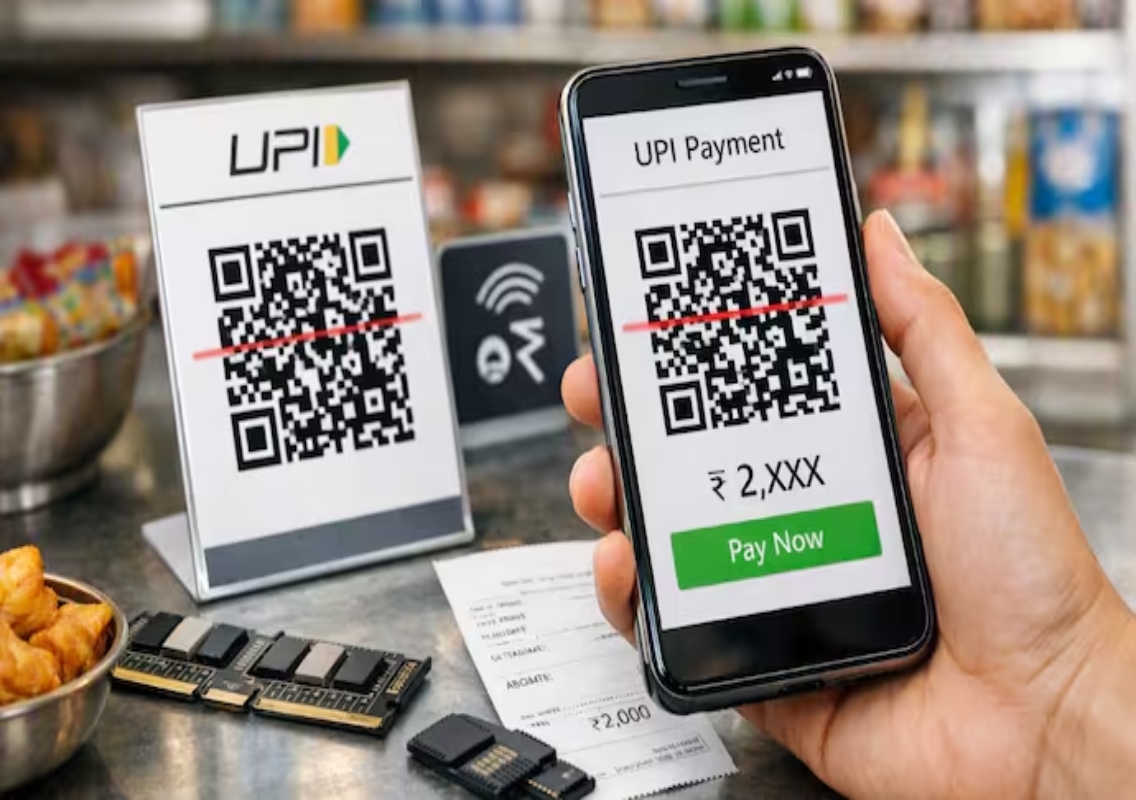


New Delhi: UPI payments in India are set to undergo a major change from October 15, 2026, with a new Merchant Discount Rate (MDR) applying to eligible transactions above ₹2,000 made to merchants. However, consumers will not be directly charged for making these payments.
The new framework, announced by the government in September, introduces a 0.4 per cent MDR for eligible person-to-merchant (P2M) UPI transactions above ₹2,000. The charge will be borne by merchants and paid to their acquiring banks.
The development has also reached the Supreme Court. On September 28, the court declined to put the new MDR framework on hold while hearing a petition challenging the decision. A bench headed by Chief Justice of India Surya Kant, along with Justices Joymalya Bagchi and V Mohana, sought responses from the Centre, the Reserve Bank of India and other parties within four weeks.
What is the new UPI charge?
Under the new framework, eligible merchant payments above ₹2,000 will attract an MDR of 0.4 per cent. The charge will be capped at ₹300 for transactions of ₹75,000 and above.
Importantly, this is not a direct transaction fee that UPI users will have to pay.
For example, if a customer pays ₹3,000 to a shopkeeper through UPI, the MDR works out to ₹12. For a ₹50,000 transaction, the charge would be ₹200. On a ₹1 lakh transaction, 0.4 per cent would amount to ₹400, but the merchant-side charge would be restricted to the ₹300 cap.
The government has advised banks to ensure that merchants do not pass the MDR on to customers.
UPI payments up to ₹2,000 remain free
Users making UPI payments of ₹2,000 or less will continue without the standard MDR.
Person-to-person (P2P) transactions will also remain free. This means transferring ₹5,000 to a friend or sending money to a family member will not attract the new merchant charge because such payments are not merchant transactions.
The distinction between P2P and P2M payments is therefore important. The new MDR framework is aimed at commercial payments made to eligible merchants rather than ordinary transfers between individuals.
Which merchant payments will be affected?
The standard 0.4 per cent MDR will apply to eligible merchant payments above ₹2,000, but some categories have been assigned different rates.
Payments for railway services, telecom services, insurance, fuel and agricultural inputs will attract a flat MDR of ₹5 for transactions above ₹2,000.
For mutual funds, securities, stockbrokers and dealers, the MDR will be 0.02 per cent, subject to a ₹300 cap.
Some recurring transactions have also been excluded from the MDR. These include utility bill payments, OTT subscriptions, monthly investments and automated recurring payments.
Small merchants get an exemption
The new framework also provides relief to smaller merchants.
Merchants receiving up to ₹1 lakh a month through UPI QR payments will continue to have zero MDR. This exemption is intended to protect smaller businesses that rely heavily on QR-based digital payments.
Therefore, the October 15 change does not mean every shopkeeper receiving a payment above ₹2,000 will automatically have to pay the standard 0.4 per cent charge. The merchant’s category, monthly UPI QR receipts and nature of the transaction will determine the applicable treatment.
Why is the government introducing MDR?
UPI has operated without MDR on these transactions for nearly six years. The government has said the new charge is intended to help cover the growing cost of operating and maintaining the digital payments ecosystem.
The UPI infrastructure requires continued investment in technology, cybersecurity, fraud prevention and the systems needed to process India’s rapidly expanding digital payment volumes.
The government has also said the revenue generated through the new framework will support the wider digital payments ecosystem, including infrastructure and security-related requirements.
Will customers have to pay more?
For ordinary UPI users, the immediate answer is no.
The new MDR is structured as a merchant-side charge rather than a direct fee on customers. Payments up to ₹2,000 remain free, while P2P transfers continue without the new MDR.
However, the impact on consumers could depend on how merchants respond to the additional cost. The Retailers Association of India has raised concerns that the MDR could put pressure on businesses operating with thin margins and that some merchants could prefer cash if digital payments become more expensive for them.
A separate LocalCircles survey cited by India Today found that only 14 per cent of surveyed UPI users said they would continue using UPI and bear an additional cost if merchants passed the charge on to them. The survey also indicated that some users could consider cash or cards for higher-value payments if an additional cost were imposed.
What changes from October 15?
For users, the main points to remember are:
- UPI payments up to ₹2,000: No standard MDR.
- P2P transfers: No new charge.
- Eligible merchant payments above ₹2,000: 0.4 per cent MDR.
- Transactions of ₹75,000 and above: MDR capped at ₹300.
- Railways, telecom, insurance, fuel and agricultural inputs: Flat ₹5 MDR above ₹2,000.
- Mutual funds, securities, stockbrokers and dealers: 0.02 per cent MDR, capped at ₹300.
- Small merchants receiving up to ₹1 lakh a month through UPI QR: Zero MDR.
- Selected recurring payments: Exempt from MDR.
The October 15 implementation therefore marks a change in how parts of the UPI ecosystem are funded, but it does not mean that consumers will suddenly have to pay a 0.4 per cent fee every time they make a UPI payment above ₹2,000.