


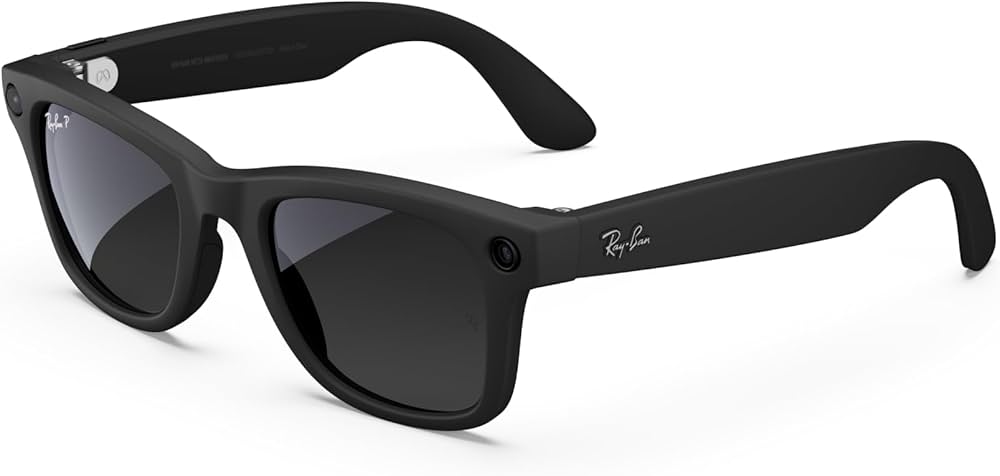


New Delhi: A viral video allegedly showing a man using AI-powered smart glasses to gain an advantage in a chess match has reignited concerns about privacy, surveillance and the potential misuse of wearable technology. The clip, which circulated on social media in October, reportedly shows the man using Ray-Ban Meta smart glasses, a MacBook and artificial intelligence tools to receive suggested moves while playing against an unsuspecting opponent.
The footage has drawn attention to how discreetly wearable devices can connect users to external information. While smart glasses are designed to make everyday tasks easier through hands-free photography, calls, information access and AI assistance, the same capabilities could create challenges in settings where recording requires consent or outside assistance is prohibited.
However, the authenticity of the alleged cheating method has not been independently established. Chess commentator Levy Rozman, widely known as GothamChess, questioned the significance of the footage and pointed out details that cast doubt on the demonstration.
What does the viral chess video show?
The video was originally shared by TikTok creator SourGrape02 and reportedly shows a man challenging a woman to a chess game in a public park. The man claims to have played chess only once or twice, but appears to perform strongly during the match.
A technology commentator subsequently shared the clip on X on October 23, describing it as an example of someone allegedly using Ray-Ban Meta smart glasses, AI and a MacBook to cheat at chess.
The footage is dated October 18, although the exact date when the original TikTok video was recorded or first uploaded could not be independently established from the available information.
According to accounts accompanying the video, the man used his smart glasses to transmit a live view of the chessboard to a MacBook through a WhatsApp video call. An AI system reportedly identified the positions of the chess pieces, while the chess engine Stockfish calculated strong moves for the player.
The suggested moves were then allegedly relayed to him through the glasses’ audio system. This would allow the player to receive assistance without repeatedly looking at a separate screen, potentially making the process less obvious to an opponent.
As the match progresses, the woman appears surprised by the man’s performance. The edited clip concludes with what appears to be checkmate.
However, the footage does not independently establish that every part of the claimed technical process occurred as described. The complete game, the alleged AI assistance and the precise role of the devices have not been independently verified.
GothamChess questions the authenticity of the stunt
The viral clip attracted criticism from chess commentator Levy Rozman, who examined the footage in a video published on October 21.
Rozman described the demonstration as “chess LARP”, questioning whether it represented a genuine example of AI-assisted cheating. He pointed out that the chess clock visible in the footage did not appear to be switched on.
He also argued that the player did not necessarily need outside assistance to win the game, noting that the position involved a familiar opening trap known as the Blackburne Shilling Gambit.
These observations raise questions about how much the video actually demonstrates. A player can appear to make strong moves because of an opponent’s mistakes or because a game follows a known opening trap. Without the complete game and independently verifiable evidence of the alleged assistance, it is difficult to determine whether cheating took place.
The distinction is important because the clip has been widely discussed as an example of the potential misuse of smart glasses. Although the technology could theoretically facilitate discreet assistance, the viral video alone does not prove that the alleged method was used successfully.
How smart glasses can connect users to AI
Smart glasses combine wearable hardware with cameras, microphones, speakers and connectivity features. Depending on the model and available software, users can take photographs, make calls, listen to audio, access information and interact with AI assistants without reaching for a smartphone.
Meta’s Ray-Ban smart glasses are one example of this category of wearable technology. Their hands-free design allows users to interact with digital services while continuing to look at their surroundings.
The technology can be useful in everyday situations. Users may capture photographs while travelling, communicate without holding a phone, access information while carrying out tasks or use audio features for hands-free assistance.
In an AI-enabled workflow, information captured through a camera can potentially be processed by compatible services and used to generate responses. A separate computer or connected device may also be involved, depending on the setup.
The alleged chess demonstration illustrates how multiple technologies could be combined to create a discreet assistance system. A camera could capture the board, software could interpret the position, a chess engine could calculate moves, and an audio output could communicate suggestions to the player.
However, this description reflects the process alleged in accounts accompanying the video, not an independently verified reconstruction of what happened during the match.
Privacy concerns extend beyond chess
The debate surrounding smart glasses is not limited to competitive games. Camera-equipped wearables raise questions about recording people in public and private settings, especially when the person being recorded does not realise that a camera is being used.
Unlike a smartphone, which generally requires the user to hold up a device to take a photograph or record a video, smart glasses can allow hands-free capture. This may make recording more convenient, but it can also make it harder for people nearby to recognise when they are being filmed.
The concerns become more significant in workplaces, classrooms, medical settings and other environments where people may expect greater privacy. Recording rules and consent requirements vary according to the location and circumstances, and wearing a device does not automatically give someone permission to record others.
Smart glasses can also raise questions about the handling of captured information. Depending on the product and the services being used, recordings or other data may be processed through connected applications or cloud-based systems. Users need to understand the relevant privacy settings, data practices and recording indicators.
The challenge for manufacturers is to provide useful hands-free features while giving people clear information about when recording is taking place and how captured data is handled.
Could smart glasses make cheating harder to detect?
The alleged chess stunt has also highlighted concerns about wearable technology in activities that depend on independent decision-making.
In chess, players are generally expected to make moves without unauthorised assistance during a competitive game. Access to a chess engine can provide recommendations far beyond what a player might calculate independently. If such assistance were delivered discreetly through a wearable device, an opponent or event organiser could find it difficult to identify immediately.
Similar concerns could arise in examinations, poker games, interviews and other settings where outside information is restricted. A person wearing a camera-equipped device could potentially capture questions, cards or other visual information and seek assistance through a connected system.
The actual risk depends on the capabilities of the device, the software available, connectivity and the rules governing the activity. Smart glasses do not automatically enable cheating, and their presence alone is not evidence of wrongdoing.
Organisers may need to consider clear device policies, appropriate checks and procedures for investigating suspected violations. At the same time, safeguards should distinguish genuine evidence of misconduct from assumptions based solely on the use of wearable technology.
The benefits of wearable AI remain significant
Despite these concerns, smart glasses can provide practical benefits when used responsibly. Hands-free communication and information access can help people who need to keep their hands available while working or moving around.
Camera features can make it easier to document experiences, while AI assistants may help users obtain information or perform tasks without repeatedly interacting with a phone. Wearable devices can also support accessibility, although their suitability depends on the individual user’s needs and the specific features available.
These benefits explain why smart glasses are attracting interest as technology companies develop more natural ways for people to interact with digital assistants.
The challenge is to ensure that convenience does not come at the expense of privacy, consent or fairness. Manufacturers, users and organisations may all have a role in establishing appropriate expectations for recording and AI-assisted activities.
A viral clip highlights questions, not proof
The chess video has renewed debate about how AI-enabled wearables could be misused, but it does not conclusively establish that the man cheated using the method described online. Rozman’s criticism of the footage, including his observations about the chess clock and the opening trap, underscores the need to distinguish a viral claim from verified evidence.
Nevertheless, the broader concern remains relevant. As wearable devices become more capable and discreet, people and institutions will need to consider how their use affects privacy, consent and activities that require independent performance.
The central issue is not whether smart glasses are inherently harmful, but how their increasingly powerful features are used and governed. The viral chess stunt may remain disputed, yet it has brought attention to the need for clear rules and responsible use of AI-powered wearable technology.