


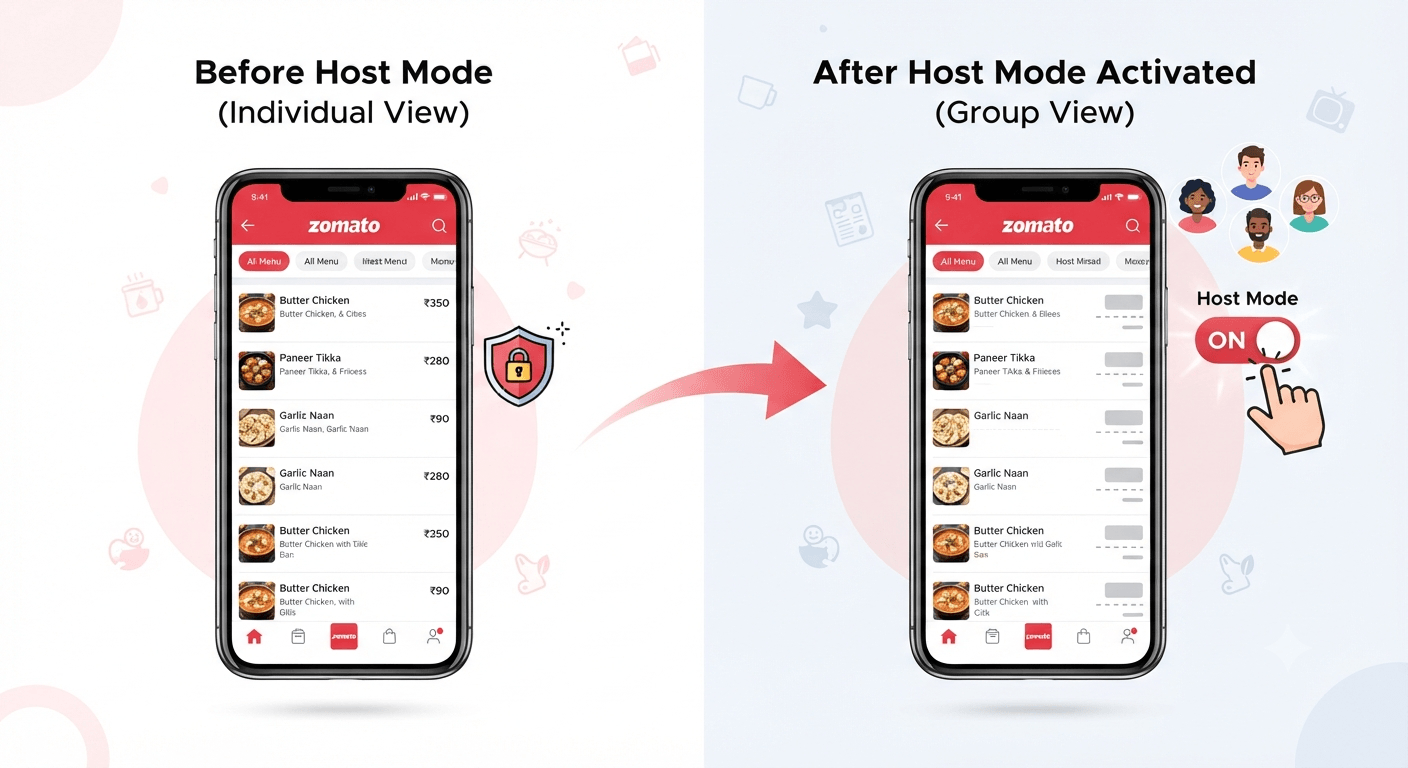


New Delhi: Zomato has introduced a new feature called Host Mode, allowing users to hide food prices while guests browse restaurant menus and add dishes to a shared cart. The feature is designed to make ordering food for friends and family more comfortable by keeping the final bill visible only to the host.
The feature was introduced after Zomato founder Deepinder Goyal responded to a suggestion shared by a user on LinkedIn. Ayushmaan Agarwalla had proposed a way to let hosts offer food to guests without making them conscious of how much their choices cost.
The suggestion was made nearly a week before the feature went live. Host Mode reportedly became available on the app within 72 hours of the proposal, offering a solution aimed at making group ordering easier during the festive season.
With the feature enabled, guests can explore restaurant menus and select their preferred dishes without seeing the prices. The host retains control of the bill and can review the total amount before placing the order.
Why Zomato introduced Host Mode
Zomato’s new feature addresses a familiar situation when people visit someone’s home and are invited to order food. Guests may hesitate to select what they actually want because they do not wish to appear extravagant or increase the host’s expenses.
As a result, some guests choose cheaper dishes, avoid ordering additional items or leave the decision entirely to the host. This can make what is intended to be a generous and welcoming gesture slightly uncomfortable.
Hosts, on the other hand, generally want their guests to enjoy the experience without worrying about the cost. They may prefer that visitors select their favourite dishes freely rather than limit their choices based on the prices displayed on the app.
Host Mode is designed to address this difference in expectations. By hiding prices from guests, Zomato aims to make the ordering process less awkward while allowing the host to remain responsible for the final payment.
The feature also gives the host greater control over when the bill is revealed. Guests can participate in selecting food, while the financial details remain private until the host decides to review them.
How Zomato’s Host Mode works
Users need to ensure that they have installed the latest version of the Zomato app to access the feature. Host Mode can be activated from different sections of the app, making it easier to switch on while browsing restaurants or preparing an order.
The process involves the following steps:
- Open the Zomato app: Make sure the app is updated to its latest version.
- Find Host Mode: Tap the ‘Host Mode’ chip available on the home screen header, the restaurant menu page or under Profile and then Your Preferences.
- Activate the feature: Select ‘Switch on Host Mode’ and confirm the action.
- Browse menus without prices: Once activated, food prices disappear from restaurant menus and the cart.
- Add dishes to the cart: Guests can select their preferred dishes and add them to the cart without seeing how much each item costs.
- Review the bill: When the selections are complete, the host can tap ‘Exit host mode to review bill’.
- Authenticate access: The host must use fingerprint authentication or face lock to regain access to the full bill.
- Place the order: The host can review the complete amount, including applicable savings, before tapping ‘Place Order’.
A confirmation message appears when the feature is activated, stating: “All prices are hidden in Host Mode.”
This ensures that users know the price display has been intentionally disabled rather than assuming that the app has encountered a technical issue.
Only the host can reveal the final bill
One of the key aspects of Host Mode is that guests cannot independently restore the price display. The host must exit the mode and complete the authentication process to view the full bill.
This keeps the total amount private while guests are selecting their food. The host can review the cost, check the savings and make the final decision before placing the order.
The authentication requirement also adds a layer of control to the process. Instead of allowing anyone browsing the cart to reveal the prices, the feature reserves that action for the host.
The arrangement is particularly useful when several people are ordering food together. Guests can focus on their preferences, while the person paying for the order can manage the overall spending.
However, the host still needs to review the complete cart and bill before confirming the purchase. Hiding prices does not remove the host’s responsibility for checking the order total.
A customer suggestion turned into an app feature
Host Mode also highlights how customer feedback can influence product development. Agarwalla’s LinkedIn suggestion focused on a relatively small but recognisable social situation: guests often feel uncomfortable choosing expensive dishes when someone else is paying.
Rather than treating the issue as a minor inconvenience, the suggestion proposed a direct change to the ordering experience.
Goyal considered the idea, and Zomato introduced the feature within 72 hours, according to the information shared about its rollout.
The timing also makes the feature relevant during the festive season, when families and friends frequently gather and hosts may order food for groups.
What Host Mode means for Zomato users
Zomato’s Host Mode changes how users interact with restaurant menus during group orders. While conventional ordering displays prices to everyone browsing the menu, the new option separates the selection process from the bill review.
Guests can choose what they want without being influenced by the cost, while the host retains control over the final payment.
The feature is intended to make hosting more convenient rather than change the basic ordering process. Users can still browse restaurants, select dishes and review the order as usual, with the difference that prices remain hidden until the host exits the mode.
By responding quickly to a customer suggestion, Zomato has introduced a feature aimed at addressing an everyday social discomfort. Its usefulness will depend on how easily hosts and guests adopt it, but the idea offers a different approach to making shared food ordering more comfortable.