







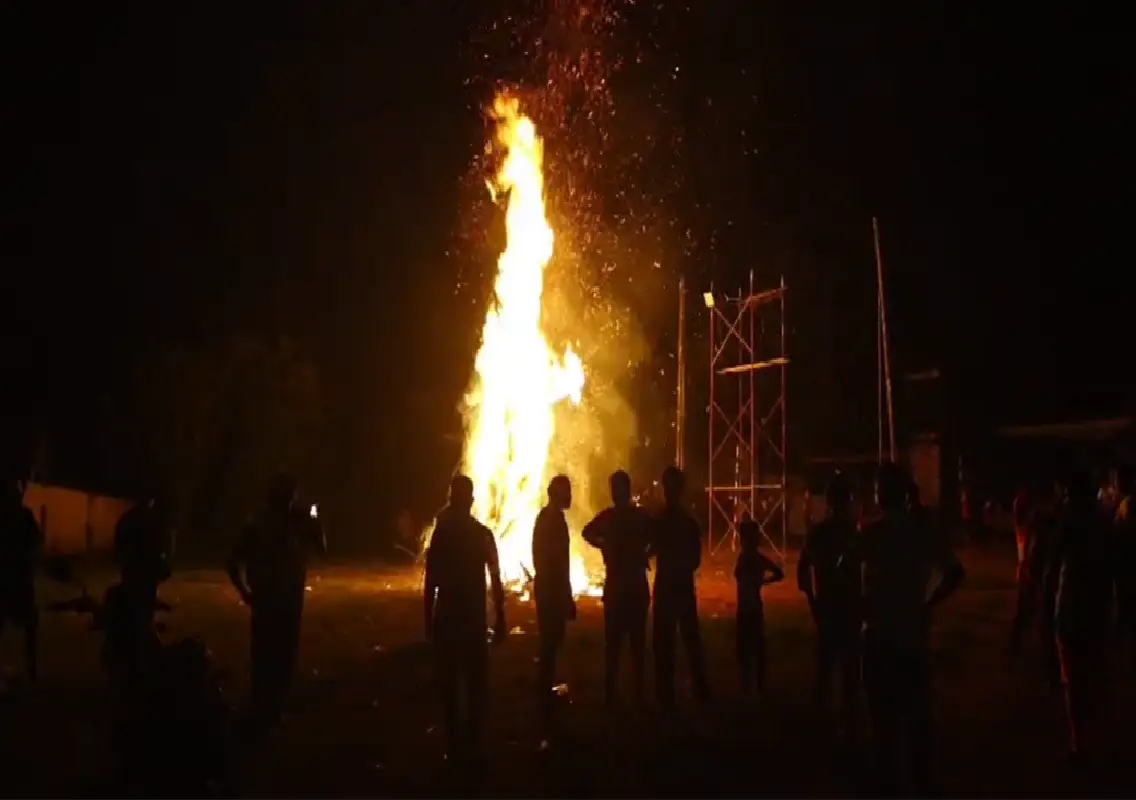


Udupi: Deepavali, the festival of lights, is celebrated with a variety of customs and traditions across Karnataka. In the coastal region, however, Naraka Chaturdashi brings with it a distinctive village tradition known as ‘Mulla Mutte’, which reflects community participation, youthful enthusiasm and the cultural heritage of rural coastal Karnataka.
Observed on the eve and the day of Naraka Chaturdashi, Mulla Mutte involves village youth coming together to collect dry wood, agricultural debris and other unwanted materials from different parts of the village. These materials are then gathered at a designated spot and set on fire on Naraka Chaturdashi, following a custom that has been practised for generations.
The tradition is more than just the burning of collected waste and dry vegetation. It represents the spirit of togetherness and collective participation that has long been an integral part of village life in the coastal districts.
Youth come together to preserve tradition
The preparations for Mulla Mutte begin on the eve of Naraka Chaturdashi, when groups of young people move around the village collecting dry branches, firewood, discarded materials and other debris.
The activity brings together youngsters from different neighbourhoods, who participate in the collection and preparation of the materials.
On Naraka Chaturdashi, the collected materials are set alight as part of the traditional observance. The gathering around the fire becomes an occasion for community participation, with the younger generation taking responsibility for carrying forward a custom inherited from their elders.
For many villages, the ritual is also an opportunity for youngsters to reconnect with their cultural roots and participate in a collective activity during the Deepavali celebrations.
Unlike celebrations centred primarily on individual households, Mulla Mutte brings the wider village community together through a shared tradition.
Tradition continues at Sarkari Gudde in Kapu
The custom continues to be observed in certain parts of Udupi district, including Sarkari Gudde in Kapu taluk.
Here, both older residents and youngsters continue to uphold the practice, ensuring that the tradition remains part of the local Deepavali celebrations.
The participation of the younger generation is particularly significant at a time when changing lifestyles, urbanisation and modern forms of celebration are gradually transforming traditional village practices.
Despite these changes, youngsters in areas where Mulla Mutte is observed continue to follow the customs practised by previous generations.
Their involvement demonstrates how local traditions can survive through community participation rather than merely being remembered as part of the past.
A reflection of coastal Karnataka’s rural culture
Coastal Karnataka is known for its distinctive cultural practices, folk traditions and community celebrations. Deepavali itself is marked by different customs across Dakshina Kannada and Udupi districts, with several village-level practices adding to the region’s cultural diversity.
Mulla Mutte is one such tradition that highlights the importance of collective effort in rural society.
The practice of gathering unwanted materials and bringing them together for a common ritual symbolises cooperation among village youth. It also creates an opportunity for different generations to interact and share memories of how the festival was celebrated in earlier times.
For older residents, the continuation of Mulla Mutte is a reminder of customs they grew up witnessing. For youngsters, participating in the ritual offers a way to experience and preserve a part of their community’s heritage.
As Deepavali celebrations increasingly incorporate modern activities and urban influences, traditions such as Mulla Mutte retain their distinct identity through the involvement of local communities.
The continued observance of this Naraka Chaturdashi custom at places such as Sarkari Gudde in Kapu reflects the enduring connection between coastal Karnataka’s people and their cultural heritage.
Through the collective efforts of village youth, Mulla Mutte remains a distinctive feature of the region’s Deepavali celebrations, passing an age-old tradition from one generation to the next.