







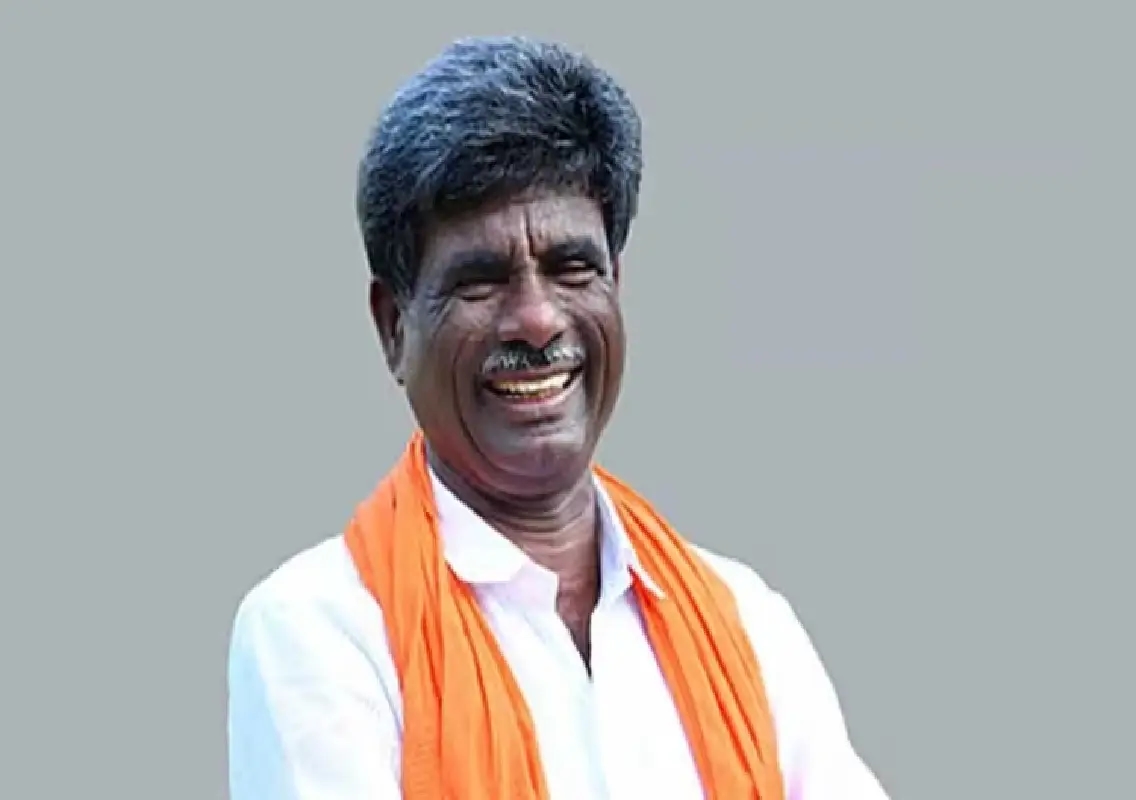


Udupi: Udupi–Chikmagalur Member of Parliament Kota Shrinivas Poojary has directed the National Highways Authority of India (NHAI) to take responsibility for repairing and reinstalling drinking water supply pipelines damaged during the construction of National Highway service roads in several gram panchayat areas of the Kundapur Assembly constituency. Stressing that public inconvenience must be addressed on priority, the MP said the authority executing the highway widening works should also bear the cost of restoring essential civic infrastructure.
The MP was presiding over a review meeting held at the deputy commissioner’s office in Udupi on Thursday to discuss issues related to the installation and damage of drinking water pipelines in gram panchayat areas affected by National Highway expansion projects. The meeting was convened in response to complaints from residents about frequent disruption to water supply due to damaged pipelines.
Damage caused during highway widening works
During the meeting, it was pointed out that the NHAI is currently undertaking multiple highway widening and related infrastructure projects across gram panchayat limits in Koteshwara, Gopadi, Kumbhashi, Thekkatte, Saligrama, Kotathattu, Kota, Manuru, Pandeshwara, and Sasthana in the Brahmavar region.
As part of these works, including the construction of service roads, existing public drinking water supply pipelines have been damaged at several locations. These pipelines fall under rural drinking water schemes and are critical for daily household water supply in these villages.
MP Kota Shrinivas Poojary said the damage has caused serious inconvenience to the public, particularly during peak summer months when water availability is already under stress. “The drinking water pipelines within gram panchayat limits have been damaged due to National Highway works. The responsibility of repairing and reinstalling them lies with the NHAI,” he said.
Risk of further damage and need for new alignment
The MP warned that there is a strong possibility of further damage to pipelines as highway widening activities continue in the coming days. He noted that many of the existing pipelines are currently located in the middle of the road carriageway, making them vulnerable to repeated damage during construction and future maintenance works.
“To avoid recurring problems, there is a clear need for installing separate pipelines along a safer alignment,” he said. According to him, instead of retaining pipelines beneath the main carriageway, new pipelines should be laid in the remaining 2.5-metre space available along the service roads.
Such a shift, he said, would ensure the long-term safety of the drinking water infrastructure and reduce maintenance costs in the future.
Funding constraints of local bodies
Highlighting the financial challenges faced by local bodies, MP Poojary said gram panchayats and the rural development department do not have adequate funds to undertake large-scale repair and reinstallation of pipelines damaged due to national infrastructure projects.
“Gram panchayats cannot be expected to bear the burden of repairing pipelines that were damaged due to highway widening works carried out by a central agency,” he said, adding that the NHAI must take up not only immediate repair work but also related infrastructure adjustments required to safeguard the pipelines.
He made it clear that the cost escalation involved in repairing damaged pipelines and installing new ones along safer routes should be borne by the NHAI as part of the project responsibility.
Re-evaluation of cost estimates ordered
During the meeting, MP Poojary observed that the estimated cost for the current repair work and installation of new pipelines has increased due to repeated damage and the need for realignment. He instructed engineers from the Rural Drinking Water and Sanitation Department to re-evaluate the situation and prepare a fresh, realistic cost estimate for the required works.
The revised estimate, he said, should take into account the technical feasibility of laying pipelines along the service road, future safety, and long-term sustainability. He emphasised that accurate cost projections are essential to ensure timely approvals and execution.
Coordination with NHAI headquarters
The MP also directed that the decisions taken during the meeting under the leadership of the deputy commissioner should be formally communicated to the divisional office of the NHAI. He said close coordination between the district administration, line departments, and the NHAI is crucial to avoid delays and ensure accountability.
Deputy Commissioner Swaroopa TK assured that the district administration would follow up on the decisions taken and facilitate coordination among the concerned departments. Zilla Panchayat Chief Executive Officer Prateek Bayal also spoke on the need for protecting rural water supply systems during major infrastructure projects.
Public representatives stress urgency
MLAs Yashpal Suvarna and Kiran Kumar Kodgi, who were present at the meeting, echoed concerns about public hardship due to disrupted water supply. They urged the NHAI to act swiftly and ensure that repair works are completed without further inconvenience to residents.
Local representatives pointed out that villagers are often forced to depend on alternative water sources or tanker supply when pipelines are damaged, adding to their financial and physical burden.
Conclusion
The meeting highlighted the growing need for better coordination between infrastructure development agencies and civic departments to protect essential services such as drinking water supply. With National Highway expansion continuing across Udupi district, MP Kota Shrinivas Poojary’s directive places clear responsibility on the NHAI to repair and realign damaged pipelines. District officials expressed hope that with revised cost estimates and timely intervention by the NHAI, normal water supply will be restored and safeguarded against future disruptions.