







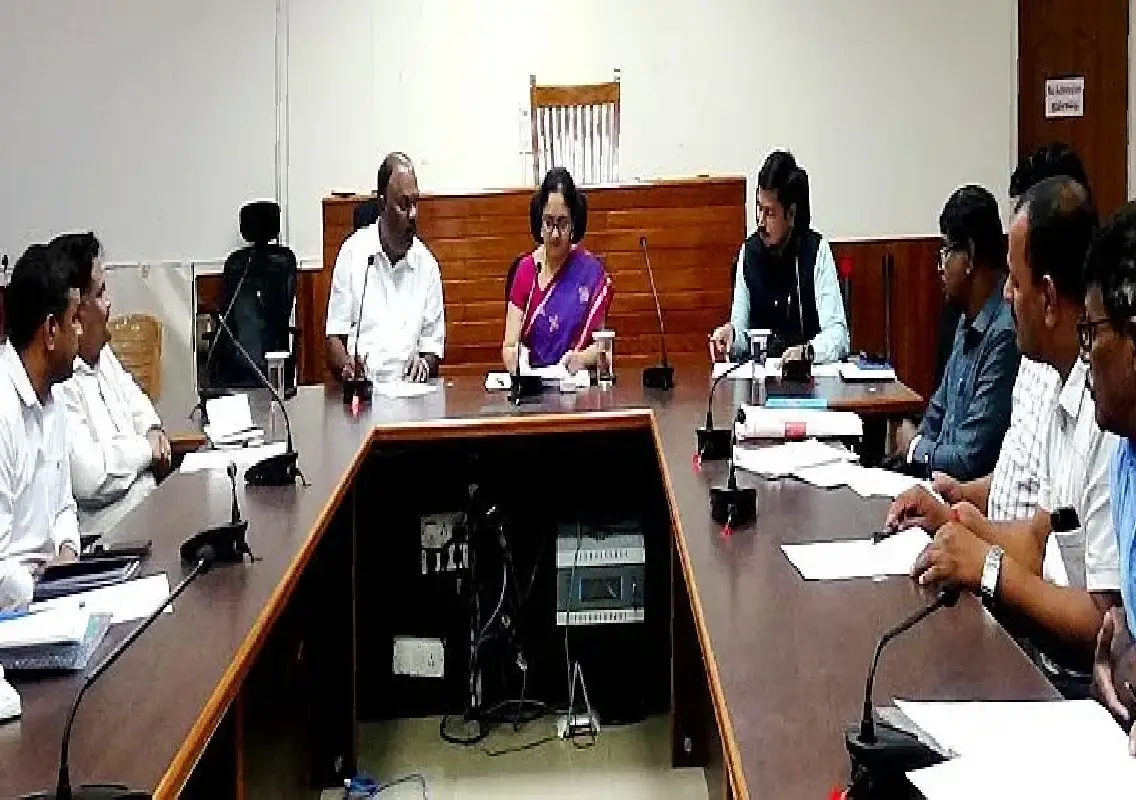


Udupi: Deputy Commissioner Swaroopa T.K. has directed officials to implement stringent precautionary measures during the execution of the second phase of the crude oil storage project at Padur village, which falls under the jurisdiction of the Majoor Gram Panchayat in Udupi district. The directives are aimed at minimising inconvenience to local residents, preventing damage to property and natural resources, and ensuring that long-pending issues from the first phase are not repeated.
The instructions were issued during a review meeting chaired by the Deputy Commissioner at the auditorium of the Deputy Commissioner’s office at Rajathadri, Manipal. The meeting was convened to assess the progress of the strategically important crude oil storage facility and to address concerns raised by elected representatives, officials and members of the local community.
Land acquisition completed, compensation delays flagged
During the meeting, Swaroopa T.K. acknowledged that the land acquisition process required for the expansion of the crude oil storage facility had been completed. However, she noted that there were reports of compensation payments still pending for some landowners whose land was acquired for the project.
Taking a serious view of the matter, the Deputy Commissioner instructed officials of the Karnataka Industrial Areas Development Board (KIADB) to expedite the disbursement of compensation without further delay. She emphasised that all eligible landowners must receive their due payments promptly and transparently.
She also directed revenue, survey and KIADB officials to jointly review cases where there were ambiguities or disputes regarding the verification of legitimate landowners. “Any confusion related to ownership or compensation must be resolved at the earliest to avoid resentment among villagers and to ensure smooth execution of the project,” she said.
Mandatory video documentation of nearby houses
One of the key precautionary measures mandated by the Deputy Commissioner is comprehensive video documentation of all residential houses and structures located in the vicinity of the project site before the commencement of the second phase of construction.
Officials were told to ensure that the video documentation clearly captures the existing condition of buildings, including walls, roofs and foundations. This record will serve as evidence in the event of complaints about damage allegedly caused by construction activities, particularly rock blasting.
“This exercise is essential to protect both residents and the implementing agencies. It will help prevent disputes and ensure accountability if any damage occurs during the construction process,” Swaroopa T.K. said.
Caution urged during rock blasting activities
The Deputy Commissioner stressed that extreme caution must be exercised during rock blasting operations, which are expected to be a major component of the second phase of the project. She warned that careless blasting could cause structural damage to nearby houses and public buildings.
Officials were instructed to strictly adhere to safety norms, use controlled blasting techniques and continuously monitor vibrations. Any activity that poses a risk to surrounding structures must be immediately halted, she said.
The Deputy Commissioner also underlined the need to protect heritage and traditional sites in and around Padur village during the execution of the project. She said such sites should not be disturbed under any circumstances.
Concerns over water safety and employment
Udupi MLA Gurme Suresh Shetty, who was present at the meeting, raised serious concerns regarding the potential impact of rock blasting on local drinking water sources. He cautioned that blasting could affect the quality and safety of well water, which is the primary source of drinking water for many households in the area.
He urged the authorities to closely monitor water sources and ensure that safe drinking water is supplied to residents if any contamination or depletion is observed. “People’s health must not be compromised in the name of development,” the MLA said.
Shetty also stressed the importance of providing employment opportunities to local residents during the execution of the project. He suggested that priority be given to people from nearby villages for suitable jobs.
In addition, he called for the construction of separate residential facilities for migrant workers engaged in the project, so as to avoid pressure on local infrastructure and prevent social issues.
Traffic management and lessons from first phase
Another key issue discussed at the meeting was the movement of heavy vehicles related to the project. The MLA and local representatives stressed the need for proper traffic management to ensure public safety and minimise inconvenience to residents.
They pointed out that during the first phase of the project, villagers had faced several problems, including road damage, dust pollution and traffic congestion. Elected representatives and community leaders urged authorities to proactively address these concerns during the second phase.
“Past experiences must guide present actions. Problems faced earlier should not be repeated,” several participants said.
Officials and stakeholders assure coordination
Additional Deputy Commissioner Abeer Gadyal, the President of Majoor Gram Panchayat, the Tahsildar, the Taluk Panchayat Executive Officer, KIADB officials and representatives of other concerned departments attended the meeting.
Officials assured the Deputy Commissioner that there would be close coordination among departments to ensure that the project is implemented in a responsible and community-sensitive manner.
Conclusion
The second phase of the Padur crude oil storage project, which is considered a critical infrastructure initiative, will move forward under strict supervision and with enhanced safeguards, as directed by Deputy Commissioner Swaroopa T.K. With mandatory video documentation, cautious blasting practices, expedited compensation and a focus on local welfare, the district administration aims to balance development needs with the rights and safety of residents. Authorities have reiterated their commitment to addressing community concerns and ensuring that the project progresses without causing avoidable hardship to the people of Padur and surrounding villages.