







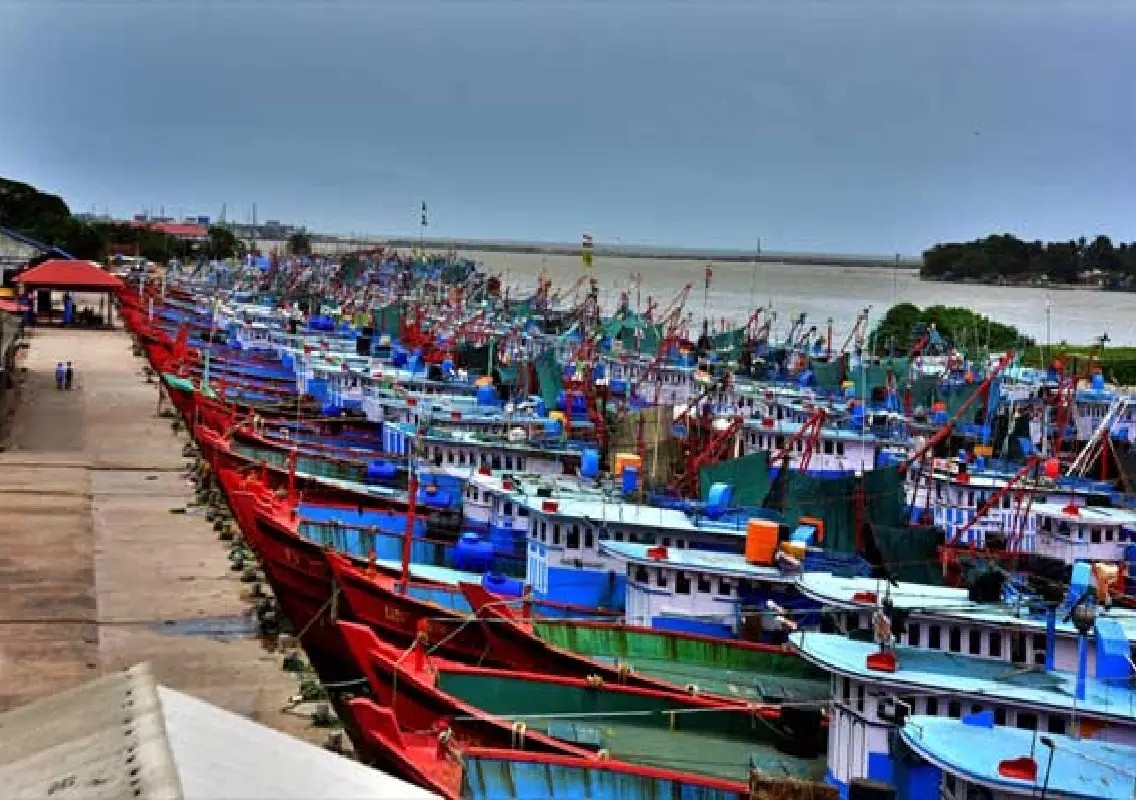


Udupi: The delayed and below-normal monsoon along the coastal region has triggered a sharp decline in fish availability this season, leaving thousands of traditional fishermen facing severe financial hardship and causing a shortage of fresh fish in local markets.
For traditional fishermen who rely on country boat fishing during the monsoon months, the period is usually one of the most productive times of the year. However, the absence of heavy rains and rough sea conditions has significantly reduced fish catches, disrupting livelihoods and impacting the supply chain across coastal Karnataka.
The crisis has become more pronounced as the 61-day ban on mechanised fishing boats, which came into effect on June 1, remains in force. During this period, traditional fishermen generally depend on favourable monsoon conditions to earn their livelihood.
Lack of rainfall affects fish movement
According to fishermen, heavy rainfall and stormy weather play a crucial role in increasing fish availability near the coast.
Strong winds and turbulent sea conditions disturb the seabed and drive fish towards the surface, making them easier to catch using traditional country boats. In addition, large volumes of freshwater flowing from the Western Ghats into the sea create conditions that attract small fish, including mackerel and several other species, closer to the shore.
This year, however, the coast has experienced a significant deficit in rainfall and an absence of storms, resulting in fish remaining in deeper waters and beyond the reach of traditional fishermen.
As a result, fishermen venturing into the sea are returning with minimal catches, while some are reportedly coming back empty-handed.
Thousands of fishermen face financial hardship
The poor fishing season has placed thousands of traditional fishermen in a difficult financial situation. Many families along the coast depend almost entirely on income generated during the monsoon fishing season.
With catches declining sharply, earnings have dropped substantially, creating uncertainty among fishing communities already dealing with rising operational costs and economic pressures.
The situation has also affected associated sectors, including fish vendors, transport workers and others involved in the fisheries supply chain.
Fishermen fear that if rainfall remains weak in the coming weeks, the crisis could deepen further and have long-term implications for the fishing industry.
Fresh fish shortage pushes prices higher
The scarcity of fish has also been felt in local markets, where the supply of fresh fish has fallen sharply.
Shore-based fishing operations are yielding only small quantities of species such as kalluru and mixed fish varieties. The limited supply has caused prices to soar, making fresh fish increasingly expensive for consumers.
River fish are also being sold at significantly higher rates due to rising demand and reduced availability.
Even trawl boats that have ventured into the sea are reportedly struggling to secure adequate catches, further contributing to the shortage.
Consumers turn to packaged fish
With fresh fish becoming increasingly scarce, consumers have started turning to packaged fish stored in cold storage facilities.
Demand for frozen and preserved fish products has risen considerably in recent weeks as vendors attempt to meet market requirements.
Fish is also being brought into coastal Karnataka from neighbouring states, particularly Kerala and Tamil Nadu, to bridge the supply gap.
Fish vendors in Malpe and consumers alike have been left with little choice but to depend on imported supplies and cold storage products until local catches improve.
Concerns over future fishing season
Fishing community leaders have expressed concern that the impact of the weak monsoon may extend beyond traditional fishing activities.
According to Dayakar V Suvarna, president of the Malpe Kanni Fishermen’s Association, experts have already indicated that the monsoon this year is likely to remain below normal.
He warned that if the situation persists, it could adversely affect not only country boat fishermen but also mechanised fishing operations once the annual fishing ban ends later in the season.
Last year, abundant rainfall and stormy weather had created ideal conditions for fishing, resulting in healthy catches and better incomes for fishermen. This year, however, the weak monsoon has left the fishing community anxiously waiting for rains that could revive both the sea and their livelihoods.