







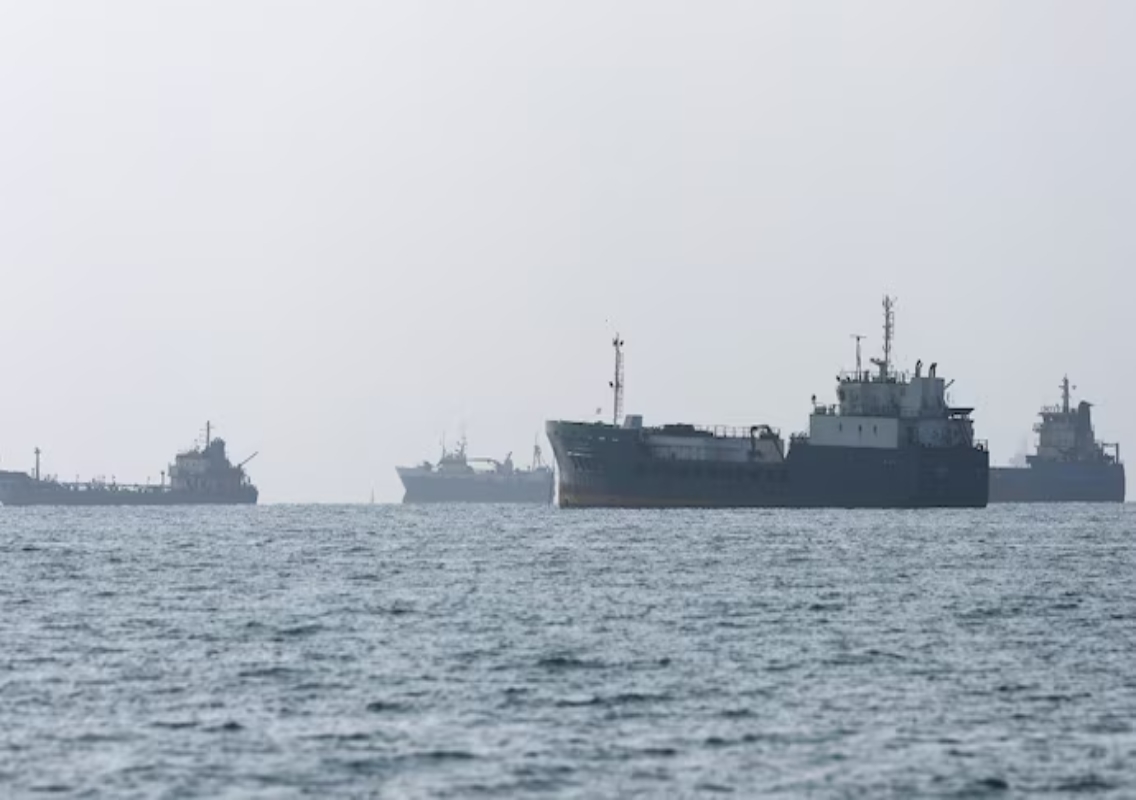


BRUSSELS: More than 60 countries have backed a European Union-led declaration opposing tolls and fees on ships passing through international straits, as tensions over shipping access through the Strait of Hormuz continue to disrupt global maritime trade. The declaration, announced on October 12, 2026, calls for freedom of navigation and rejects measures that could restrict lawful passage through vital international waterways.
The initiative comes amid Iran’s efforts to assert greater control over shipping movements through the Strait of Hormuz, a strategic waterway connecting the Persian Gulf with the Gulf of Oman and the wider Indian Ocean. Tehran has sought to impose conditions on vessels using the route, including demands for payment, prompting objections from governments concerned about international maritime access.
The declaration has received support from all European Union member states and other countries, including Australia, Japan, the United Kingdom, Canada and Singapore. The signatories have called for international shipping routes to remain accessible without unlawful charges or discriminatory restrictions.
European Union foreign policy chief Kaja Kallas announced the initiative, describing it as a collective diplomatic response to attempts to use international waterways for financial or political leverage. The pledge is intended to reinforce the principle that lawful maritime passage should not depend on a vessel’s ability to pay a transit toll.
Why the Strait of Hormuz matters to global trade
The Strait of Hormuz is one of the world’s most strategically important maritime routes. It lies between Iran to the north and Oman and the United Arab Emirates to the south and provides the principal sea passage between the Persian Gulf and the Gulf of Oman.
The waterway is particularly important for international energy supplies. Large quantities of crude oil and petroleum products produced in Gulf countries travel through the strait before reaching markets in Asia and other parts of the world. Any disruption can affect shipping schedules, energy prices, insurance costs and the wider movement of goods.
For major oil-importing economies, including India, the route has considerable economic significance. Disruptions can raise the cost of transporting crude oil and increase uncertainty for refiners, shipping companies and energy traders.
The current tensions have made passage through the waterway more complicated. Iran has asserted control over shipping movements and linked access to its demands, while commercial operators face uncertainty over the safety, cost and legality of transit arrangements.
The declaration backed by more than 60 countries seeks to prevent such restrictions from becoming an accepted precedent for international shipping. The signatories argue that international straits must remain available for lawful navigation rather than becoming sources of revenue or political pressure for states controlling nearby waters.
What the 60-country declaration says
The declaration calls on countries to oppose tolls and other restrictions that interfere with lawful navigation through international straits. It also raises concerns about discriminatory treatment of vessels and requirements that ships obtain prior authorisation when such measures undermine their rights of passage.
According to the European Union’s announcement, the participating countries have committed to supporting defensive and non-escalatory multilateral efforts to maintain safe and uninterrupted navigation.
Kallas said international navigation should remain open to everyone, rather than being restricted to those able to pay. Her announcement invited additional countries to join the initiative.
The declaration is a diplomatic commitment rather than an immediate enforcement mechanism. It does not, by itself, physically reopen the Strait of Hormuz or guarantee that vessels will be able to pass without interference. Instead, it establishes a common position among participating governments against tolls and restrictions that they consider incompatible with international maritime rules.
The initiative also signals that the issue extends beyond the immediate confrontation involving Iran. If charges for passage through international straits were accepted more widely, governments and shipping operators could face uncertainty over the costs and conditions of using other strategic waterways.
The declaration therefore seeks to defend a broader principle: countries should not use control over strategically located maritime passages to impose unlawful financial or political conditions on international shipping.
What international law says about shipping tolls
International maritime law provides the framework for navigation through straits used for international shipping. The United Nations Convention on the Law of the Sea (UNCLOS) sets out the principle of transit passage through qualifying international straits and places restrictions on measures that would impede that passage.
Article 38 establishes the right of transit passage for ships and aircraft through straits covered by the convention. Article 44 states that countries bordering such straits must not hamper transit passage and that the right cannot be suspended.
The convention also addresses charges for passage through territorial waters. Article 26 states that no charge may be levied on a foreign ship simply because it is passing through a territorial sea. Charges may be imposed for specific services provided to a vessel, but they must not be discriminatory.
The legal position surrounding the Strait of Hormuz is complicated by the fact that Iran has not ratified UNCLOS and disputes the application of certain provisions. The United States has also not ratified the convention. Nevertheless, many maritime experts and governments maintain that important navigation rights reflect customary international law and apply beyond the treaty’s formal membership.
A key distinction is between a fee for a specific service and a toll imposed solely for transit. International shipping rules generally recognise that vessels may be charged for services provided to them, but do not establish a general right to demand payment merely because a ship passes through an international strait.
Iran’s position and the wider regional tensions
Iran’s efforts to impose conditions on shipping through the Strait of Hormuz have emerged amid a wider regional conflict and continuing disputes over control of the waterway.
Iranian officials have asserted authority over maritime movements and threatened to restrict routes they regard as unauthorised. Tehran has linked access to the strait to its broader demands, while international governments have warned against restrictions that could interfere with commercial navigation.
The situation has raised concerns among shipowners, energy companies and governments that depend on predictable access to Gulf shipping routes.
The effects extend beyond the immediate cost of any proposed toll. Restrictions or uncertainty can lead to delays, higher insurance premiums and increased freight charges. Shipping companies may also need to reconsider routes and operating arrangements if they believe a passage is unsafe or subject to unpredictable conditions.
The Financial Times has reported that tanker operators have faced sharply increased costs and substantial risks in the region amid attacks on commercial vessels. Such pressures demonstrate how maritime insecurity can affect international trade even before a formal toll system is implemented.
The declaration backed by more than 60 countries does not settle the dispute between Iran and other governments. It does, however, underline opposition to turning a major international shipping route into an instrument of economic pressure.
What the development means for India
India has a significant interest in the uninterrupted movement of energy supplies through the Strait of Hormuz. The country imports substantial quantities of crude oil, and the Gulf region remains an important source of energy for Indian refineries.
Any prolonged disruption to the waterway could affect crude oil procurement, tanker availability, transport costs and the prices paid by energy importers. Higher shipping and insurance expenses can also influence the overall cost of imported goods.
For India, the issue is therefore not limited to a diplomatic disagreement over maritime law. The security and accessibility of international sea lanes are directly connected to energy security, trade and economic stability.
The declaration’s emphasis on freedom of navigation aligns with the wider interest of trading nations in maintaining predictable access to international waterways. However, the practical impact will depend on whether diplomatic pressure and multilateral cooperation can reduce restrictions and restore confidence among shipping operators.
What happens next?
The declaration marks a coordinated diplomatic effort to oppose tolls and restrictions on international shipping, but it does not guarantee an immediate resolution of the Strait of Hormuz crisis.
The next steps will depend on developments in the region, Iran’s approach to maritime access and the willingness of governments to pursue diplomatic solutions. International shipping organisations and maritime authorities are also likely to remain involved in efforts to restore safe and reliable passage.
For now, the backing of more than 60 countries demonstrates broad concern about the implications of imposing charges on vessels using international straits. The dispute has placed freedom of navigation, international law and energy security at the centre of a wider geopolitical confrontation.