







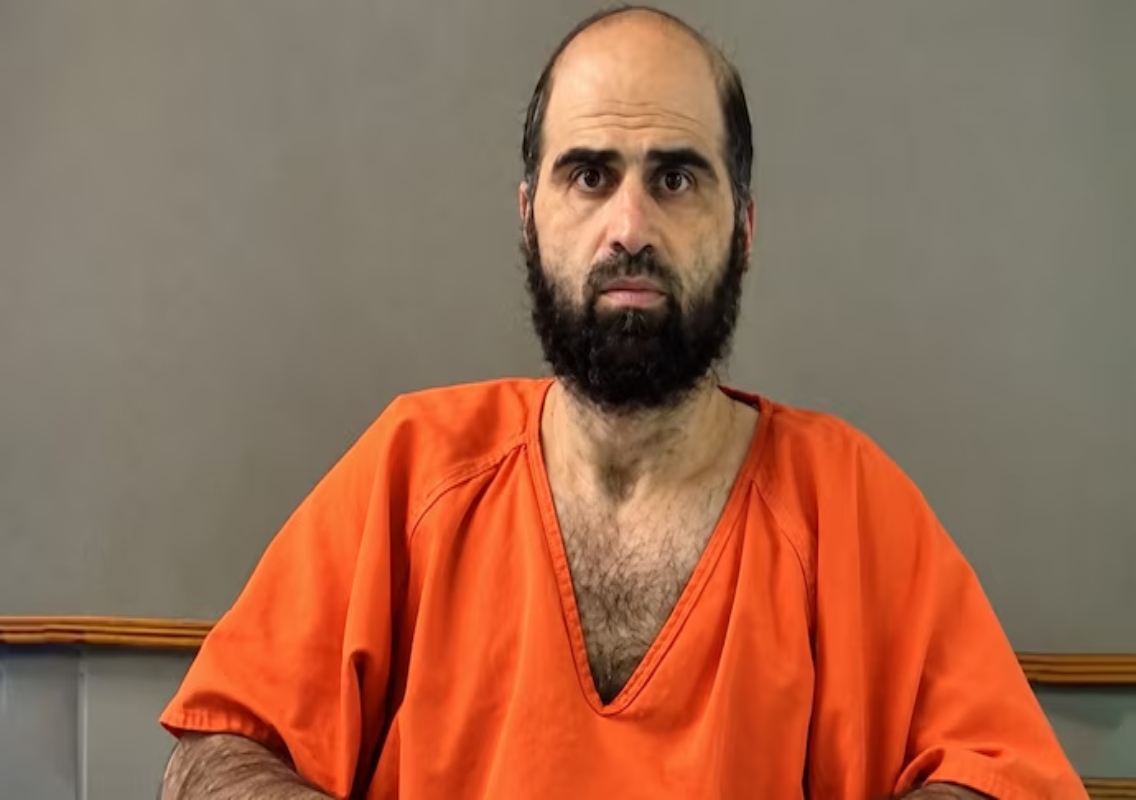


WASHINGTON: Archbishop Timothy Broglio, who oversees the spiritual care of Catholic personnel in the US armed forces, has urged Catholic soldiers assigned to the firing squad for the planned execution of former US Army Major Nidal Hasan to seek exemption from the duty. His appeal comes amid growing criticism of the Pentagon’s proposal to livestream Hasan’s execution, scheduled for December 3, 2026.
Broglio said participation in the execution would conflict with the teachings of the Catholic Church. He also questioned the moral implications of broadcasting the death of a convicted mass shooter, warning that the decision could affect the reputation of the US military and raise concerns about the treatment of human life.
The intervention has added a religious and ethical dimension to a growing debate over capital punishment, military responsibility and the proposed public broadcast. While the US government has defended the planned execution, Catholic leaders and some political figures have raised concerns about turning it into a public spectacle.
Archbishop calls on Catholic soldiers to seek exemption
In a statement issued on October 12, Broglio urged Catholic service members assigned to the execution squad to request to be excused from participating.
The archbishop, who serves as the head of the Archdiocese for the Military Services, USA, provides pastoral care to Catholic members of the US armed forces and their families. His position gives his intervention particular significance for Catholic personnel who may be involved in carrying out military duties.
Broglio condemned Hasan’s 2009 attack but argued that the planned execution raised separate moral questions. His position reflects the Catholic Church’s opposition to capital punishment and its emphasis on the dignity of human life, including in cases involving serious crimes.
The archbishop also questioned whether publicly broadcasting an execution was an appropriate response to terrorism and mass violence. His objections focus not only on the death penalty itself but also on the decision to make the execution available for public viewing.
The appeal does not change the legal sentence imposed on Hasan. Instead, it calls on Catholic soldiers who may be assigned to the firing squad to seek exemption on religious and moral grounds.
Nidal Hasan’s 2009 Fort Hood shooting
Hasan, a former US Army psychiatrist, was convicted of killing 13 people and injuring 32 others in a shooting at Fort Hood, Texas, in November 2009. The attack took place at the military installation’s medical processing facility and became one of the deadliest shootings on a US military base.
Hasan was tried by a military court and sentenced to death in 2013. The case attracted widespread attention because the victims were military personnel preparing for deployment or other service-related duties.
The planned execution would bring the long-running case to a significant stage, although legal proceedings could still affect the timeline. Reports have said Hasan is scheduled to be executed by firing squad on December 3, 2026, at Fort Hood, now known as Fort Cavazos.
US President Donald Trump approved the execution, while the Pentagon has outlined plans for the firing squad method. The proposed arrangement has drawn attention because military executions are exceptionally rare in the United States.
Hasan’s case remains particularly sensitive for survivors, relatives of those killed and the wider military community. The discussion over how the execution should be conducted and whether it should be broadcast has therefore extended beyond questions of sentencing and legal procedure.
Pentagon’s livestream plan sparks controversy
The Pentagon’s proposal to livestream the execution has become a central point of disagreement. Defence Secretary Pete Hegseth has supported the plan, which has been presented as a way to demonstrate the consequences of Hasan’s crimes.
However, the proposal has prompted objections from religious leaders and politicians who question the purpose and likely effects of a public broadcast of an execution.
Archbishop Broglio argued that broadcasting the event could turn a serious act of punishment into a public spectacle. His concerns also relate to the potential psychological impact on viewers, particularly young people, and the effect the decision could have on perceptions of the US armed forces.
The controversy has attracted attention beyond the Catholic community. US House Speaker Mike Johnson has expressed concern that footage of the execution could be used as a recruitment tool by extremist groups. Vice-President JD Vance has also indicated that he would not watch the proposed broadcast.
The objections do not necessarily amount to opposition to holding Hasan accountable for the attack. Rather, they raise questions about whether a public livestream is appropriate and whether it could create consequences beyond the execution itself.
The final decision on broadcasting the execution has been reported as remaining with the US administration. The distinction between carrying out a sentence and transmitting it publicly is central to the ongoing debate.
Catholic Church’s position on capital punishment
The Catholic Church’s opposition to capital punishment is central to Broglio’s appeal. Church teaching emphasises the dignity of every human being and calls for approaches to justice that do not involve taking human life where this can be avoided.
The archbishop’s intervention also follows criticism from Archbishop Paul Coakley, president of the US Conference of Catholic Bishops. Coakley condemned the proposed livestream in a statement issued on October 9, arguing that broadcasting the execution would undermine the country’s moral standing.
These interventions highlight the distinction between condemning a violent crime and endorsing every proposed form of punishment or public presentation of that punishment. Catholic leaders have maintained that Hasan’s actions cannot be condoned while questioning the morality of the planned execution and its broadcast.
For Catholic military personnel, Broglio’s statement raises questions about how religious convictions intersect with military duties. His appeal asks those assigned to the firing squad to seek exemption rather than participate in an act he considers contrary to Church teaching.
Debate over execution continues
The planned execution of Nidal Hasan has become a broader debate about justice, religious conscience and the limits of public punishment. The US military faces questions about the proposed livestream, while Catholic leaders are urging personnel to consider their religious obligations before taking part.
Hasan’s conviction stems from the deaths and injuries caused by the 2009 Fort Hood shooting. The latest controversy, however, centres on how the sentence should be carried out and whether the public should be able to watch it.
As the scheduled December 3 date approaches, legal developments and the administration’s final decision on broadcasting will determine the next steps. Broglio’s appeal has ensured that the moral implications of the execution remain part of the public discussion.