







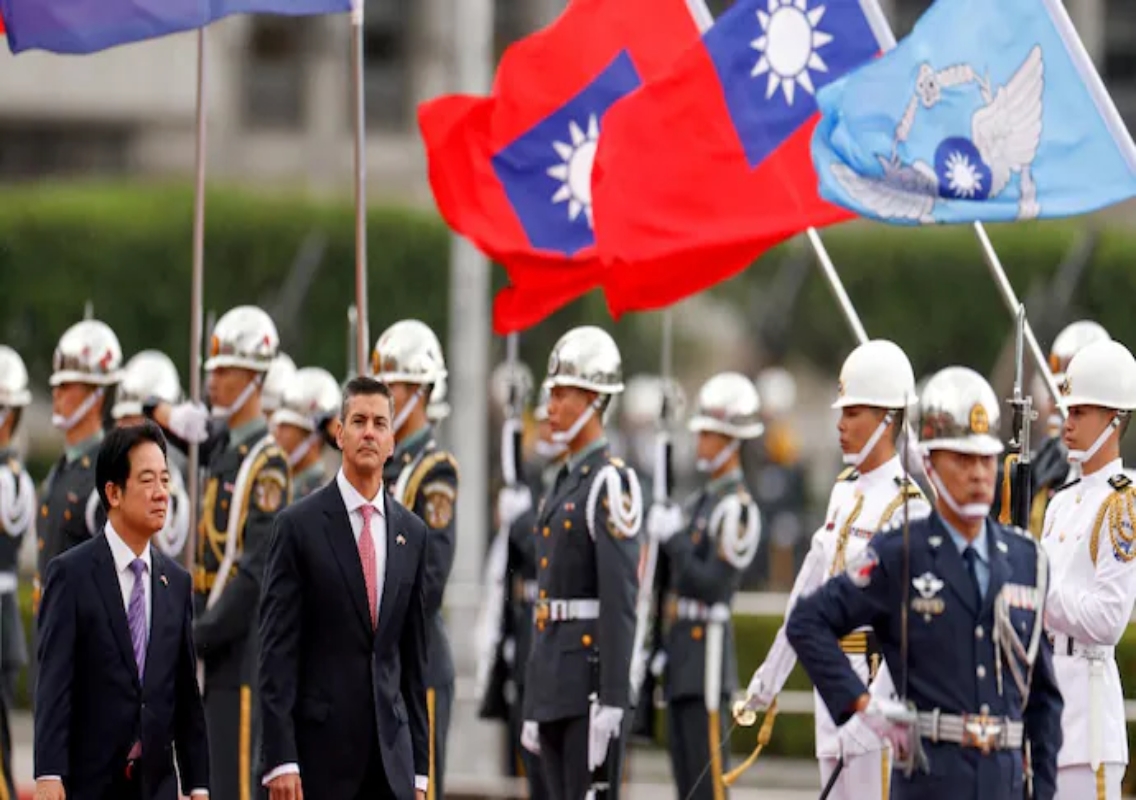


BEIJING: China has imposed sanctions on senior ministers from Paraguay and Belize over their countries’ continued diplomatic relations with Taiwan, escalating tensions over the island’s international status. The measures, announced on October 12, 2026, target Paraguay’s Communications Minister Gustavo Villate and Belize’s Foreign Minister Francis Fonseca. Both governments have rejected the action and reaffirmed their commitment to maintaining ties with Taiwan.
China announces sanctions against two ministers
China’s Foreign Ministry said the sanctions were intended to protect the country’s sovereignty and security and oppose activities it considers supportive of Taiwan’s independence. Beijing accused politicians in Paraguay and Belize of promoting continued diplomatic relations with Taipei despite China’s objections.
The restrictions include denying the two ministers entry to mainland China, Hong Kong and Macau. Chinese organisations and individuals have also been prohibited from engaging in transactions, cooperation or other activities with them, according to the ministry’s announcements.
The measures are largely symbolic in practical terms, as officials from countries maintaining diplomatic relations with Taiwan generally do not travel to China. However, the decision carries diplomatic significance because it reinforces Beijing’s efforts to discourage other governments from maintaining formal ties with Taipei.
Paraguay says cooperation with Taiwan will continue
Paraguay’s Communications Minister Gustavo Villate said the Chinese decision was expected in view of the projects his country is pursuing with Taiwan, including a data centre initiative.
Villate indicated that the sanctions would not derail the government’s ongoing work with Taipei. Speaking to local media on Monday, he said Paraguay would continue its existing projects and pursue them with greater determination.
Paraguay is one of the few countries in the world that maintains formal diplomatic relations with Taiwan rather than Beijing. Its partnership with Taipei is significant to Taiwan’s efforts to retain international recognition and sustain cooperation with governments outside its immediate region.
The data centre project mentioned by Villate highlights the technology and infrastructure dimension of the relationship. Such initiatives also demonstrate how diplomatic partnerships can extend beyond formal recognition to include practical cooperation.
China’s sanctions introduce another point of friction into Paraguay’s foreign relations. However, Villate’s response suggests that the Paraguayan government does not intend to change its current approach in response to the restrictions.
Belize rejects the restrictions on its foreign minister
Belize has also rejected Beijing’s decision to sanction Foreign Minister Francis Fonseca.
In a statement, Belize’s Foreign Ministry described the measures against Fonseca as unwarranted, arguing that he had been carrying out the lawful responsibilities of his office.
The ministry said the sanctions would neither alter Belize’s foreign policy nor deter the government from performing its duties. It also reaffirmed the country’s commitment to its relationship with Taiwan.
Fonseca’s diplomatic engagement with Taipei has been part of the relationship that prompted Beijing’s response. According to reports, the Belizean foreign minister met Taiwan’s Foreign Minister Lin Chia-lung in Belize in September 2026.
The meeting was followed by China’s announcement of sanctions, although Beijing’s broader objections concern the countries’ continued diplomatic recognition of Taiwan.
Belize’s response reflects its position that decisions concerning its foreign relations are a matter for its own government. The sanctions have therefore become a diplomatic issue involving not only China and Taiwan but also the right of smaller countries to determine their international partnerships.
Taiwan accuses Beijing of interfering in diplomatic relations
Taiwan’s Foreign Ministry strongly condemned China’s decision, arguing that Beijing had no right to interfere in the diplomatic relationships maintained by other countries.
Taipei characterised the restrictions as interference in the sovereignty and foreign policy of Paraguay and Belize. Its response underlines the central disagreement between China and Taiwan over the island’s international status.
China considers Taiwan part of its territory and opposes moves that could strengthen the island’s separate international identity. Taiwan, which has its own elected government and institutions, rejects Beijing’s claim to govern it.
This dispute has shaped Taiwan’s diplomatic relations for decades. Countries that formally recognise Beijing generally do not maintain official diplomatic relations with Taipei, while Taiwan continues to work with the smaller group of governments that recognise it.
Paraguay and Belize are among the 12 countries that maintain formal diplomatic relations with Taiwan, according to reports published alongside the sanctions announcement.
For Taipei, retaining these relationships is important because they provide formal international partners and opportunities for diplomatic, economic and technical cooperation. For Beijing, persuading these governments to switch recognition remains part of its wider effort to limit Taiwan’s international space.
Beijing defends its decision
China’s Foreign Ministry spokesperson Mao Ning defended the sanctions, accusing the two ministers of acting in support of Taiwan’s independence efforts.
Mao alleged that the politicians had interfered in China’s internal affairs, spread false information about alleged Chinese cyberattacks and damaged China’s international standing. She did not provide further details in the remarks reported by the media.
Beijing also warned countries that maintain diplomatic ties with Taiwan against what it described as manipulation by pro-independence forces.
China has repeatedly used diplomatic pressure to discourage governments from recognising Taipei. Its position is that Taiwan should not be treated as a separate sovereign state, while Taiwan’s government maintains that its future should be determined by its people.
The latest sanctions demonstrate how this disagreement can affect individual officials as well as relations between governments. The restrictions on Villate and Fonseca also follow a pattern in which Beijing has targeted foreign politicians over their support for Taiwan.
The practical impact of the latest measures may be limited if the two ministers do not conduct business in China or travel to the territories covered by the restrictions. Nevertheless, the announcement sends a political message to other governments considering closer relations with Taipei.
China’s pressure on Taiwan’s diplomatic partners
China has intensified efforts over the years to persuade Taiwan’s remaining diplomatic partners to establish relations with Beijing instead.
Nauru, a Pacific island nation, switched diplomatic recognition from Taiwan to China in 2024. Honduras made a similar change in 2023, ending decades of formal relations with Taipei.
These developments have reduced the number of governments that officially recognise Taiwan. For the island, retaining its remaining diplomatic partners has become an important part of its international engagement.
Paraguay’s technology cooperation with Taiwan and Belize’s continued diplomatic engagement illustrate the different ways these relationships are maintained. Beijing’s sanctions place additional pressure on both governments, but neither announced a change in its diplomatic position in response to the measures.
The situation also highlights the competing priorities involved. China seeks international support for its position on Taiwan, while Paraguay and Belize have stated that they will continue their existing foreign policies. Taiwan, meanwhile, has rejected the sanctions as an infringement on the diplomatic choices of other governments.
What happens next?
The immediate question is whether China’s decision will lead to any changes in diplomatic engagement between the three governments and Taiwan. As of October 13, Paraguay and Belize have reaffirmed their positions, while Taiwan has condemned the restrictions.
The sanctions do not, by themselves, sever diplomatic relations between the countries concerned. Instead, they impose restrictions on the two ministers and reinforce Beijing’s opposition to official ties with Taipei.
Any wider consequences will depend on how the governments respond and whether further diplomatic measures follow. For now, the dispute underscores the continuing tension between China’s efforts to isolate Taiwan diplomatically and the decision of Paraguay and Belize to maintain their existing relationships with the island.