


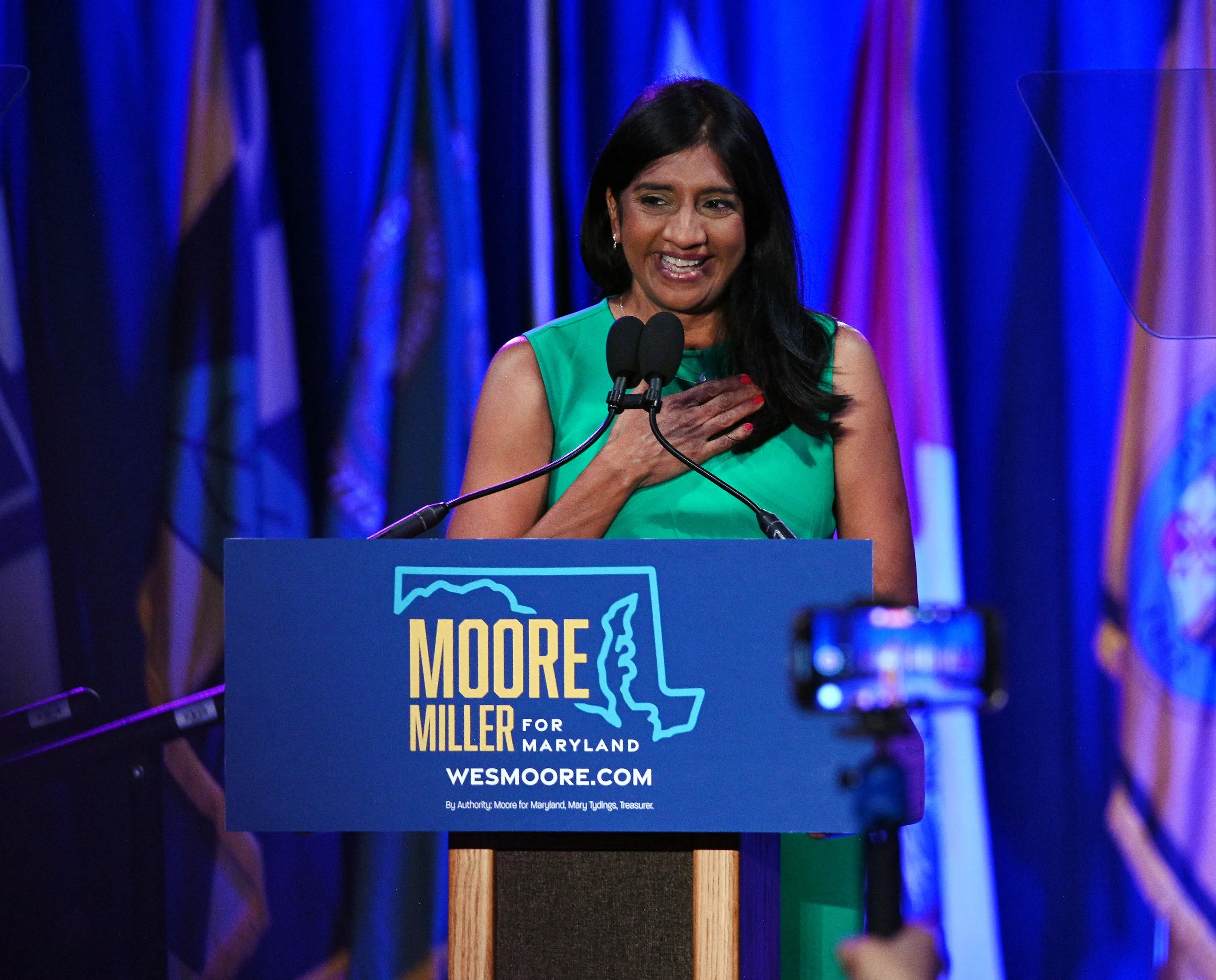


Maryland: Lieutenant Governor Aruna Miller has raised concerns over growing anxiety among immigrant communities in the United States ahead of the November 3 midterm elections, saying families fear attacks on their children, homes and places of worship.
The Indian-American leader said the concerns extended beyond people of Indian origin, with immigrant families from different backgrounds worried about their safety amid rising anti-immigrant sentiment.
Miller said parents were concerned about their children’s security and feared that temples, gurdwaras, mosques and community centres could become targets.
“They’re telling me, you know, these immigrants are telling us they’re scared. Parents are worried for their kids. Families are worried about their temples, their gurudwaras, their mosques, you know being attacked. And it is happening,” she said.
She blamed the rhetoric of the federal administration for contributing to an environment in which immigrants increasingly felt targeted.
“This federal administration has cast a wide net in denigrating immigrants,” Miller said.
The lieutenant governor also highlighted the economic contribution of immigrant communities, arguing that they have helped build the country through businesses, employment generation and participation in local communities.
“I know this because I came here as an immigrant to this country, and I know the great opportunities that are available for people that are willing to work hard, that care about their communities,” she said.
Her remarks come as immigration, household costs and the performance of the federal administration remain important issues in the run-up to the midterm elections.
Maryland doubles security funding for places of worship
Miller said the Democratic administration of Governor Wes Moore had taken steps to protect immigrant communities and strengthen security at religious institutions and community centres.
One of the measures she highlighted was doubling funding for the protection of places of worship and community facilities against potential attacks.
“We’ve actually doubled funding to protect houses of worship and community centers from our crosser state, you know, against being attacked,” she said.
Miller also referred to Maryland’s restrictions on local police entering into agreements under Section 287(g) of the Immigration and Nationality Act with Immigration and Customs Enforcement (ICE).
These agreements allow designated local law enforcement agencies to perform certain federal immigration enforcement functions under ICE supervision. Maryland’s policy is intended to limit the involvement of local police in federal immigration enforcement.
The state has also established an immigration affairs office to help immigrants understand and access available government services.
Miller said more than one in six Maryland residents were born outside the United States, making immigrant communities an important part of the state’s population and social fabric.
She described Maryland as the most diverse state in the Mid-Atlantic region and said the administration had sought to reflect that diversity in government.
“Governor Moore and I built a government that looks like the state of Maryland, and we’re unapologetic about it, and we are unapologetic about standing up to hate,” she said.
Aruna Miller identifies affordability as a major election concern
Apart from immigration, Miller identified the rising cost of living as one of the biggest concerns among voters ahead of the midterm elections.
She pointed to higher grocery bills, fuel prices and household energy expenses, saying families were struggling to manage everyday costs.
The lieutenant governor also said Maryland had lost more than 31,000 federal jobs since January 2025. She claimed the state had experienced the highest number of federal job losses in the country.
Miller argued that the effects of job cuts extended beyond employees who directly lost their positions. Businesses that depend on federal workers for customers and income could also face financial pressure.
“When a family loses a paycheck, every bill gets harder to pay. And that’s just the beginning. It hits the contractors, the diners that they would normally visit, the small businesses that they go to. Everybody feels that impact,” she said.
Her comments reflect concerns about the wider economic consequences of federal workforce reductions, particularly in Maryland, where government agencies and contractors form an important part of the employment landscape.
Miller criticises Trump administration’s tariffs and fuel costs
Miller also criticised tariffs imposed by the administration of President Donald Trump, arguing that the additional costs were ultimately borne by American consumers.
She said tariffs should not be viewed simply as charges imposed on foreign countries because businesses often pass the increased costs of imported goods and materials on to customers.
“Tariff isn’t just a fee on some other country. It’s a tax on the American people,” she said.
The lieutenant governor also linked rising petrol and diesel prices to the US war with Iran. She said petrol prices had increased from below $3 per gallon to nearly $5 per gallon, while diesel costs had risen by 70 per cent.
Higher fuel prices, she argued, could have consequences well beyond transport. Businesses face increased costs when moving goods, while households may eventually pay more for groceries and home heating.
Fuel price increases can affect several parts of the supply chain, particularly agriculture, manufacturing and distribution. Miller said these pressures were adding to the financial difficulties already faced by families.
Her remarks placed affordability at the centre of the Democratic administration’s election message, alongside its criticism of federal immigration and economic policies.
What Democrats promise if they win control of Congress
Asked what a Democratic majority in both chambers of Congress could mean for Americans, Miller said the party would focus on stronger oversight of the Trump administration.
She argued that Congress should hold the federal government accountable for its decisions, particularly those involving immigration enforcement and cuts to public assistance programmes.
Miller specifically referred to ICE operations and changes affecting programmes such as the Supplemental Nutrition Assistance Program (SNAP) and Medicaid.
“Our hope is that the Democratic majority will bring a Congress that exercises meaningful oversight and holds this administration accountable, right? That’s our firewall against this administration,” she said.
SNAP provides food assistance to eligible low-income households, while Medicaid offers health coverage to eligible people with limited incomes and certain other groups.
Miller suggested that congressional oversight would be important in examining the effects of federal decisions on vulnerable families and communities.
She also appealed to independent voters to consider whether they felt represented by the current administration and whether economic conditions allowed them and their families to thrive.
The remarks underline how Democrats are seeking to connect concerns over immigration enforcement with the everyday financial pressures facing American households.
Maryland highlights measures to ease household expenses
Miller said the Moore administration had introduced several measures aimed at reducing the financial burden on Maryland residents.
These include direct energy rebates intended to help households manage utility expenses, initiatives to increase clean energy supplies and temporary relief from state fuel taxes for farmers purchasing diesel.
She also said Maryland had banned dynamic pricing in retail grocery stores.
Dynamic pricing refers to changing prices based on factors such as demand, time or other market conditions. The policy cited by Miller is intended to prevent grocery retailers from using such pricing practices.
The lieutenant governor said the state was attempting to provide relief through a combination of consumer protections and financial assistance.
“We are doing everything that we can to make sure that we provide relief to the pain that they’re feeling,” she said.
The measures form part of the administration’s wider argument that state governments can take action to cushion residents from economic pressures even when broader national policies remain outside their control.
Immigrant safety and cost of living shape midterm debate
Miller’s comments bring together two issues likely to influence political discussions around the November 3 elections: the treatment of immigrant communities and the rising cost of living.
Her warning about fears among immigrant families highlights concerns over safety and the protection of religious institutions. At the same time, her criticism of federal job cuts, tariffs and fuel prices reflects the economic arguments Democrats are making against the Trump administration.
For Maryland, the debate also has a local dimension, with the Moore administration highlighting its security funding, immigration policies and household relief measures.
Whether Democrats can translate these concerns into electoral gains will depend on how voters assess the federal government’s record and the alternatives offered by their candidates. Miller’s appeal to independent voters suggests that the contest is not only about party loyalty but also about whether households feel secure, financially stable and represented.