







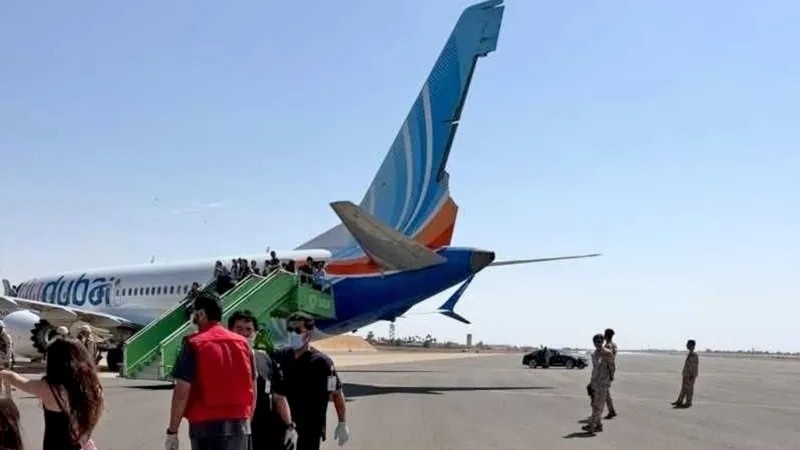


Canberra: Australian authorities are investigating the links between Australia and the Flydubai co-pilot accused of attacking the captain and attempting to take control of a passenger aircraft bound for Israel.
The Australian Federal Police (AFP) confirmed that it is examining the man’s links to Australia as part of an investigation being conducted by the Victorian Joint Counter Terrorism Team, which includes the AFP, Victoria Police and the Australian Security Intelligence Organisation (ASIO). Authorities have not disclosed the co-pilot’s identity, although Reuters and other international media have identified him as Hammam al-Hammami, an Omani national.
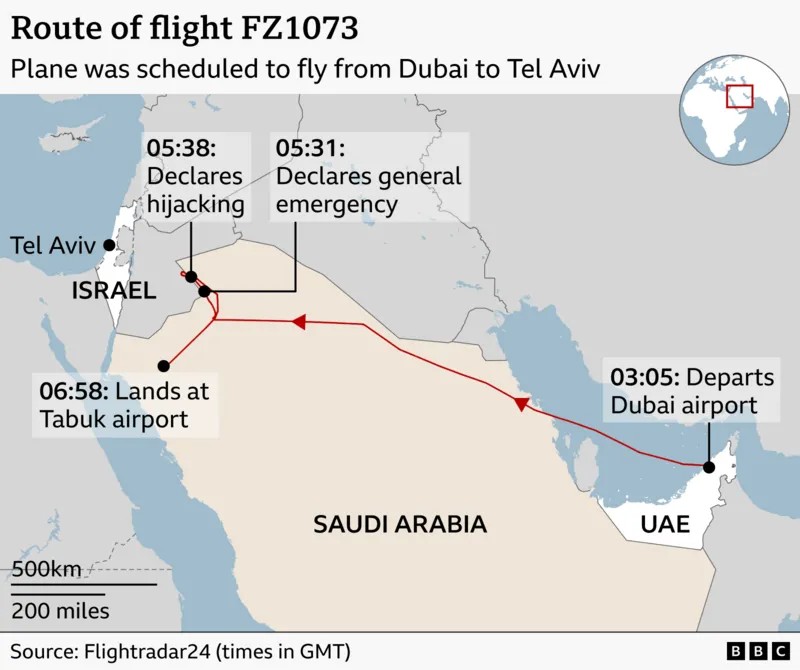
The investigation comes days after Flydubai flight FZ1073, travelling from Dubai to Tel Aviv, was forced to make an emergency landing in Saudi Arabia after the co-pilot allegedly attacked the captain in the cockpit and attempted to take control of the aircraft.
The United Arab Emirates has since said its investigation found that the co-pilot attempted to carry out a terrorist attack. UAE authorities are investigating the circumstances, possible motives and whether anyone else was involved.
Australian authorities investigate co-pilot’s background
The AFP confirmed that its investigation is focused on the man’s links to Australia.
According to Australia’s ABC, sources familiar with the matter said the co-pilot was granted an Australian student visa in 2014 and studied in the country between 2015 and 2017 before leaving.
His student visa was cancelled in 2019 after he was no longer enrolled in a course. ABC reported that the cancellation was not understood to have been based on character grounds, but on his ineligibility to continue holding a student visa after ceasing his studies.
The Victorian Joint Counter Terrorism Team is examining whether the man was radicalised while he was in Australia, according to ABC. That remains an area of investigation and has not been established as a finding.
Australian authorities have said further information will be released at an appropriate time.
Flydubai flight plunged thousands of feet
The incident took place on September 30 aboard Flydubai flight FZ1073, which was travelling from Dubai to Tel Aviv with 174 people on board, according to ABC.
The aircraft experienced a dramatic loss of altitude during the incident. The UAE prosecutor general said the co-pilot attacked the captain with a crash axe and attempted to take control of the aircraft. Reuters reported that the plane plunged more than 16,000 feet during the episode.
Earlier reports from Israeli authorities described the attack as involving a stabbing, while subsequent UAE reporting referred to the use of a crash axe. Investigations are continuing to establish the precise sequence of events.
The injured captain, identified as Indian national Smit Machchhar, was eventually able to open the cockpit door. Passengers and crew then intervened and overpowered the co-pilot.
Two off-duty pilots who were travelling on the aircraft subsequently helped land the plane safely at Tabuk in north-western Saudi Arabia.
Passengers helped prevent a potential disaster
The actions of passengers and crew became a central part of accounts of the incident.
According to statements reported after the emergency, passengers entered the cockpit after the captain managed to open the door. They restrained the co-pilot and helped prevent him from maintaining control of the aircraft.
Israeli Prime Minister Benjamin Netanyahu praised the passengers and described their intervention as having prevented a major disaster. The aircraft was carrying a large number of Israeli passengers travelling to Tel Aviv.
The captain was injured during the confrontation and was subsequently taken for medical treatment. ABC reported that Machchhar had worked for Flydubai for about four years and had previously spent 11 years with Indian airline SpiceJet, where he served as a senior commander and line training captain.
The aircraft itself was able to land safely after the emergency and passengers were subsequently able to continue their journey.
UAE investigates possible terrorist motive
The UAE has taken the lead in the investigation into the incident.
UAE Attorney General Hamad Saif Al Shamsi said investigations were being conducted to establish the circumstances and motives behind the attack and to determine whether it was linked to terrorist activity, prior planning or direction from others. UAE state media reported that investigators had concluded the co-pilot attempted to carry out a terrorist act.
The identification of a possible motive remains important because authorities are also examining whether the co-pilot acted alone.
Netanyahu has alleged that the co-pilot had undergone Islamist radicalisation and was suicidal. Those claims have not been independently established, and the broader investigation into the motive remains ongoing.
Australian authorities are separately examining whether anything in the man’s history in Australia is relevant to the incident.
Reports raise questions about earlier flight training
Additional details have emerged about al-Hammami’s professional and educational background.
According to reports cited by ABC and Reuters, he had previously worked for Oman Air. US media reports said he had been removed from flight training because of concerns about extremist views and was subsequently assigned another role at the airline. These reports have not been independently verified by Reuters in full.
He also studied through a distance-learning programme run by Buckinghamshire New University in the United Kingdom from 2020. The university said he graduated with a degree in aviation management in 2023 and did not undertake pilot training at the institution.
These details are now being examined alongside his employment history, education and time spent in different countries.
Investigation extends across several countries
The incident has prompted investigations involving authorities in several countries.
The UAE is leading the main investigation because the flight originated in Dubai and was operated by Flydubai. Saudi authorities became involved after the aircraft made its emergency landing at Tabuk and the co-pilot was detained there.
Israel is also examining the incident because the flight was bound for Tel Aviv and most of the passengers were Israeli nationals. Australian authorities are now examining the co-pilot’s connections to Australia, particularly his time in the country as a student.
The international nature of the investigation means authorities are likely to examine the man’s travel, education, employment, communications and movements across multiple jurisdictions.
Questions remain over possible radicalisation
The Australian investigation is particularly focused on whether the co-pilot’s time in the country has any relevance to the events aboard the Flydubai flight.
The fact that he studied in Australia does not by itself establish that radicalisation occurred there. ABC has reported that counter-terrorism investigators will examine that possibility, but there has been no public finding that the alleged attack was planned or inspired during his time in Australia.
Similarly, reports concerning his earlier employment and alleged extremist views remain part of the wider information being examined rather than established conclusions about his motive.
Authorities are expected to compare information from Australia, the UAE, Saudi Arabia, Oman and other countries as they work to establish a complete account of the incident.
Flydubai investigation continues
Flydubai has said authorities are conducting an official investigation and that the airline is supporting the process. Its chief executive, Ghaith Al Ghaith, said it was important to allow investigators to establish the facts surrounding what he described as a serious cockpit safety incident.
The incident has raised broader questions about cockpit security, pilot screening and how an individual accused of attempting to seize control of an aircraft was able to carry out the attack.
For now, however, the central investigations remain focused on establishing what happened inside the cockpit, the co-pilot’s motive and whether anyone else was involved.
The Australian inquiry adds another dimension by examining his time in the country and whether there are any relevant links or activities that could assist investigators.
Until those investigations are completed, claims about where or when the co-pilot may have been radicalised, and whether others directed or assisted him, remain unconfirmed.