







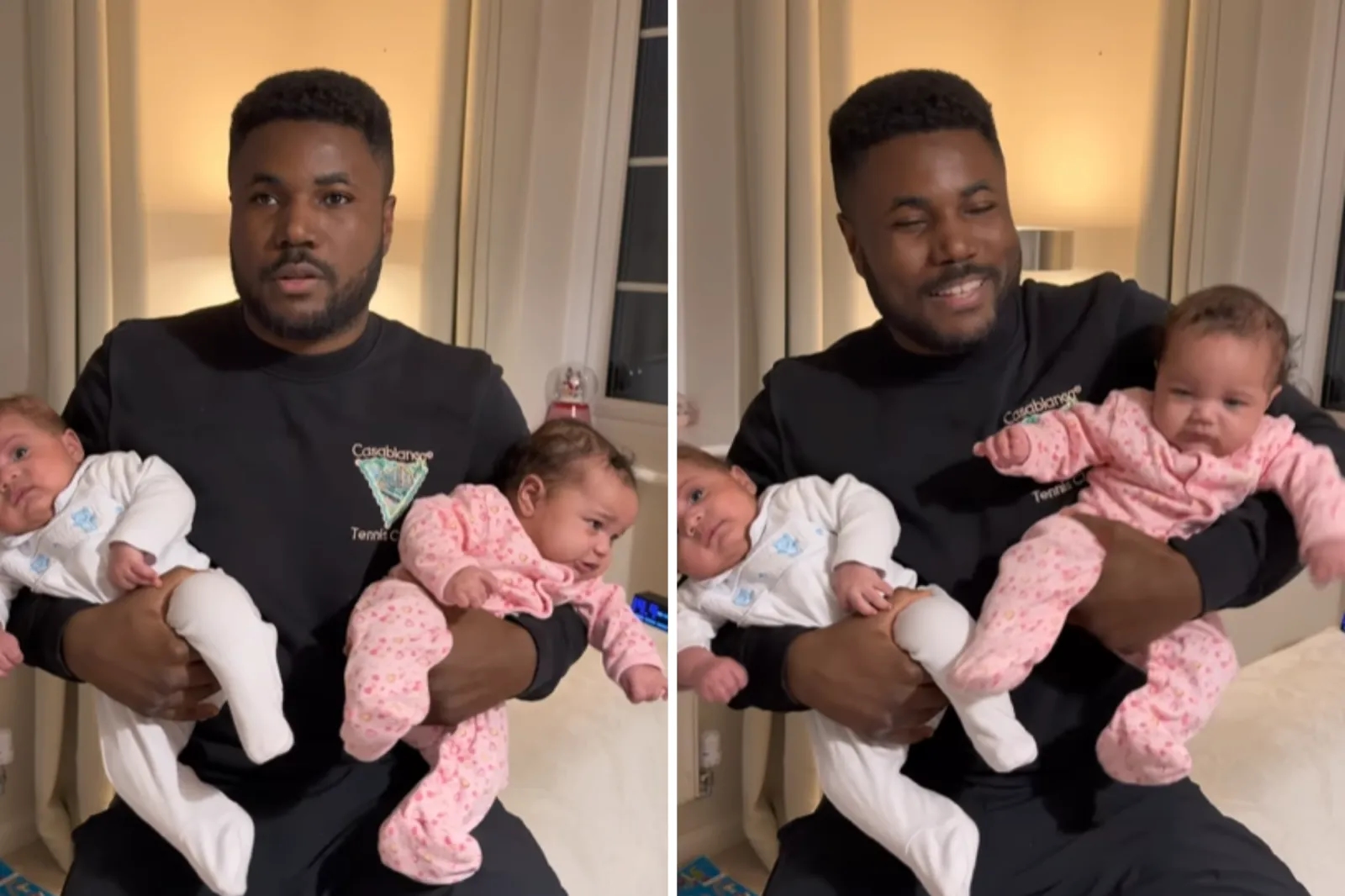


A blind father from the United Kingdom has captured hearts online after explaining how he can easily tell the difference between his three-month-old twin sons — gently challenging assumptions about disability and parenting.
Souleyman Bah, who shares his journey on social media as Souleyman Bah, recently addressed a question he says he is often asked: how a blind parent can distinguish between twins. His calm, thoughtful response has drawn widespread admiration for its honesty and emotional depth.
Parenting beyond sight
In a short video, Bah explained that parenting is not limited to what one can see. From the earliest days, he noticed that each of his sons, Angelo and Nemaya, had a distinct cry. One cried in a higher, quicker pitch, while the other’s cry was longer and deeper. These early cues became his first guide.
As the weeks passed, more differences emerged. Their hair textures varied, their body sizes changed subtly, and their temperaments became clearer — one calmer and more settled, the other expressive and vocal.
Learning through touch and closeness
Bah shared that even the way his sons breathe while sleeping, or how their bodies relax when held, helps him identify them. “You don’t need sight to know who someone is,” he said, adding that connection, touch and attention reveal far more than appearance.
He also relies on practical routines, keeping a consistent “mental map” of where each child is placed, ensuring safety and familiarity through habit rather than chance.
Challenging stereotypes
While many viewers expressed amazement, Bah used the moment to address a deeper issue. He said blindness is often mistaken for helplessness, when in reality it fosters adaptability, problem-solving and heightened awareness.
“We don’t parent despite our disability — we parent with it,” he explained, noting that his children will grow up seeing resilience and independence modelled daily.
A message that resonated
The video has resonated with parents and non-parents alike, offering a powerful reminder that caregiving is rooted in love, intuition and presence — not eyesight.