







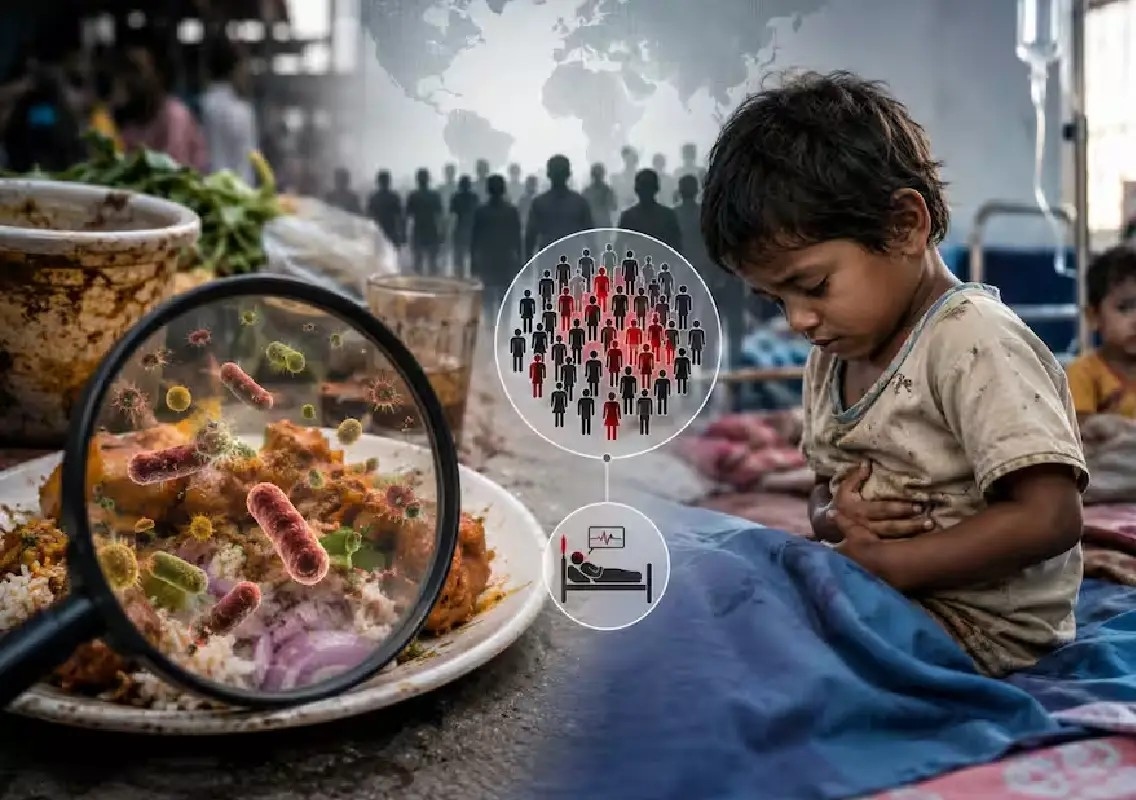


Children under the age of five are nearly three times more likely to suffer from illnesses caused by unsafe food than older children and adults, according to new estimates released by the World Health Organization (WHO) ahead of World Food Safety Day.
Although young children make up just 9 per cent of the global population, they account for almost one-third of all foodborne disease cases worldwide, highlighting the disproportionate impact of contaminated food on vulnerable groups.
Unsafe food causes 866 million illnesses annually
WHO estimates that unsafe food leads to approximately 866 million illnesses and 1.5 million deaths every year across the world.
Foodborne diseases are primarily caused by bacteria, viruses, parasites and harmful chemicals present in food. Diarrhoeal diseases remain among the most common and dangerous consequences, particularly for young children.
The report also warns that exposure to toxic substances such as lead, methylmercury and inorganic arsenic through food can cause long-term health problems, including developmental disorders, brain damage, cardiovascular disease and cancer.
Africa and South-East Asia most affected
According to the findings, Africa and South-East Asia continue to bear the highest burden of foodborne diseases, accounting for nearly three-quarters of all illnesses and 60 per cent of related deaths globally.
While biological hazards caused the majority of illnesses, chemical contamination was responsible for 73 per cent of food-related deaths in 2021. Inorganic arsenic and lead were identified as the leading contributors to these fatalities.
The economic impact is equally significant. WHO estimates that foodborne illnesses resulted in nearly US$310 billion in lost productivity in 2021, with the figure rising to US$647 billion when adjusted for purchasing power differences across countries.
World Food Safety Day focus
The findings have been released ahead of World Food Safety Day, observed annually on June 7. This year’s theme, “From burden to solutions – safe food everywhere”, calls for stronger food safety systems, better surveillance and greater collaboration between health, agriculture and environmental sectors.
WHO has urged governments to use the latest data to strengthen food safety policies, improve public awareness and protect vulnerable populations from preventable illnesses.