







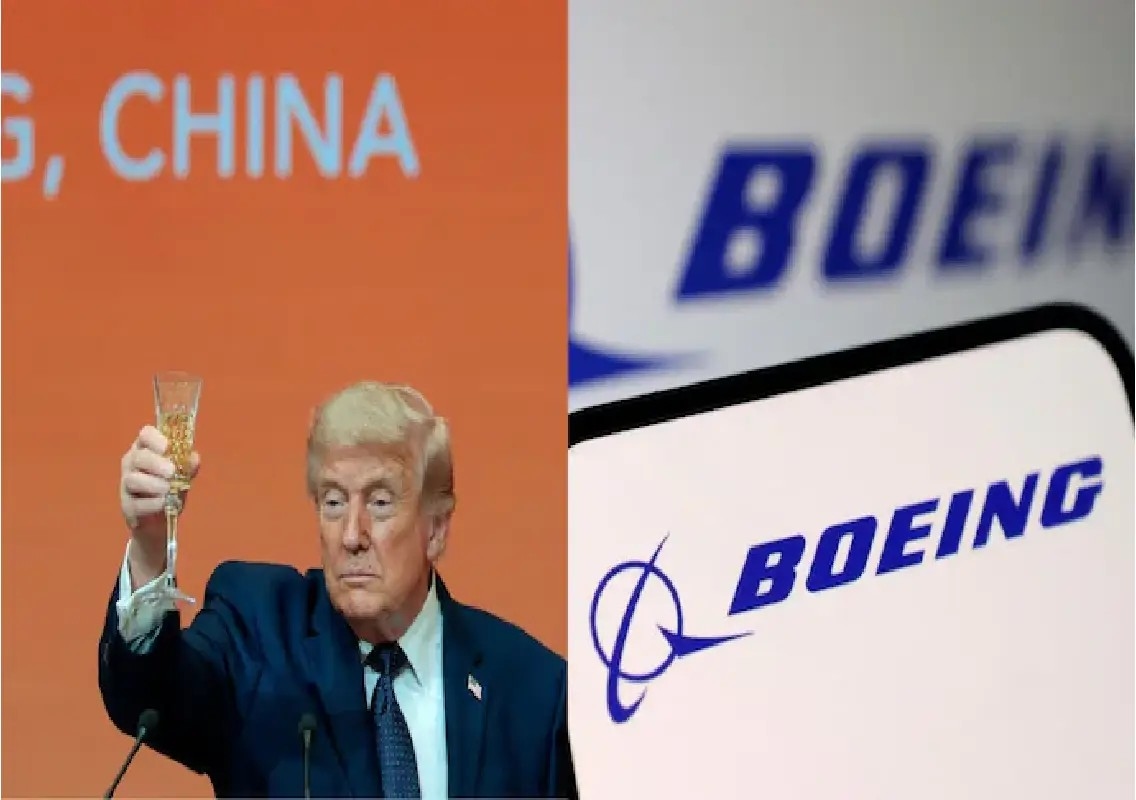


Beijing/Washington: China has agreed to purchase around 200 aircraft from Boeing, with the possibility of the order expanding to as many as 750 planes, according to US President Donald Trump.
Speaking to reporters on Friday, Trump said the agreement also included engines supplied by GE Aerospace, marking a potentially significant breakthrough for American aerospace manufacturers amid improving trade engagement between the United States and China.
Boeing eyes biggest China breakthrough in years
If finalised, the agreement would represent Boeing’s first major aircraft order from China in nearly a decade.
The American aircraft manufacturer had faced major setbacks in the Chinese market in recent years due to rising trade tensions between Washington and Beijing, regulatory disputes and geopolitical friction.
China remains one of the world’s largest aviation markets, and analysts believe any large-scale Boeing order could significantly boost the company’s commercial aircraft business.
Trump stated that the deal currently involved approximately 200 aircraft, with an understanding that the order could eventually increase to around 750 jets depending on future performance and cooperation.
However, detailed information regarding aircraft types, delivery schedules and financial value has not yet been officially disclosed.
Aviation industry closely watching negotiations
Earlier reports had suggested that negotiations were underway for a much larger order ahead of Trump’s summit meeting with Chinese President Xi Jinping.
Sources familiar with discussions reportedly indicated that an order involving roughly 500 aircraft was being explored.
Industry experts noted that if the final agreement exceeds 500 planes, it could become one of the largest commercial aviation deals in global aviation history.
The negotiations gained additional attention because several senior American business leaders accompanied Trump during his China visit.
Among them were Kelly Ortberg and Larry Culp, both of whom were reportedly involved in discussions aimed at strengthening business ties and resolving trade-related concerns.
Boeing shares react to announcement
Financial markets reacted cautiously to the news following Trump’s comments.
Shares of Boeing had reportedly fallen nearly 4 per cent on Thursday after earlier indications suggested that the order size might initially be smaller than analysts expected.
The company’s stock remained under pressure in premarket trading on Friday as investors awaited further clarity regarding the final scope and structure of the agreement.
Analysts said the uncertainty over exact numbers and delivery timelines contributed to the cautious market response.
Despite short-term fluctuations, aviation experts believe securing renewed access to the Chinese market would provide a major long-term advantage for Boeing.
China remains critical aviation market
China’s aviation sector is expected to witness significant growth over the next two decades due to rising domestic travel demand, expanding middle-class populations and increasing international connectivity.
Aircraft manufacturers have long viewed China as one of the most strategically important markets for future growth.
However, Boeing’s presence in China had weakened considerably over the past several years due to trade disputes, geopolitical tensions and safety-related controversies involving aircraft certification.
Its European rival Airbus had meanwhile gained a stronger foothold in the Chinese market during the period.
A major order from China could therefore help Boeing regain competitive ground globally.
Trade and diplomacy linked to business deals
The potential aircraft deal also comes amid broader efforts by both the United States and China to stabilise economic relations after years of tariff disputes and strategic rivalry.
Trump has repeatedly highlighted trade deficit reduction and American manufacturing exports as central objectives of his economic policies.
Observers believe a large Boeing order would provide a symbolic and economic victory for the Trump administration at a time when trade tensions and geopolitical uncertainties continue to affect global markets.
The deal is also being viewed as part of wider efforts by both countries to maintain economic cooperation despite ongoing disagreements over technology, tariffs, Taiwan and international security issues.
Major implications for aerospace industry
If fully implemented, the agreement could significantly benefit the broader American aerospace sector, including suppliers, engine manufacturers and aviation component companies.
The inclusion of GE Aerospace engines would provide additional business opportunities across the aviation supply chain.
Experts believe the final size of the agreement, along with aircraft model distribution, will determine the long-term impact on global aviation manufacturing and airline fleet expansion.
Further announcements and official confirmations are expected after ongoing negotiations and regulatory procedures are completed.