







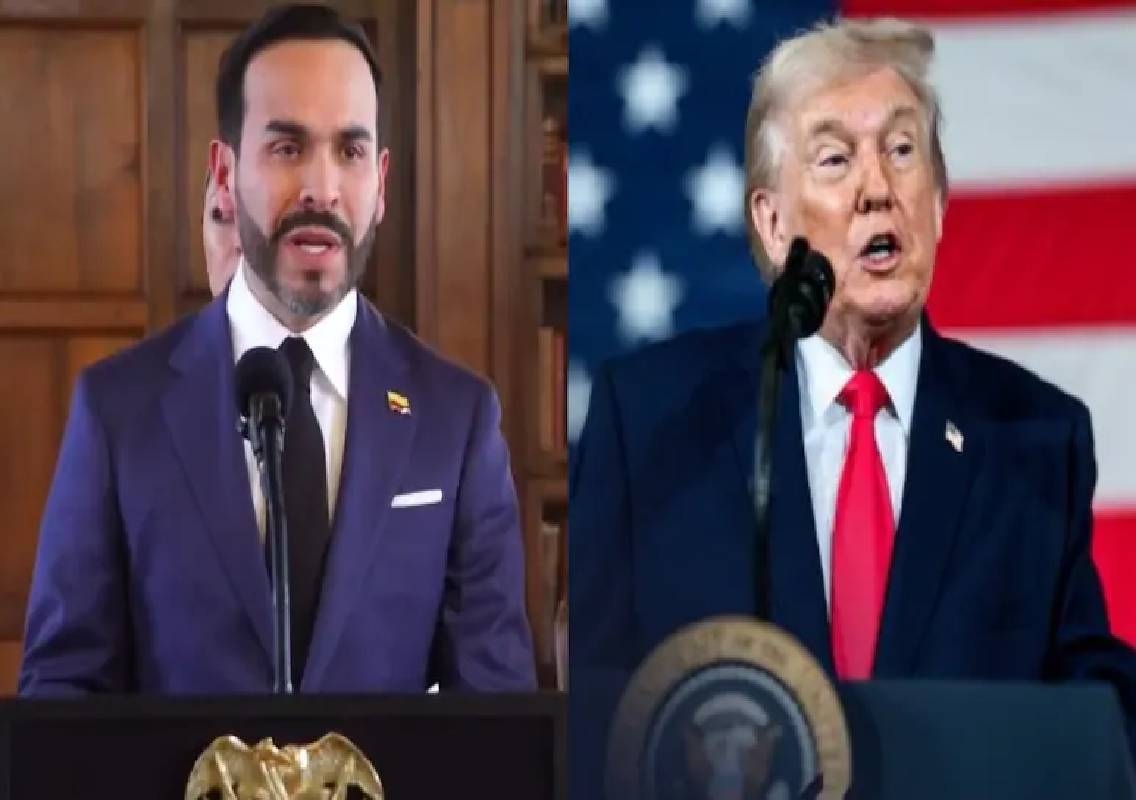


Bogotá: Colombia’s new President Abelardo de la Espriella has urged US President Donald Trump to temporarily suspend tariffs on Colombian goods as the country struggles to recover from a devastating 7.4-magnitude earthquake that has killed nearly 300 people and caused widespread destruction.
The appeal came during a roughly 10-minute telephone conversation between the two leaders. De la Espriella thanked Trump for US assistance following the disaster and asked for tariff relief to help Colombian businesses deal with the economic impact of the earthquake.
De la Espriella asks Trump for tariff relief
De la Espriella said he asked Trump to consider a temporary suspension of the tariffs affecting Colombian products, arguing that businesses were facing extremely difficult conditions following the earthquake.
The Colombian president described the conversation as friendly and cordial. Trump expressed condolences over the deaths and discussed the US response to the disaster.
There was no immediate indication that Trump had agreed to suspend the tariffs.
The request comes at a critical moment for Colombia, with the government facing the enormous task of rebuilding damaged infrastructure, homes and businesses in some of the country’s worst-affected regions.
US tariffs on Colombian goods stand at 12.5%
US tariffs on Colombian products were raised from 10% to 12.5% in late July, with some exceptions, including coffee and oil. The higher rate took effect on July 24.
The Colombian government now wants Washington to temporarily ease the duties so businesses can receive some relief while the country deals with the economic consequences of the earthquake.
The appeal effectively links trade policy with disaster recovery, as Colombia seeks to reduce pressure on companies at a time when reconstruction costs are mounting.
Earthquake killed nearly 300 people
The earthquake struck western Colombia on August 10, with cities including Cali, Pereira and Quibdó among the areas affected.
The magnitude 7.4 earthquake caused widespread structural damage and disrupted infrastructure. Government figures cited in recent reports put the death toll at around 289, while thousands of people have been injured. More than 14,000 homes have reportedly been destroyed and tens of thousands more damaged.
The disaster has been declared a national emergency, with rescue and relief teams continuing operations in affected areas.
More than 140 people remain missing
Rescue efforts have continued even after the crucial first few days following the earthquake.
The Colombian government has reported that more than 140 people remain missing, while officials and rescue workers continue searching damaged areas for survivors.
In Cali, rescue teams have continued working through collapsed structures despite the passage of more than 120 hours since the earthquake.
Officials have stressed that the search will continue in locations where there is a possibility of finding people alive.
US provides $26.5 million in assistance
The United States has already provided $26.5 million in earthquake assistance to Colombia.
The support includes food, emergency shelters and medical supplies, while US personnel have also been involved in disaster-response efforts.
De la Espriella thanked Trump for the assistance during their phone call before making his request for temporary tariff relief.
The Colombian president’s appeal therefore comes as Washington is already supporting the country’s immediate humanitarian response.
Rebuilding will be a major challenge
The earthquake has created a major reconstruction challenge for the Colombian government.
Thousands of homes have been destroyed or damaged, while businesses and infrastructure in several western regions have also suffered significant losses.
The government will need to mobilise funds for housing, roads, public facilities and other infrastructure while providing assistance to affected families.
The economic burden is likely to extend well beyond the immediate rescue operation.
Why tariff suspension could help
A temporary suspension of tariffs could provide some relief to Colombian exporters by reducing the cost burden on goods entering the US market.
For businesses already dealing with earthquake-related disruption, lower trade costs could help preserve cash flow and support the recovery of commercial activity.
The Colombian government’s argument is that the tariff relief would provide breathing room during the reconstruction period rather than represent a permanent change in trade policy.
Whether Washington accepts that argument remains unclear.
Trump and Colombia’s new president
The request also highlights the developing relationship between Trump and de la Espriella.
The Colombian president took office earlier this month and had received Trump’s backing during his presidential campaign. His administration has sought closer ties with Washington after relations between the previous Colombian government and the Trump administration were frequently strained.
De la Espriella has indicated that cooperation with the US will be important for Colombia’s security and economic interests.
The earthquake has now created an opportunity for the two governments to deepen that cooperation through disaster relief and reconstruction.
Colombia faces a huge economic recovery
The earthquake struck one of Colombia’s poorer regions, increasing the difficulty of the recovery process.
The damage has affected homes, businesses and public infrastructure, creating pressure on both government finances and local economies.
The government has been working to deliver emergency assistance while beginning to consider longer-term reconstruction.
Temporary tariff relief could therefore form part of a broader strategy to support businesses and employment while rebuilding affected communities.
No immediate response from Washington
Despite the Colombian president’s appeal, there has been no immediate announcement from the Trump administration confirming a tariff suspension.
The White House will have to decide whether to temporarily alter its trade policy towards Colombia in response to the disaster.
Any such decision could have wider implications because the tariffs were imposed as part of the administration’s broader trade policy towards multiple countries.
For now, Colombia’s request remains under consideration.
Rescue operations continue
Meanwhile, the humanitarian response remains the immediate priority.
Rescue workers continue to clear rubble and search damaged structures, particularly in areas where people are still reported missing.
The authorities are also assessing damage to homes and infrastructure to determine the scale of the reconstruction required.
With the disaster’s death toll approaching 300, the focus is gradually shifting from emergency rescue towards recovery and rebuilding.
A test for Colombia’s new government
The earthquake has become one of the first major challenges for de la Espriella’s new administration.
The president has had to coordinate emergency operations while simultaneously seeking international assistance and economic support.
His decision to appeal directly to Trump for tariff relief shows the importance his government places on the US relationship.
The response to the earthquake, including the handling of reconstruction and negotiations over trade relief, could become an early test of his administration’s economic and diplomatic strategy.
Conclusion
Colombian President Abelardo de la Espriella has asked Donald Trump to temporarily suspend US tariffs on Colombian goods, arguing that businesses need relief as the country deals with the aftermath of a devastating 7.4-magnitude earthquake.
US tariffs on Colombian products currently stand at 12.5%, although some products, including coffee and oil, are exempt. The United States has already committed $26.5 million in earthquake assistance, but Washington has not yet indicated whether it will accept Colombia’s request for a temporary tariff suspension.
With nearly 300 people dead, thousands injured and extensive damage reported across western Colombia, the government faces a long and expensive recovery. For de la Espriella, securing tariff relief could provide businesses with some additional support as the country begins the difficult task of rebuilding.