


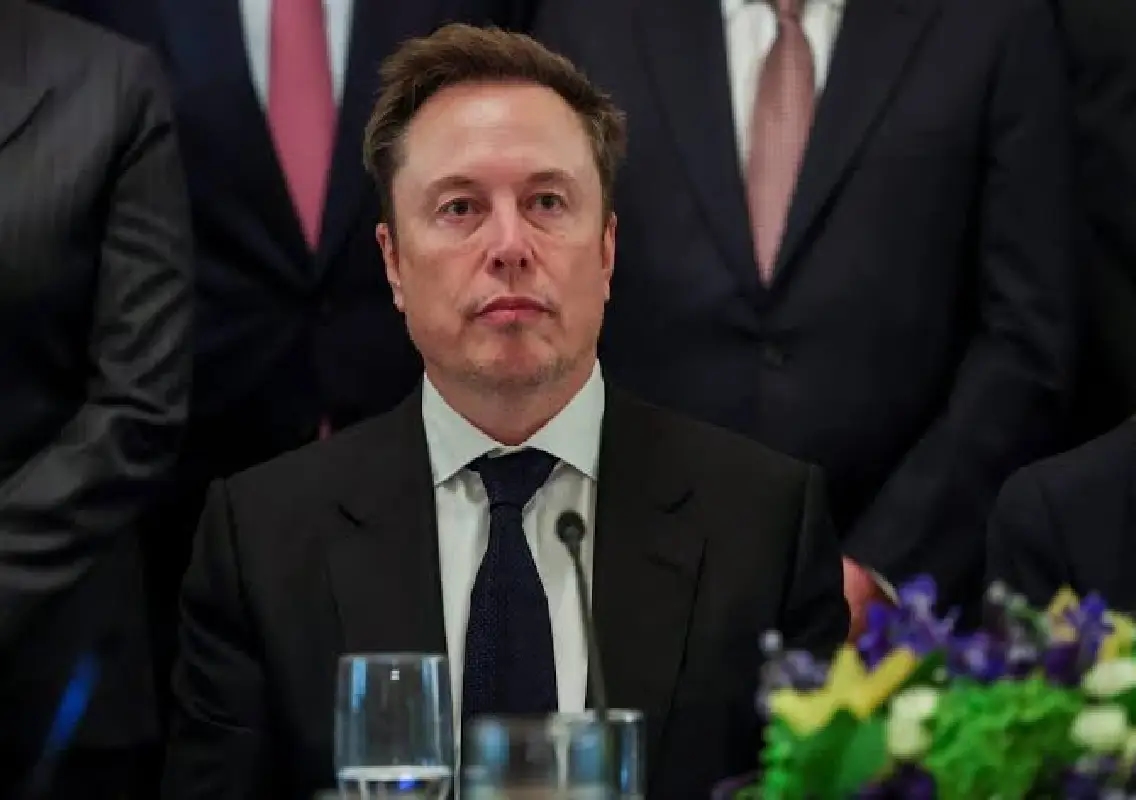


Washington: Billionaire entrepreneur Elon Musk‘s extensive financial backing of Republican candidates failed to prevent a sweeping Democratic victory in the 2026 US mid-term elections, including a historic political shift in Texas, where Democrat Gina Hinojosa defeated incumbent Republican Governor Greg Abbott.
Musk had spent more than $400 million supporting Republican candidates during the mid-term election cycle, making him one of the biggest individual political donors in the country. He also used his social media platform X to urge his more than 240 million followers to vote Republican. However, Democrats secured control of both chambers of Congress and registered major victories in several states. The Washington Post+1
The results have raised questions about the political influence of Musk’s wealth, particularly in Texas, where he has established his personal residence and moved major business operations, including those of Tesla and SpaceX.
Musk’s massive spending fails to deliver Republican victories
Musk’s political involvement in the 2026 elections was substantial. According to a Washington Post report, he spent more than $400 million backing Republican candidates through political action committees and other campaign efforts.
His spending exceeded the roughly $290 million he had directed towards supporting Donald Trump’s 2024 presidential campaign and other Republican candidates. In the 2026 mid-terms, Musk backed Republican efforts in Senate and House contests, including races in Texas and other competitive states. The Washington Post+1
The technology entrepreneur had urged voters to support Republicans on election day, posting “Vote red today!” on X. Despite his campaign activity and financial contributions, the party suffered defeats across several key contests.
The results have highlighted the limits of political spending in determining electoral outcomes, with voters delivering victories to Democratic candidates despite the involvement of wealthy donors and high-profile political figures.
Texas turns against Republicans after three decades
The most significant setback for Musk came in Texas, a state that has become central to his business and personal interests.
Democrat Gina Hinojosa defeated three-term Republican Governor Greg Abbott, ending the Republican Party’s 30-year hold on the governorship. Hinojosa also made history as the first Hispanic person elected governor of Texas. The result marked a major political shift in a state that had not elected a Democrat to statewide office since 1994. Reuters+1
Democrat James Talarico also won the Texas Senate race against Republican Ken Paxton, who had received backing from Trump and Musk-aligned political groups.
Musk had invested heavily in Republican campaigns in the state, where his companies have significant operations. His support for Republican candidates was part of a wider effort to retain the party’s control over Congress and protect the political environment in which his businesses operate.
The Democratic victories in Texas have therefore drawn attention not only to the state’s changing political landscape but also to the potential implications for Musk’s business interests.
Musk warns Democrats over possible investigations
The election results come amid concerns among Musk’s supporters about the prospect of congressional investigations into his business empire if Democrats regained control of the House.
Before the elections, Musk had reacted to a report titled ‘Capitol Agenda: Dem Gavels Are Coming for Elon Musk’ on X. The report discussed the possibility of Democratic lawmakers launching investigations into his companies and their dealings with the federal government.
Responding to it, Musk posted: “Live by the sword, die by the sword. Those who pick fights with me should understand that I will find out who is really pulling the strings and come for them, not just their puppets…”
His remarks reflected his opposition to the prospect of increased congressional scrutiny. Democratic lawmakers have previously raised questions about several aspects of his business and government involvement.
These include his role in the Department of Government Efficiency (DOGE) during the Trump administration, federal workforce reductions, government contracts and subsidies received by his companies, and the controversy surrounding restrictions on Ukraine’s access to Starlink satellite communications.
Democrats signal closer scrutiny of Musk’s companies
Following the Democratic victories, incoming House Oversight Committee chair Robert Garcia issued a warning directed at Trump, his family and members of his administration, saying: “Lawyer up.”
The House Oversight Committee is one of Congress’s principal investigative bodies. It can seek official documents, call witnesses to testify and issue subpoenas as part of its oversight responsibilities.
Democratic lawmakers have indicated that they intend to examine the relationship between Musk’s companies and the federal government, including contracts, subsidies and decisions taken during his time in the Trump administration.
Any investigations would depend on the committee’s priorities and the evidence examined. A change in congressional control does not, by itself, establish wrongdoing by Musk or his companies.
Business implications for Tesla and SpaceX
The election outcome has also drawn attention to the potential business implications for Musk’s companies, particularly SpaceX and Tesla.
SpaceX has substantial interests in government contracts and the development of satellite and space-based infrastructure. Greater scrutiny of federal agreements and regulatory decisions could affect the company’s dealings with government agencies.
The approval of large data centre and infrastructure projects has also emerged as an area of interest, given the growing importance of computing capacity to the technology and artificial intelligence industries.
Tesla, meanwhile, operates in a business environment influenced by government policies on electric vehicles, manufacturing and energy. Changes in federal and state political leadership could affect the regulatory and policy landscape in which the company operates.
The immediate market reaction was also negative, with reports indicating that Tesla and SpaceX shares declined in pre-market trading following the election results. However, short-term share movements do not establish the longer-term impact of the political changes on either company.
Musk’s substantial election spending, the Republican defeats in Texas and other states, and the prospect of congressional scrutiny have placed his political involvement under renewed attention. The results underline the limits of even large-scale campaign funding and leave questions about how the incoming Democratic-controlled Congress will approach oversight of his business interests.