







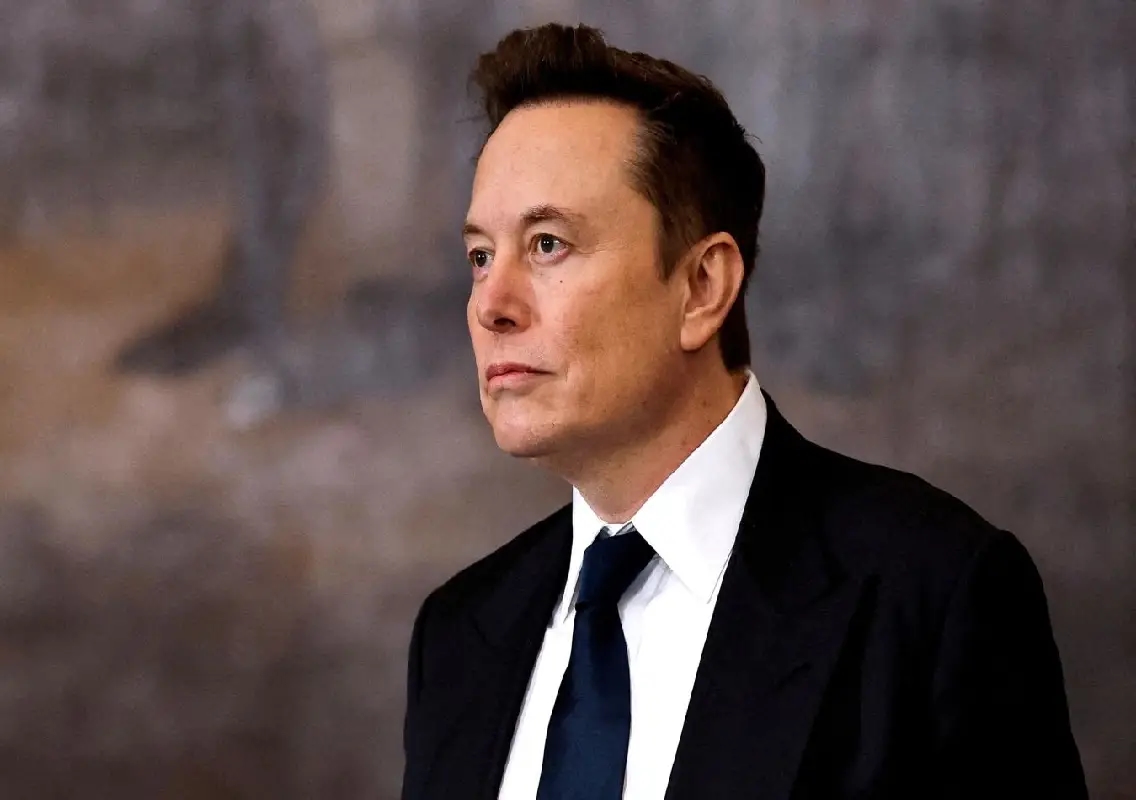


Billionaire entrepreneur Elon Musk, currently ranked the world’s richest person, has said that nearly all of his massive net worth is tied to company ownership rather than liquid cash. According to the latest estimates from Forbes, Musk’s net worth stands at about $849.3 billion, putting him well ahead of other global billionaires and fuelling speculation that he could become the world’s first trillionaire if current valuations hold.
In a recent post on social platform X, Musk clarified that his fortune is largely composed of equity stakes in his companies and not cash reserves. He stated that less than 0.1 per cent of his total net worth is held as cash, countering common assumptions that such wealth is readily spendable.
Wealth linked to Tesla and SpaceX holdings
Musk explained that the bulk of his net worth comes from his ownership stakes in Tesla and SpaceX. Market valuations of these firms — along with related entities — account for most of the surge in his personal fortune over the past year.
He noted that net worth calculations are based on prevailing share prices and private market valuations, which can change sharply depending on investor sentiment and business performance. That makes such wealth largely “paper wealth”, not money sitting in bank accounts.
Musk also highlighted that value creation at his companies is not limited to founders and top executives. He pointed out that employees at Tesla and SpaceX receive stock and stock options as part of their compensation, linking their financial gains to company performance.
Employees and retail investors also benefit
In his statement, Musk stressed that a large share of ownership in Tesla is spread across retail investors and institutional funds. He said more than 80 per cent of Tesla’s shares are held by retail investors and index or pension funds, meaning gains in valuation benefit a broad investor base.
He added that employee stock options at both companies ensure that workers also participate in value appreciation. This, he argued, spreads the financial upside beyond a small leadership circle and into the wider investing and employee community.
Such stock-heavy compensation structures are common in high-growth technology and innovation-led firms, where companies prefer to conserve cash while rewarding employees through long-term equity participation.
SpaceX–xAI deal boosts valuation
A major recent jump in Musk’s estimated wealth is linked to a deal involving SpaceX and artificial intelligence venture xAI, where SpaceX acquired xAI in a transaction that reportedly valued the combined entity at around $1.25 trillion.
Following this deal, estimates suggest Musk’s net worth rose by roughly $84 billion in a short span, pushing his total fortune to record territory. SpaceX is now considered his single most valuable asset based on private market valuations.
Reports indicate Musk owns roughly 43 per cent of the combined SpaceX–xAI entity, with that stake alone valued at more than $540 billion. In addition, he holds about 12 per cent of Tesla, valued near $178 billion, along with Tesla stock options estimated at about $124 billion.
Performance pay could add more upside
Apart from his current holdings, Musk is also eligible for large performance-based stock packages tied to long-term milestones at Tesla. If those aggressive operational and market-cap targets are met, additional shares could vest in future, potentially lifting his net worth further.
However, such compensation depends on strict benchmarks and market performance, and is neither guaranteed nor immediately liquid. Financial analysts caution that headline net worth figures do not equal readily available spending power.
Trillionaire possibility depends on markets
Market watchers suggest that if Tesla’s share price continues to climb and SpaceX eventually moves toward a public listing, Musk’s net worth could cross the $1 trillion mark. That would make him the first individual in history to reach trillionaire status on paper.
At the same time, equity-driven fortunes can be volatile. A correction in technology stocks or a shift in private market valuations could reduce net worth estimates just as quickly as they rise.
Conclusion
Musk’s remarks underline a key distinction between net worth and cash wealth. While headline numbers place him close to the trillionaire milestone, the overwhelming majority of his fortune remains tied to company stakes, stock options and long-term valuations — not liquid cash. His financial trajectory will therefore continue to depend largely on how Tesla, SpaceX and xAI perform in the years ahead.