









Kathmandu : An army of engineers working through a WhatsApp group has become an unlikely but crucial source of technical support for rescue teams searching for survivors inside tunnels of hydropower plants devastated by catastrophic flooding in Nepal.
The group, originally created by engineers before the disaster, has grown to more than 500 members. Its participants are now sharing tunnel plans, technical information and knowledge of the affected hydropower projects to help rescue workers determine where missing people could be trapped and how teams can safely reach them.
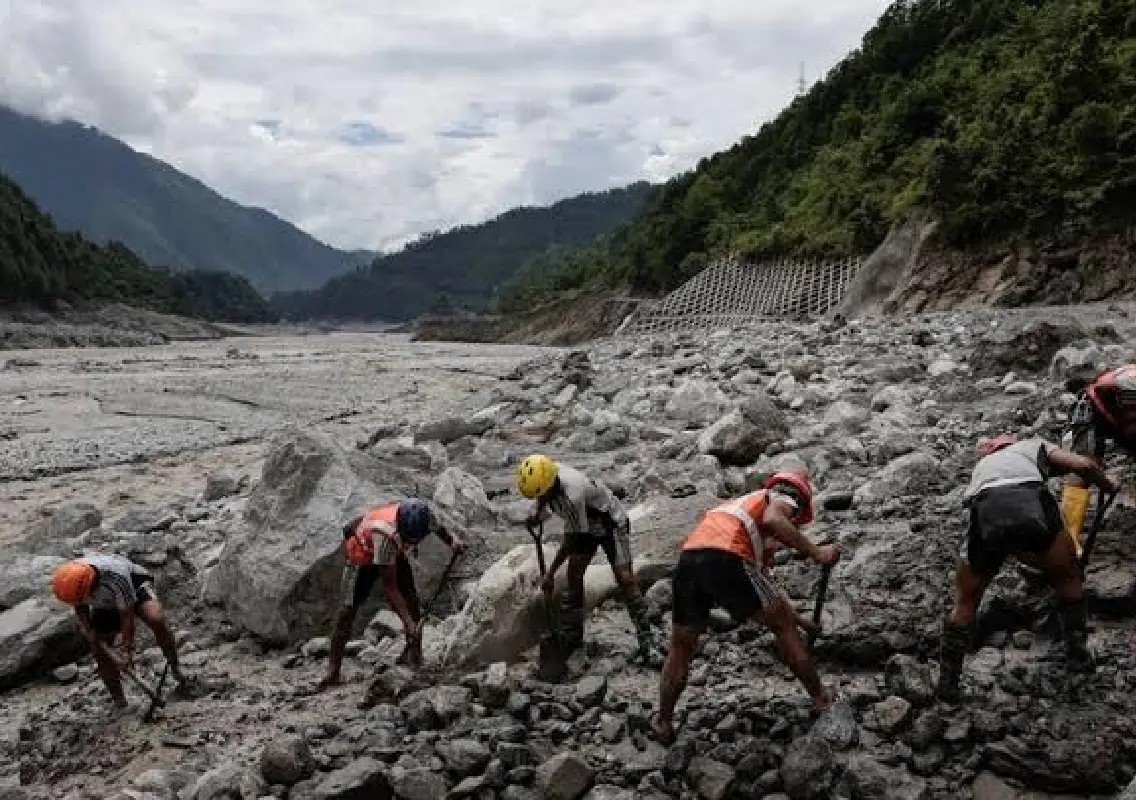
The effort comes as Nepal continues one of its most challenging rescue operations following a massive flash flood that swept through the Trishuli Valley on August 26. The disaster, triggered by a glacier collapse, caused widespread destruction across the mountainous region and severely damaged several hydropower projects.
More than 1,200 people have been killed, while hundreds remain missing. Around 900 workers connected to 12 hydropower projects are also unaccounted for, with many feared to be trapped inside underground tunnels.
Engineers provide vital tunnel information
For rescuers working in unfamiliar and dangerous underground environments, knowing the exact layout of a tunnel can make a crucial difference.
Engineers in the WhatsApp group have been sharing drawings and plans of the affected facilities, along with information about tunnel entrances, internal passages and other structural details. Some members have previously worked at the hydropower plants and are able to provide rescuers with practical knowledge that may not be immediately available at the disaster sites.
The information is being used to help rescue teams decide where to dig, which passages may provide access and where survivors could potentially have taken refuge.
The communication network has allowed technical specialists who are not physically present at the sites to contribute to the rescue effort in real time.
Two workers rescued after nine days
The search gained fresh hope on Friday after two workers were found alive inside a tunnel at the Upper Trishuli 3A hydropower project, nine days after the disaster.
The survivors, identified as Sanjay Shah and Kabir Maharjan, were located deep inside the tunnel and brought out alive by rescue teams. Their rescue provided a powerful reminder that people trapped underground may still have a chance of survival despite the passage of time.
The successful rescue has encouraged teams to continue searching other underground locations where workers may have survived in air pockets or relatively protected sections of tunnels.
Families of missing workers have been waiting anxiously for news, while rescue personnel continue to work through mud, debris and unstable infrastructure.
Massive debris complicates the search
The scale of destruction has made the rescue operation extremely difficult.
About 2.2 million tonnes of mud and debris have been deposited across affected areas, blocking tunnel entrances and making access to underground structures extremely challenging. Roads and other infrastructure have also been damaged, complicating the movement of heavy machinery and rescue equipment.
In several locations, rescuers have had to clear huge quantities of debris before they can even reach tunnel entrances.
The mountainous terrain, damaged roads and continuing risks at the sites have added to the difficulties faced by rescue workers. Teams are using heavy equipment as well as helicopter support in their efforts to reach isolated areas.
Technical knowledge becomes a rescue tool
The WhatsApp group demonstrates how technology can connect specialists with emergency responders during a crisis.
Rather than serving simply as a messaging platform, the group has become a rapidly evolving technical network. Engineers can exchange information, compare tunnel plans and respond to questions from rescue teams working on the ground.
Some members have knowledge of the affected plants from their previous employment, while others contribute specialist engineering expertise.
This collective knowledge can help rescuers make better-informed decisions when visibility is poor and conventional access routes have been destroyed.
For teams working in underground tunnels, even seemingly small pieces of information — such as the location of a passage or the configuration of a section of the tunnel — can help determine the safest approach.
Search continues at other hydropower plants
The Upper Trishuli 3A rescue has strengthened hopes that more workers could still be found alive at other affected sites.
Rescuers are continuing operations at facilities including Rasuwagadhi and Chilime, where workers are believed to remain trapped or missing.
At some locations, the presence of blocked passages and accumulated mud has made it difficult to establish exactly where missing workers may be located. Rescue teams therefore continue to rely on engineering information, structural drawings and knowledge from people familiar with the facilities.
The search is taking place against the backdrop of an enormous humanitarian disaster. The flood destroyed homes, roads, bridges and power infrastructure across parts of Nepal, leaving communities struggling to recover while rescue teams continue searching for missing people.
Hope amid a devastating disaster
The rescue of two workers after nine days has brought a measure of hope to families who have spent more than a week waiting for news.
It has also demonstrated the importance of persistence and technical expertise in complex disaster operations. In a situation where conventional access has been severely disrupted, the engineers’ WhatsApp network is providing rescuers with information that could prove critical in reaching people trapped underground.
The continuing search remains difficult and dangerous, and the fate of many missing workers is still unknown. However, the successful rescue at Upper Trishuli 3A has reinforced the determination of rescue teams to keep searching.
As heavy machinery clears debris and engineers continue analysing tunnel layouts from afar, a simple messaging group has become an important link between technical expertise and frontline rescue work — helping Nepal’s rescuers navigate some of the most challenging conditions of the disaster.