







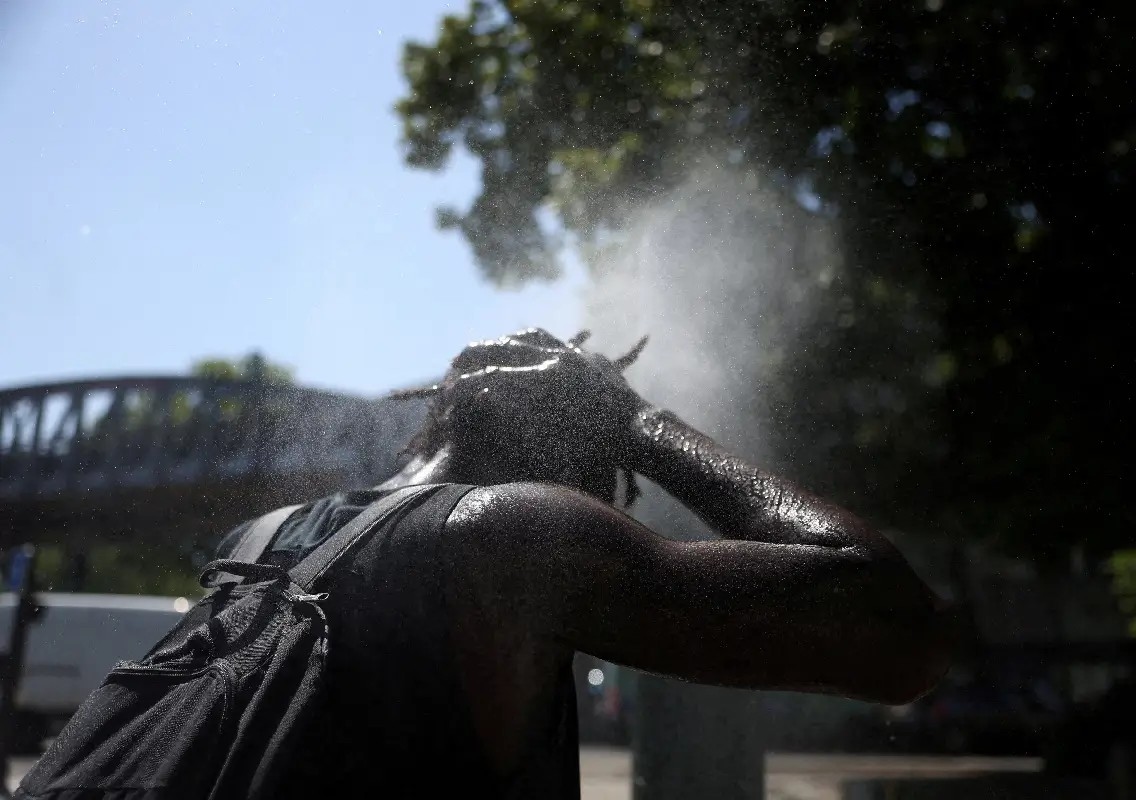


Brussels: More than 10,000 excess deaths were recorded across Europe during the record-breaking heatwave that swept through western parts of the continent in late June, according to official mortality data released by EuroMOMO, a surveillance network supported by the European Centre for Disease Prevention and Control (ECDC) and the World Health Organization (WHO).
The figures highlight the devastating human impact of extreme temperatures, with elderly people bearing the brunt of the crisis.
Elderly account for most deaths
According to EuroMOMO, 10,650 excess deaths were recorded during the week of June 22 to 28, when temperatures peaked across countries including France, Spain and the United Kingdom.
More than 9,000 of those deaths occurred among people aged 65 years and above, making older adults the most vulnerable group during the heatwave.
Experts say extreme heat can lead to heatstroke while also worsening cardiovascular and respiratory illnesses, significantly increasing the risk of death among elderly people and those with underlying health conditions.
Scientists link deaths to extreme heat
Lasse Vestergaard, Chief Physician at Denmark’s Statens Serum Institut, which hosts EuroMOMO, said the unusually high mortality at this time of year was difficult to explain by anything other than the extreme heat.
Scientists have also stated that the late-June heatwave would have been virtually impossible without human-induced climate change, which is making heatwaves more frequent, longer and more intense across Europe.
Researchers noted there were no significant Covid-19 outbreaks or other major public health events during the period that could account for the sharp rise in deaths.
France and Belgium worst affected
While EuroMOMO does not publish country-specific death figures, it reported that France and Belgium experienced “very high excess mortality” during the final week of June.
Belgium’s public health institute, Sciensano, said the country recorded its highest heatwave-related excess mortality since records began in 2000.
The intense heat also disrupted daily life across Europe, forcing school closures, straining electricity supplies and breaking temperature records in several countries.
The latest figures have renewed calls for stronger climate adaptation measures and better protection for vulnerable populations during increasingly frequent extreme weather events.eaking heatwave, with elderly people accounting for most fatalities