


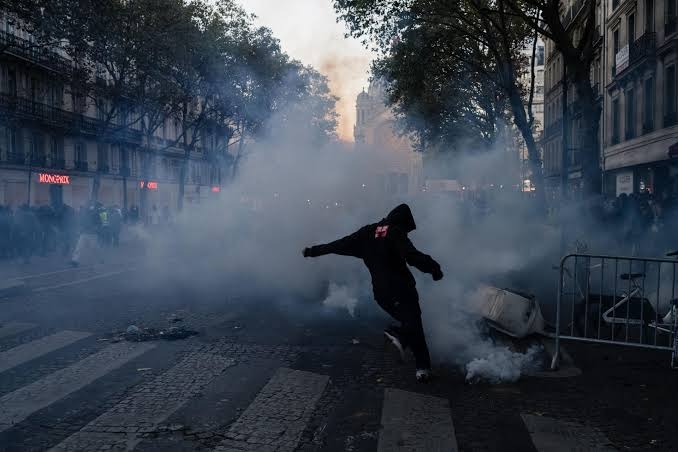


Paris: Young people across Europe have taken to the streets to protest rising living costs, soaring rents, housing insecurity and concerns over education standards, with demonstrations in France, Spain, Portugal and Italy reflecting growing frustration with economic pressures. Some protests have escalated into clashes with police, while demonstrations in Albania have focused on alleged corruption, unemployment and education.
The unrest highlights the mounting difficulties faced by younger generations and low-income households as they struggle to afford housing, manage everyday expenses and access quality public services. Although the demonstrations differ from country to country, protesters share demands for governments to respond more effectively to the challenges affecting their daily lives.
Reports by The Guardian and news agencies have described demonstrations ranging from student-led rallies over school conditions in France to housing protests in Spain and Portugal. In Italy, a march in Milan turned violent, while protesters in Albania continued to challenge the government over corruption allegations and a lack of economic opportunities.
The demonstrations have also placed pressure on national governments to introduce reforms, particularly in housing, education, wages and public spending. However, political disagreements and uncertainty over proposed measures have complicated efforts to ease public anger.
France sees student protests and clashes with police
France has witnessed student demonstrations over long school hours, teacher shortages, deteriorating classroom conditions and concerns about the university admissions system. Some students argue that the admissions process lacks transparency, while shortages of teaching staff have reportedly left pupils without lessons for extended periods.
The education protests have also become part of a broader expression of dissatisfaction with the cost-of-living crisis. Participants and supporting groups have raised demands for better wages, stronger pensions and relief from rising fuel prices.
According to the reports, some schools have struggled to fill vacant teaching positions, leaving pupils without regular instruction. The situation has intensified concerns about unequal access to education and the ability of public institutions to meet students’ needs.
The General Confederation of Labour (CGT), one of France’s major trade unions, has supported calls for higher wages, improved pensions and lower prices. Its involvement has helped connect student concerns with the wider economic grievances of workers and households.
Rising fuel costs have added to the pressure, particularly amid disruption to energy supplies linked to the effective closure of the Strait of Hormuz following US bombing. The disruption has raised concerns about the cost of energy and its wider effect on household budgets.
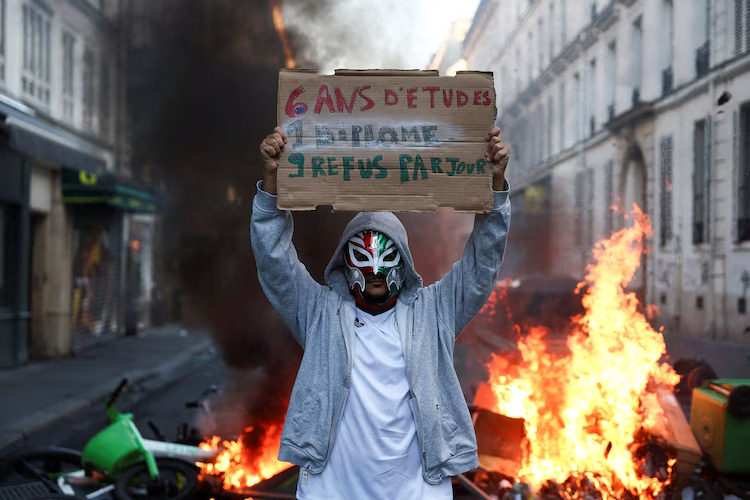
President Emmanuel Macron’s government is facing mounting pressure as the demonstrations broaden beyond education. The unrest has become another challenge for the administration as it approaches the final months of Macron’s second presidential term.
Housing crisis fuels anger in Spain and Portugal
Housing affordability has emerged as one of the most prominent issues driving protests in Spain and Portugal. Rising rents and property prices have made it increasingly difficult for many residents, particularly young people and lower-income families, to secure stable accommodation.
In Spain, housing activists took to the streets in September following the eviction of Maricarmen Abascal, an 87-year-old woman whose rent was reportedly increased by 230% by an investment fund. Abascal died about two weeks after being admitted to hospital, intensifying public debate over housing insecurity and the treatment of vulnerable tenants.
Her case became a focus of wider concerns about the impact of investment funds and property speculation on residential housing. Protesters have called for lower rents, stronger protection for tenants facing eviction and restrictions on investment funds purchasing residential properties.
Housing campaigners argue that accommodation should remain affordable for people who live and work in cities rather than becoming increasingly inaccessible because of investment-driven price increases.
Portugal has faced similar concerns. Hundreds of people gathered in central Lisbon on Saturday to protest against the cost of housing and the difficulties associated with finding affordable accommodation.
Official figures cited in the reports show that Portuguese house prices increased by 124% between 2015 and 2024, roughly twice the European Union average over the same period. The sharp rise has placed pressure on prospective buyers and renters, particularly in areas where demand for housing is high.
The situation across the Iberian Peninsula illustrates how rising property prices can become a wider social and political issue. For many young people, the cost of accommodation affects their ability to live independently, save money and plan for the future.
Milan protests turn violent as household pressures grow
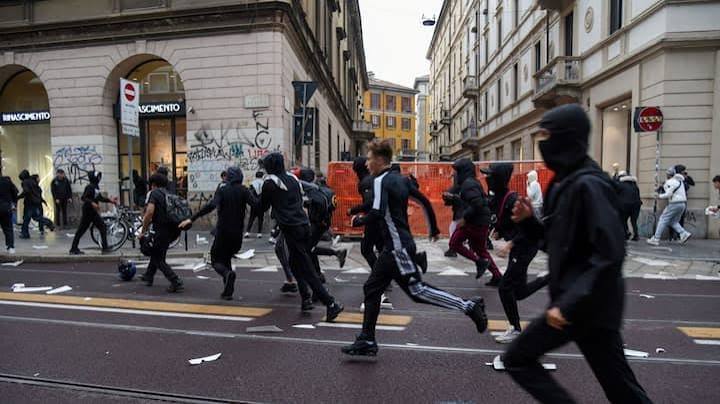
In Italy, demonstrators took to the streets over rising living costs and mounting pressure on household finances. A march in Milan on Saturday began peacefully but later descended into violence.
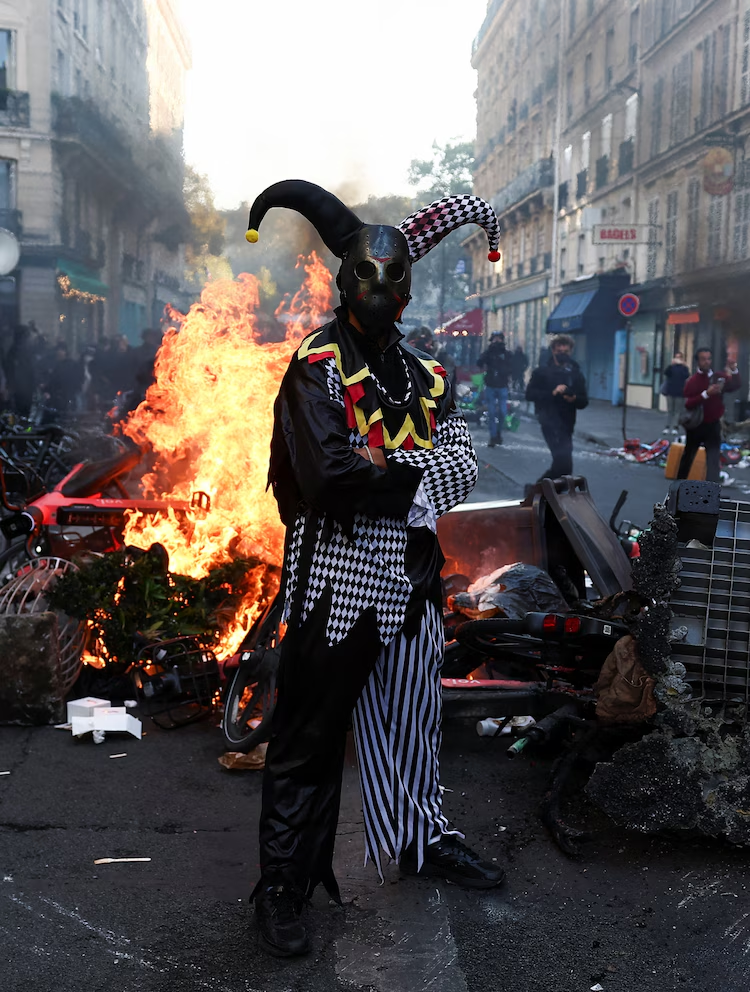
According to reports, masked rioters threw stones, paving blocks and other objects at riot police. Some barricades made from bar tables were also set on fire as the situation deteriorated.
The violence marked a sharp escalation from the economic grievances that had brought demonstrators onto the streets. The incidents also highlighted the challenge authorities face in managing protests when peaceful demonstrations are disrupted by clashes.
Saturday also marked the beginning of cost-of-living protests in Italy, Portugal and Belgium, according to the reports. The demonstrations reflected concerns that housing expenses and everyday costs are placing an increasing burden on households.
While the specific demands vary across countries, affordability remains a common theme. Rising rents, energy expenses and other essential costs have become central to public debate, particularly among younger people who face uncertainty over employment and their ability to establish independent households.
The Milan clashes have added a security dimension to the protests, although the broader demonstrations are centred on economic and social concerns.
Albania protests focus on alleged corruption and unemployment
In Albania, demonstrations against Prime Minister Edi Rama entered their sixth consecutive day on Sunday. Protesters have raised concerns about alleged corruption, limited employment opportunities and poor education standards.
The unrest has been continuing since the summer, with its initial trigger reportedly linked to a luxury coastal development backed by Jared Kushner, the son-in-law of US President Donald Trump.
The development has become a point of contention amid wider questions about government accountability, investment decisions and the distribution of economic benefits.
Protesters have also highlighted the shortage of employment opportunities and concerns about the quality of public education. These issues have contributed to dissatisfaction among people who believe that economic growth and development have not sufficiently addressed their everyday needs.
Unlike demonstrations focused primarily on housing costs elsewhere in Europe, Albania’s protests have placed greater emphasis on political accountability and alleged corruption. However, unemployment and access to quality public services remain common concerns.
The continuing demonstrations underline the pressure facing the Albanian government as protesters demand answers and action on the issues they have raised.
Governments announce measures to ease public anger
The protests have prompted responses from authorities, particularly in France, where education staffing and household expenses have become central concerns.
The French government has announced plans to deploy an additional 3,000 substitute teachers to address staffing shortages. It has also proposed involving students in decisions concerning their schools.
Authorities have withdrawn plans to increase certain university registration fees in next year’s budget, according to the reports. The move represents a response to concerns about the financial barriers facing students.
Earlier demonstrations over fuel prices in mid-September also prompted the Élysée Palace to announce increased petrol subsidies for selected industries.
However, the measures have not eliminated wider dissatisfaction over wages, pensions, public services and household costs. The government continues to face pressure to demonstrate that its response can address both immediate financial concerns and longer-term structural problems.
In Spain, Prime Minister Pedro Sánchez attempted to introduce emergency housing legislation intended to strengthen tenant protections. The proposal was defeated in Congress by right-wing and far-right parties, complicating the government’s efforts to secure further housing reforms.
Following the defeat, Sánchez called an early election for November 29, saying he needed a “broader progressive majority” to pass additional measures.
Both Sánchez’s Socialists and the conservative People’s Party have pledged to increase housing construction and prioritise affordability ahead of the next election. However, their differing approaches and the political divisions in Congress could influence how quickly reforms are implemented.
Political uncertainty complicates the path to calm
Political uncertainty has added another dimension to the unrest in France and Spain.
In France, Macron was scheduled to deliver a televised address on Sunday evening after holding an emergency meeting with key ministers to discuss the demonstrations. Interior Minister Laurent Nunez appeared to signal that the government was unwilling to make further concessions, blaming what he described as “far left” protesters and those responsible for looting and vandalising buildings.
France is due to hold its next presidential election in April 2027, making the government’s handling of the protests politically significant.
In Spain, the future of housing reforms remains uncertain following the defeat of Sánchez’s proposal. The government may still attempt to secure some measures through Congress’s permanent council, a special body that operates when parliament is not in session.
The success of any new measures will depend on political support as well as their ability to deliver practical relief to tenants and prospective homebuyers.
Across Europe, the demonstrations have exposed the gap between government policy and the everyday experiences of people struggling with housing costs, education problems and household expenses.
Cost of living remains a common European concern
The protests in France, Spain, Portugal, Italy and Albania reflect different national circumstances, but they share a common demand for governments to respond to growing economic and social pressures.
For students in France, teacher shortages and school conditions have become key issues. In Spain and Portugal, housing affordability has taken centre stage, while demonstrators in Italy have highlighted the strain of rising living costs. In Albania, allegations of corruption and concerns about employment opportunities have driven continued opposition.
Government announcements and proposed reforms may offer some relief, but their impact will depend on implementation and whether they address the underlying causes of public dissatisfaction.
As demonstrations continue to put pressure on political leaders, housing affordability, access to education, wages and the cost of essential goods are likely to remain major issues in Europe’s public debate. Whether governments can turn their commitments into meaningful improvements will be crucial to restoring public confidence and easing the unrest.