







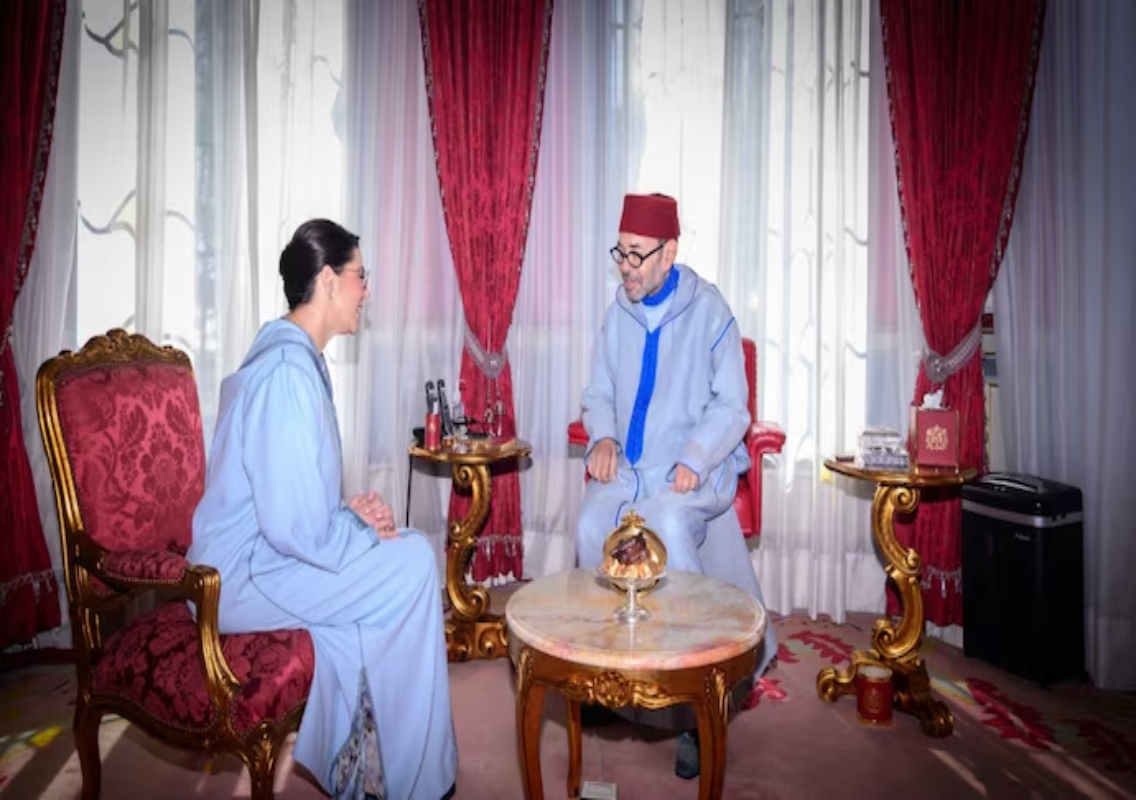


Rabat: Morocco has appointed Fatima Ezzahra El Mansouri as its first woman prime minister after King Mohammed VI asked her to form the country’s next government. Her appointment follows the September 23 parliamentary election, in which her Authenticity and Modernity Party (PAM) emerged as the largest party.
The appointment marks a significant milestone in Morocco’s political history. El Mansouri, who is also the mayor of Marrakech and has previously served as the country’s housing and urban planning minister, now faces the task of building a governing coalition before presenting a new administration for royal approval.
PAM wins most seats but falls short of majority
PAM won 97 of the 395 seats in Morocco’s House of Representatives, making it the largest party in the new parliament. However, it did not secure enough seats to govern alone and will need support from other parties to form a coalition.
The National Rally of Independents (RNI) finished second with 66 seats, while the Istiqlal Party won 65. The Islamist Justice and Development Party (PJD), which suffered a major setback in the 2021 election, recovered to win 54 seats.
Under Morocco’s Constitution, the king appoints the head of government from the party that wins the largest number of seats in the legislative election. The monarch also retains significant powers over areas including defence, foreign policy and other strategic matters.
Who is Fatima Ezzahra El Mansouri?
El Mansouri, 50, has held several prominent positions in Moroccan public life. She is the mayor of Marrakech and has served as minister responsible for housing and urban planning.
She is also a senior figure within PAM and has served as the party’s coordinator. Her nomination makes her the first woman to head the Moroccan government and the second woman to serve as prime minister in the Arab world, following Tunisia’s Najla Bouden.
El Mansouri’s appointment follows a period of increased participation by women in Morocco’s political institutions. Four women served in the previous cabinet, according to Reuters.
Coalition talks ahead
Because PAM does not hold a parliamentary majority, El Mansouri will have to negotiate with other parties to assemble a governing coalition.
Reuters reported that she has indicated there would be no “red lines” in coalition discussions, leaving room for negotiations with parties including RNI and Istiqlal. The final composition of the government remains to be determined.
The coalition-building process will be closely watched because the new government will have to balance economic priorities with public demands over employment, wages and living costs.
The election recorded a turnout of around 38 per cent, down from about 50 per cent in 2021. The result came amid concerns over youth unemployment and demands for improvements in public services.
2030 World Cup preparations among key priorities
El Mansouri’s government will also oversee major preparations for the 2030 FIFA World Cup, which Morocco will co-host with Spain and Portugal.
The country is undertaking large-scale infrastructure and investment projects ahead of the tournament. Reuters reported that the incoming administration is expected to oversee the final stages of Morocco’s preparations, alongside economic measures aimed at addressing youth concerns.
The government will therefore face the challenge of managing substantial investment associated with the World Cup while responding to domestic concerns over jobs, wages and the cost of living.
A new political phase for Morocco
El Mansouri’s appointment opens a new phase in Moroccan politics, with the first woman prime minister now tasked with forming a government from a fragmented parliament.
The immediate priority will be coalition negotiations and securing sufficient parliamentary support. Beyond government formation, her administration will have to manage economic pressures, public expectations and the country’s preparations for the 2030 World Cup.
While the appointment is historic for women’s representation at the highest level of Morocco’s government, the country’s constitutional system continues to give the monarchy a central role in major strategic decisions.