







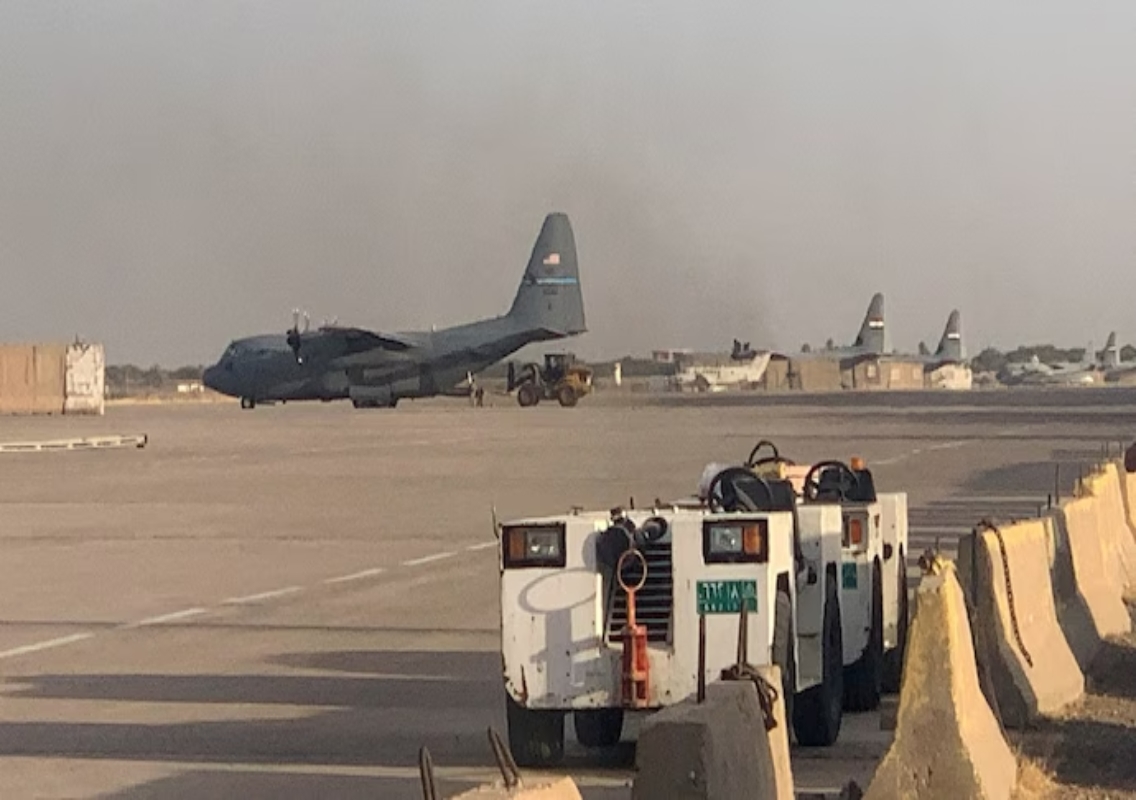


Baghdad: US forces have withdrawn from their remaining military bases in Iraq, ending a more than two-decade-long American military presence that began with the 2003 invasion. The departure marks a major shift in Iraq’s security landscape, while concerns remain over the influence of Iran-backed armed groups and the possibility of the Islamic State regrouping.
The withdrawal was agreed by Washington and Baghdad in 2024 and has been carried out by the administration of US President Donald Trump. Most American troops had already left Iraqi bases, with the remaining contingent concentrated largely in the semi-autonomous Kurdistan Region.
The end of the US military mission does not mean Washington is ending all security cooperation with Baghdad. The two countries have discussed moving towards a normal bilateral security relationship after the coalition mission against the Islamic State concludes.
US military presence ends after 23 years
US-led forces invaded Iraq in 2003 and toppled Saddam Hussein’s government. American troops subsequently remained in the country for years before withdrawing in 2011.
The US returned in 2014 after the Islamic State seized large areas of Iraq and Syria. American forces then supported Iraqi security forces through intelligence, surveillance, air support, training and other assistance during the campaign that eventually dismantled the group’s territorial control.
The Islamic State lost its last significant territorial strongholds in Iraq by 2017. The group has since been reduced largely to sleeper cells and small networks, although Iraqi and international officials continue to regard it as a security threat.
The final US withdrawal therefore closes a major chapter in Iraq’s post-2003 security history.
Concerns over Iran-backed militias
One of the biggest questions following the US departure is the balance between the Iraqi government and powerful armed groups aligned with Iran.
Iran has developed substantial influence in Iraq through political and military networks, including Shiite militias that have played an important role in the country’s security structure. Some of these groups have resisted calls to surrender their weapons and come entirely under state control.
Iraq had been facing two linked deadlines in September: the completion of the US withdrawal and efforts to address the issue of non-state armed groups. Several Iran-backed factions indicated that they were not prepared to disarm, leaving the Iraqi government with a difficult security and political challenge.
Reuters reported that Iraqi security experts have warned the US withdrawal could increase Tehran’s influence and provide greater room for Iran-aligned groups. These are assessments by officials and analysts rather than evidence of a confirmed future outcome.
Islamic State remains a concern
Although the Islamic State no longer controls large stretches of Iraqi territory, its remnants remain active. Security officials and analysts have warned that reduced American intelligence, surveillance and logistical support could create challenges for Iraqi forces attempting to contain the group.
The US-led coalition played an important role in providing intelligence and aerial surveillance during the campaign against the Islamic State. Iraqi security forces are now expected to take greater responsibility for counterterrorism operations.
Reuters reported that Islamic State sleeper cells remain present and could attempt to exploit any security gaps. The group previously took advantage of instability and weak state control to expand rapidly, making its possible regrouping a concern for Iraqi authorities.
At the same time, the US and Iraqi governments have maintained that Iraqi security forces have developed the capabilities necessary to take the lead in combating the remaining Islamic State threat.
Kurdish region faces separate security concerns
The US departure is also significant for Iraq’s Kurdistan Region, where American forces had maintained a presence after most troops left other parts of the country.
Kurdish officials have expressed concerns about the loss of American military support, particularly air defence and surveillance capabilities. The region has faced attacks involving drones and missiles during the wider US-Iran confrontation, adding to concerns about its security environment.
The withdrawal also changes the strategic balance between Baghdad, Kurdish authorities, Iran-aligned groups and other armed actors operating in or around northern Iraq.
What happens after the withdrawal?
Iraq now assumes greater responsibility for protecting its territory and managing competing armed and political interests.
The Iraqi government has described the completion of the foreign troop withdrawal as a step towards full national sovereignty. Prime Minister Ali al-Zaidi’s office had said September 30 would mark the end of the international coalition’s military mission and the beginning of a new phase in Iraq’s relationship with foreign partners.
However, the withdrawal leaves several unresolved questions. These include how Baghdad will manage powerful militias, how effectively Iraqi forces can prevent an Islamic State resurgence and how Iraq will maintain security along its borders without the same level of US military assistance.
The United States’ departure therefore represents not only the end of a long military deployment but also the beginning of a new security phase for Iraq. The country’s ability to manage armed groups, contain Islamic State remnants and balance relations with Iran and other regional powers will shape the security environment in the years ahead.