







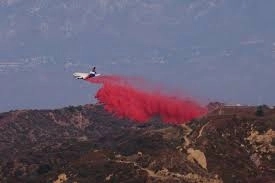


As crews work tirelessly to battle devastating wildfires in southern California, vivid images of air tankers dropping bright red and pink fire retardant over Los Angeles suburbs have emerged. The substance, known as Phos-Chek, is designed to prevent the spread of flames and has been used to combat wildfires in the United States since 1963.
Phos-Chek, manufactured by the company Perimeter, is made up of 80% water, 14% fertilizer-type salts, 6% coloring agents, and corrosion inhibitors. Its bright red and pink color serves as a visual aid for firefighters and pilots, helping them track the effectiveness of the drops. After exposure to sunlight, the color fades, blending into earth tones.
While fire retardants like Phos-Chek are crucial in slowing the spread of wildfires by cooling vegetation, depleting oxygen, and inhibiting combustion, their environmental impact has raised concerns. A 2022 lawsuit by the Forest Service Employees for Environmental Ethics argued that the retardant kills fish and violates clean water laws. The lawsuit prompted a court ruling allowing the continued use of retardants, with the condition that the Forest Service seeks an EPA permit.
In response, the U.S. Forest Service has phased out one formula, Phos-Chek LC95, in favor of a less toxic version, MVP-Fx. Additionally, there is a ban on using retardants in sensitive areas like waterways and habitats for endangered species, except in emergencies where public safety is at risk.
Read also: