


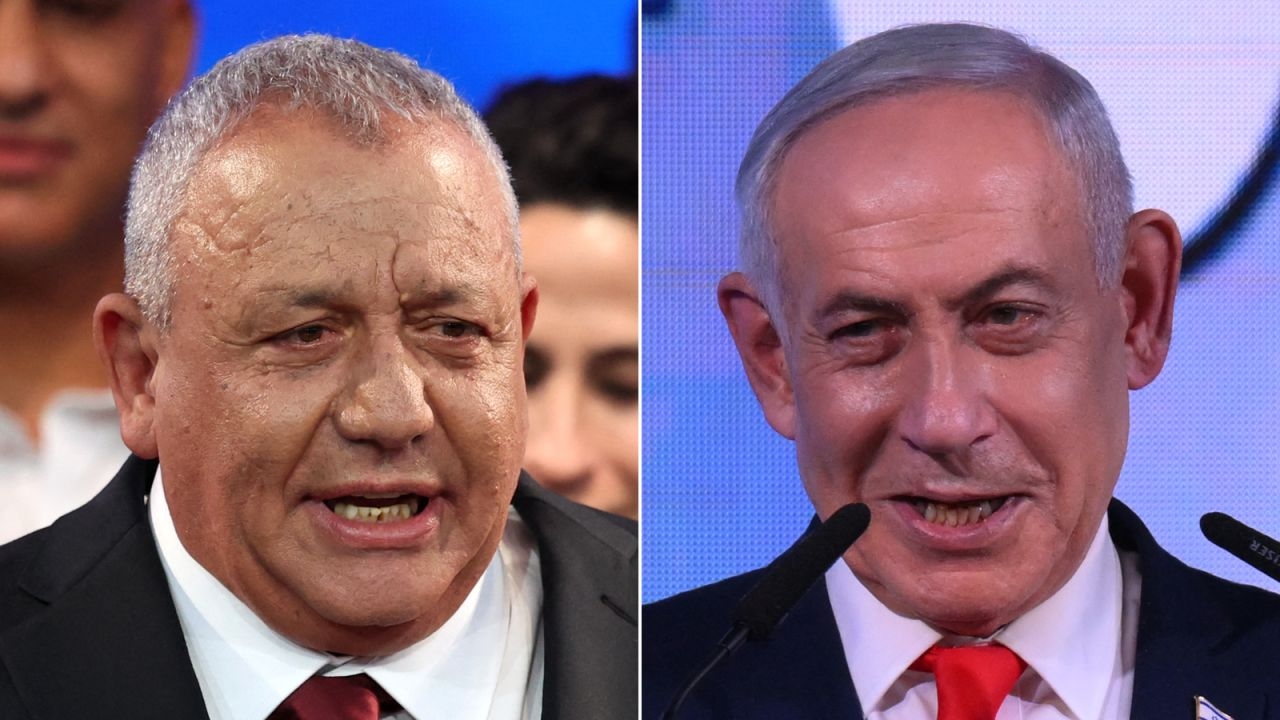


Jerusalem: Gadi Eisenkot, leader of Israel’s Yashar party, has emerged as the leading candidate for prime minister after reportedly securing recommendations from 67 members of the next Knesset. The figure puts him ahead of incumbent Prime Minister Benjamin Netanyahu, who has received 46 endorsements. .
Eisenkot’s position received a significant boost after the Arab Joint List announced that it would recommend him to President Isaac Herzog as the next prime minister. The alliance said the decision had been unanimously approved by its three constituent factions.
The development could strengthen the effort to prevent Netanyahu and his government from returning to power. However, the recommendations do not automatically translate into support for a governing coalition, leaving the formation of Israel’s next government uncertain.
Arab Joint List’s endorsement changes the numbers
The Joint List’s decision was particularly significant because it brought the support of its 11 incoming lawmakers into Eisenkot’s camp. The alliance said its three factions had unanimously approved the recommendation after consultations.
In its statement, the Joint List said the decision was taken “in response to the public demand to prevent Netanyahu and his government from returning to power”.
The alliance also acknowledged reservations about the wider opposition bloc. It said the parties seeking to replace Netanyahu had not yet demonstrated sufficient willingness to confront his political approach, oppose incitement against Arab citizens and defend the legitimacy of their political participation.
Despite those concerns, the Joint List argued that recommending Eisenkot was important to widen the gap between him and Netanyahu. It said the move could improve the prospects of changing the government and reduce the possibility of a unity arrangement that would allow Netanyahu to remain in power.
The Joint List’s support followed an earlier endorsement by Ra’am, another Arab-led party. Ra’am’s eight lawmakers had already recommended Eisenkot, taking his total to 56 before the Joint List announced its decision. The additional 11 recommendations are expected to raise the figure to 67.
The two Arab-led parties secured a combined 19 seats in the October 27 election, making their recommendations important in the contest over who should receive the first opportunity to form the next government.
Why Netanyahu is behind despite Likud’s position
Netanyahu’s position has weakened because the ultra-Orthodox United Torah Judaism alliance has declined to recommend either candidate. The party holds seven seats, but its decision not to endorse Netanyahu has reduced the number of recommendations expected for the incumbent to 46.
Netanyahu’s Likud remains the largest individual party in the new Knesset, with 27 seats. However, the bloc aligned with him secured 53 seats in the election, short of the 61 required for a majority in the 120-member parliament. The Jewish opposition parties aligned with Eisenkot won 48 seats, while the Arab-led parties secured the remaining 19.
The distinction between election results and presidential recommendations is important. A party’s number of seats does not automatically determine who receives the mandate to form a government. President Herzog considers the recommendations made by the parliamentary factions and must decide which lawmaker has the best chance of assembling a government.
Eisenkot’s expected 67 recommendations therefore give him a strong position in the presidential consultations. However, they do not mean that he already commands a coalition with 67 seats or that all the lawmakers recommending him will support his government in parliament.
Arab parties’ backing does not guarantee coalition support
One of the biggest obstacles for Eisenkot is the question of whether the parties recommending him would be accepted as partners in a future government.
The Joint List and Ra’am have indicated their willingness to help prevent Netanyahu’s return to power. But recommending a candidate to the President is different from joining that candidate’s coalition or voting to approve a government.
Reuters reported that both Eisenkot and Netanyahu have ruled out governing with the Arab-led parties, even though their recommendations have become central to the contest. The situation creates a political challenge for Eisenkot: he can benefit from Arab lawmakers’ support in securing the mandate, but still face opposition from some of his potential coalition partners to relying on them to govern.
The disagreement is particularly relevant because some parties in Eisenkot’s opposition bloc have expressed reservations about cooperation with Arab factions. Avigdor Liberman’s Yisrael Beiteinu, for instance, has opposed a government dependent on Arab-party support, according to reports on the presidential consultations.
This means that the 67 recommendations should be understood as support for Eisenkot receiving the opportunity to form a government, rather than proof that he has secured a stable parliamentary majority for one.
What happens next in Israel’s government formation process?
A delegation from the Joint List is due to present its recommendation to Herzog during the presidential consultations on Thursday. The President will then decide which member of the Knesset should receive the mandate to form the next government.
Under Israel’s government formation process, the lawmaker selected by the President initially receives 28 days to assemble a coalition. The President can grant an extension of up to 14 additional days, giving the candidate a maximum of 42 days.
If the first candidate fails, the President can give another lawmaker an opportunity to form a government. If the attempts remain unsuccessful, the process can lead to another election.
Eisenkot’s lead in recommendations makes him a strong contender to receive the first mandate. Yet the more difficult task could begin after that decision: bringing together parties with different political positions and securing enough support for a government to win the confidence of the Knesset.
For Netanyahu, the loss of support from United Torah Judaism and the endorsements from the two Arab-led parties have complicated his efforts to remain in office. For Eisenkot, the challenge is to turn a numerical advantage in presidential recommendations into a workable governing arrangement.
The final decision rests with Herzog, and the outcome of the consultations will determine who gets the first chance to form Israel’s next government. Eisenkot’s 67 expected endorsements put him ahead of Netanyahu, but they do not yet make him Israel’s next prime minister.