







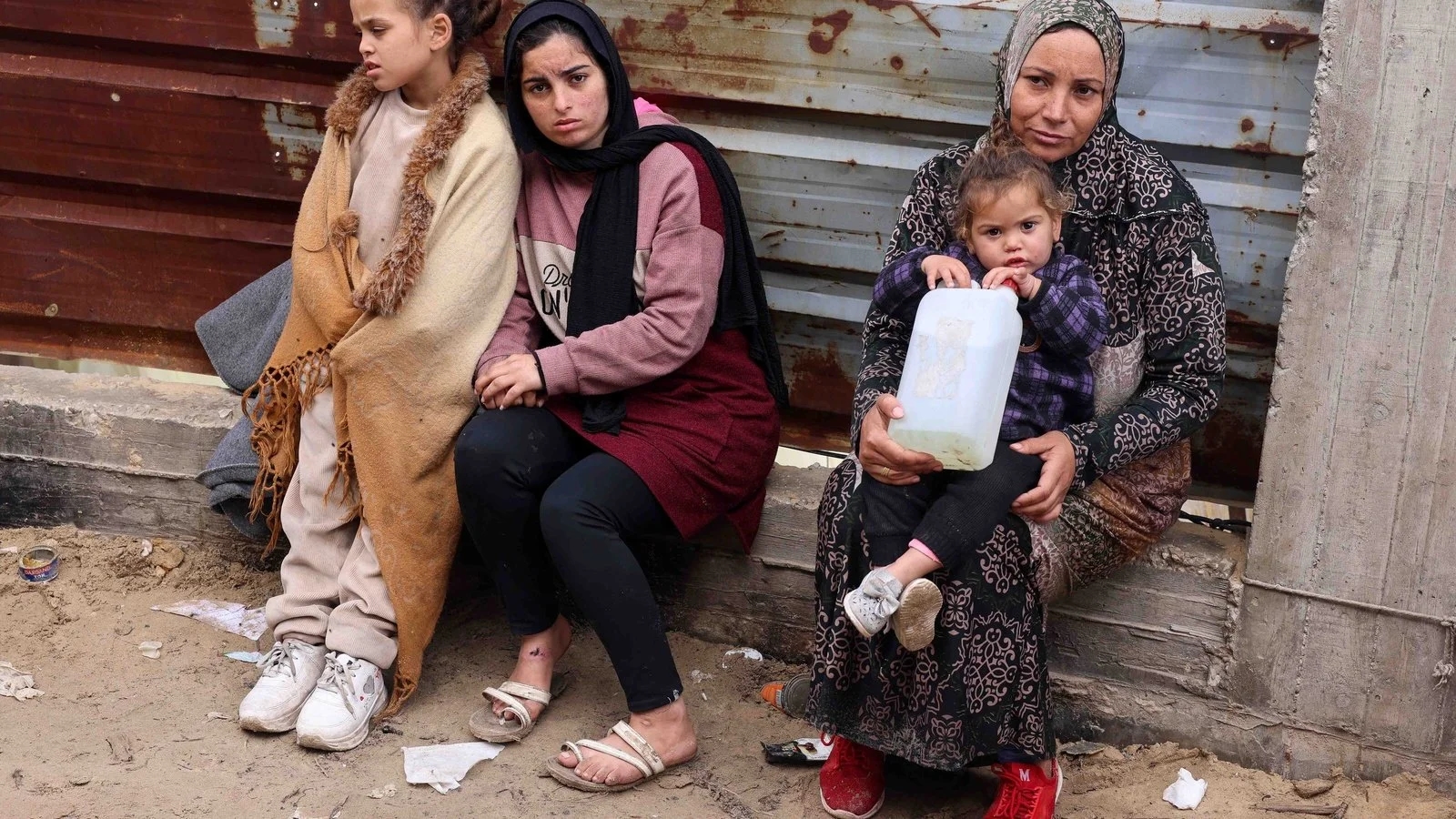


As the new year dawned under a fragile ceasefire, thousands of displaced Palestinians in the Gaza Strip faced it not with celebration, but with hunger, grief and deep uncertainty. For women like Sanaa Issa and Batoul Abu Shawish, survival itself has become the only remaining hope.
A mother’s daily fight for bread
Sanaa Issa, 41, lives in a makeshift tent of fabric sheets and plastic tarpaulin with her seven children. Her husband was killed in an Israeli strike in November 2024, leaving her solely responsible for her family. Speaking to Al Jazeera, she said the past year had stripped life down to its bare essentials.
“We didn’t know whether to blame the war, the cold or the hunger,” Sanaa said. Displaced from al-Bureij to Deir el-Balah, her greatest challenge throughout 2025 was securing a loaf of bread or a kilogram of flour each day.
During the famine caused by prolonged restrictions on aid, desperation pushed her to visit US-backed aid distribution points, despite the danger. According to the United Nations, more than 2,000 Palestinians were killed in and around these sites before operations ended in November. Sanaa herself was injured by shrapnel, while her teenage daughter was wounded at another location.
“Sometimes I returned empty-handed,” she said. “But once, when I brought back five kilos of flour, my children cried with joy.”
A family erased in one strike
For 20-year-old Batoul Abu Shawish, the new year arrived in silence. In November 2025, during the ceasefire, an Israeli strike hit the house her family had taken shelter in at Nuseirat refugee camp. Batoul survived, but lost her parents and all five siblings.
“My family survived two years of war together,” she said. “We thought we were safe.”
Gaza authorities estimate that over 2,600 Palestinian families were completely wiped out during the war, while nearly 6,000 others were left with only one surviving member.
A future reduced to basic dignity
As Gaza enters another year, hopes of rebuilding have faded into simple wishes: proper shelter, food, cooking gas, medical care and peace. For mothers like Sanaa and survivors like Batoul, the ceasefire has brought a pause in bombs, but not yet a return to life with dignity.