







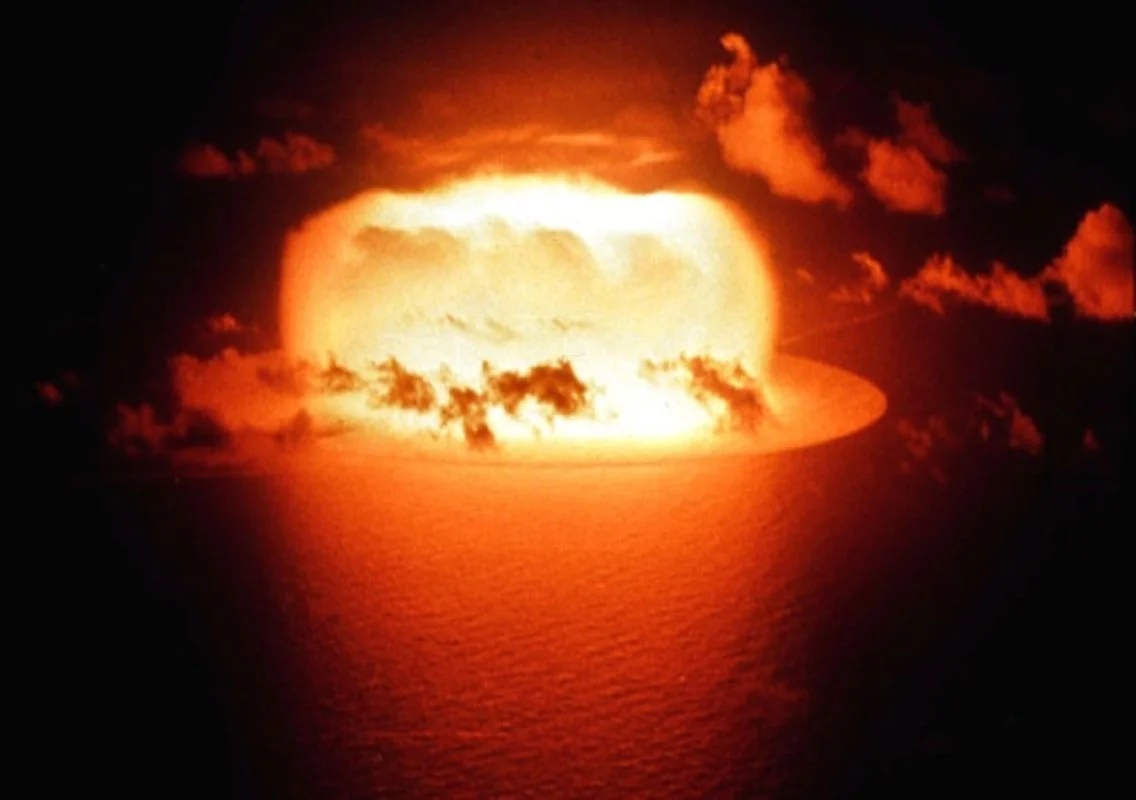


Washington/New Delhi: A growing wave of geopolitical tensions, particularly following repeated strikes on Iran by the United States and Israel, is pushing several nations across Europe and Asia to reconsider their stance on nuclear weapons, raising fears of a renewed global arms race.
Experts warn that countries such as Japan, South Korea, Turkey, and Saudi Arabia are increasingly debating the possibility of developing their own nuclear arsenals amid declining trust in traditional security alliances.
Shift from post-Cold War order
The recent escalation involving Iran has shaken the foundations of the post-Cold War non-proliferation framework. Nations that once relied on the US nuclear umbrella are now exploring independent deterrence strategies, particularly under the leadership of Donald Trump, whose policies have raised concerns over unpredictability.
In Europe, countries like Germany and Poland are engaging more closely with France on nuclear deterrence cooperation. French President Emmanuel Macron has even called for strengthening nuclear capabilities to ensure strategic autonomy.
Growing distrust in nuclear treaties
Faith in global arms control agreements is eroding. The potential resumption of nuclear testing by the United States, along with similar moves by rivals like Russia and China, has weakened confidence in frameworks like the Comprehensive Nuclear-Test-Ban Treaty.
The ongoing conflict in Iran has further undermined trust, with critics arguing that selective enforcement of non-proliferation norms is fuelling resentment among non-nuclear states.
Middle East tensions and proliferation risks
In the Middle East, Saudi Arabia has signalled that it may pursue nuclear weapons if Iran succeeds in building one. Meanwhile, Pakistan has strengthened defence ties with Riyadh, adding another layer of complexity to the regional balance.
Turkey is also exploring nuclear options, citing concerns over regional stability and doubts about support from NATO.
East Asia’s nuclear debate intensifies
In East Asia, security concerns are intensifying. Japan—the only nation to have suffered atomic bombings during the Hiroshima and Nagasaki bombings—is witnessing renewed debate on nuclear weapons.
Similarly, South Korea has seen growing public support for nuclear armament due to threats from North Korea and concerns over US security guarantees.
Nuclear weapons as deterrence
Analysts argue that nuclear weapons significantly raise the cost of aggression, acting as a powerful deterrent. Countries like North Korea have effectively used their nuclear capabilities to discourage external intervention.
However, Rafael Mariano Grossi of the International Atomic Energy Agency has warned that increased proliferation will make the world less secure, not more.
Fragile global nuclear order
According to experts, over 20 countries already possess the technical capability to develop nuclear weapons if they choose. The weakening of agreements like the Nuclear Non-Proliferation Treaty further complicates efforts to contain the spread.
The symbolic Bulletin of the Atomic Scientists has moved its Doomsday Clock closer to midnight, reflecting rising global risks.
Existing nuclear powers
Currently, nine countries possess nuclear weapons, including the United States, Russia, China, France, the United Kingdom, India, Pakistan, Israel, and North Korea. Together, they hold over 12,000 warheads, with thousands ready for deployment across land, sea, and air-based systems.
Even a fraction of this arsenal could cause catastrophic global consequences, including the possibility of a nuclear winter.
Conclusion
With rising conflicts, weakening alliances, and growing mistrust in global institutions, the world appears to be entering a new era of nuclear uncertainty. As more nations reconsider their nuclear policies, experts warn that the risk of a dangerous arms race is higher than it has been in decades.