







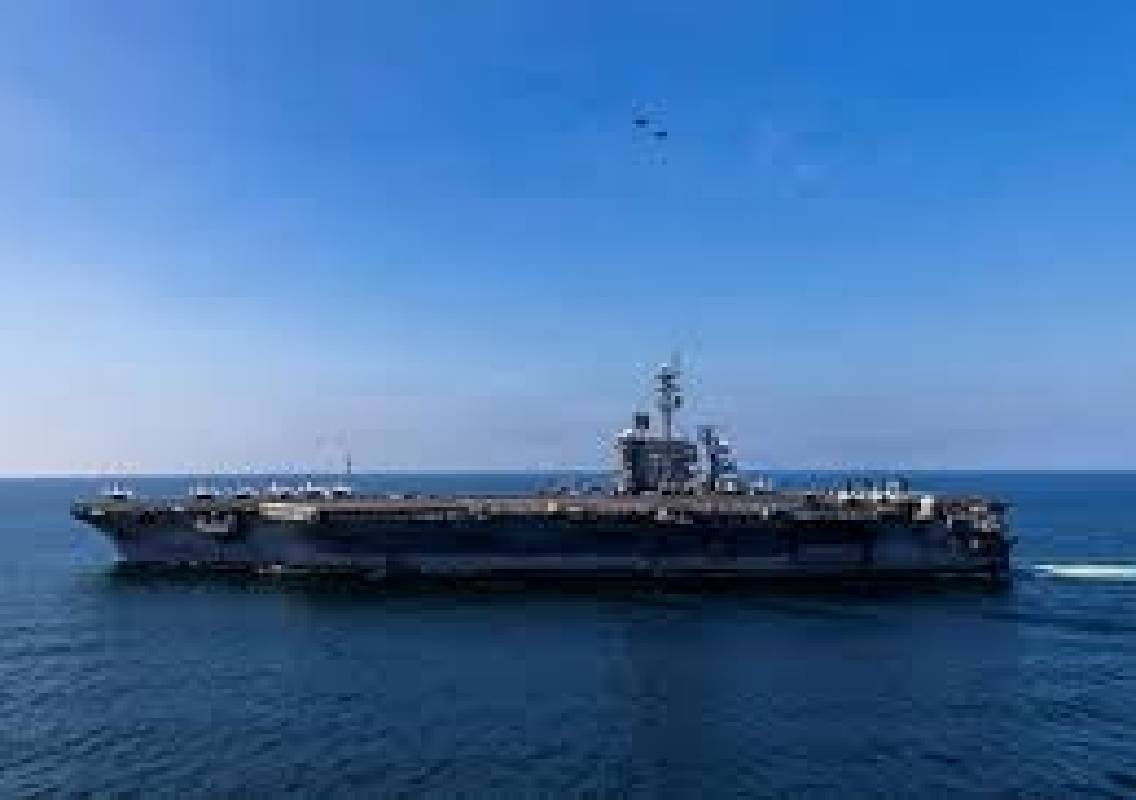


Washington: US Defence Secretary Pete Hegseth has rejected reports describing poor living and working conditions aboard a US aircraft carrier, saying accounts of overcrowding, maintenance problems and inadequate facilities have been misrepresented. His comments came after reports raised concerns about conditions faced by sailors serving on the carrier.
Hegseth disputes reports about carrier conditions
Hegseth pushed back against reports that portrayed conditions aboard the aircraft carrier as unusually difficult. He argued that some accounts had presented an incomplete or misleading picture of life on board.
The Defence Secretary’s response comes amid renewed attention on the conditions experienced by US Navy personnel deployed for extended periods.
Aircraft carriers operate as floating military bases, with thousands of sailors and other personnel living and working in a confined environment. Maintaining accommodation, food services, sanitation and other facilities during long deployments can therefore present significant logistical challenges.
Reports raised concerns over sailors’ living conditions
Reports had highlighted complaints concerning the conditions aboard the carrier, including issues related to living spaces and facilities.
Such concerns are particularly significant because sailors can spend months at sea, often operating far from shore-based support. Even relatively minor maintenance or accommodation problems can become more difficult to address during extended deployments.
The reports prompted questions about whether the Navy was providing adequate conditions for personnel serving aboard one of its most important warships.
Hegseth, however, disputed the characterisation of the situation.
Why aircraft carriers face unique challenges
US aircraft carriers are among the largest and most complex military vessels in the world. They function simultaneously as warships, air bases, command centres and living facilities.
Thousands of personnel may be stationed aboard a single carrier, requiring continuous supplies of food, water, fuel, spare parts and other essential materials.
The confined nature of the vessel also means that maintenance problems can affect large numbers of sailors.
Unlike personnel stationed at a conventional military base, sailors cannot simply leave the ship at the end of a working day. Accommodation, recreation, medical care and workspaces all exist within the same vessel.
Hegseth says accounts were misrepresented
Hegseth’s response focused on what he described as inaccurate or misleading portrayals of the carrier’s conditions.
The Defence Secretary has frequently emphasised military readiness and the need for the US armed forces to maintain high operational standards.
His rejection of the reports reflects the administration’s broader effort to defend the condition and effectiveness of America’s military forces.
The Navy, meanwhile, continues to operate aircraft carriers around the world as a central component of US military power.
Extended deployments put pressure on crews
Long deployments can put considerable pressure on sailors.
Personnel aboard carriers work in demanding environments that can involve irregular schedules, limited personal space and prolonged separation from family.
Aircraft operations add another layer of complexity. Carrier crews must support flight operations around the clock while simultaneously maintaining propulsion systems, weapons, communications equipment and other critical infrastructure.
The ability to keep personnel healthy and rested is therefore directly connected to operational readiness.
Maintenance is critical to naval readiness
Aircraft carriers require extensive maintenance even under normal circumstances.
The ships contain thousands of mechanical, electrical and electronic systems. Regular repairs and inspections are necessary to ensure that the vessel can safely conduct operations.
When maintenance is delayed, problems can accumulate and affect both crew welfare and military effectiveness.
This is why reports about deteriorating facilities aboard a carrier can attract attention well beyond questions of comfort.
US Navy faces broader readiness pressures
The controversy comes as the US military continues to balance global commitments with demands on its fleet.
Aircraft carriers are regularly deployed to strategically important regions, where they serve as visible symbols of American military power and provide aviation capabilities without requiring access to a foreign airbase.
However, maintaining a large carrier fleet is extremely expensive and requires significant investment in shipbuilding, repairs and personnel.
The condition of individual vessels can therefore become part of a wider debate over defence spending and military readiness.
Why Hegseth’s comments matter
As Defence Secretary, Hegseth is responsible for overseeing the US military and communicating the administration’s position on defence matters.
His decision to directly challenge reports about the carrier’s conditions signals that the Pentagon does not accept the portrayal of the vessel as being in an unacceptable state.
The dispute also illustrates the tension between official assessments of military readiness and accounts from personnel or other observers describing conditions on the ground — or, in this case, at sea.
The focus remains on sailors
Regardless of the disagreement over how conditions were characterised, the issue highlights the importance of the welfare of sailors serving aboard US Navy vessels.
Carrier crews operate sophisticated military equipment in demanding circumstances. Adequate accommodation, food, medical support, sanitation and maintenance are essential not only for morale but also for safe and effective operations.
The Navy must therefore ensure that its ships remain capable of supporting personnel throughout lengthy deployments.
Conclusion
US Defence Secretary Pete Hegseth has rejected reports portraying conditions aboard a US aircraft carrier as poor, arguing that the situation has been misrepresented.
The controversy has nevertheless drawn attention to the demanding environment in which thousands of US sailors live and work during extended deployments. Aircraft carriers are highly complex floating military bases, making maintenance and crew welfare crucial components of operational readiness.
The disagreement over the reports is likely to keep attention focused on the condition of US Navy vessels and the Pentagon’s efforts to maintain both military capability and the welfare of personnel serving at sea.