







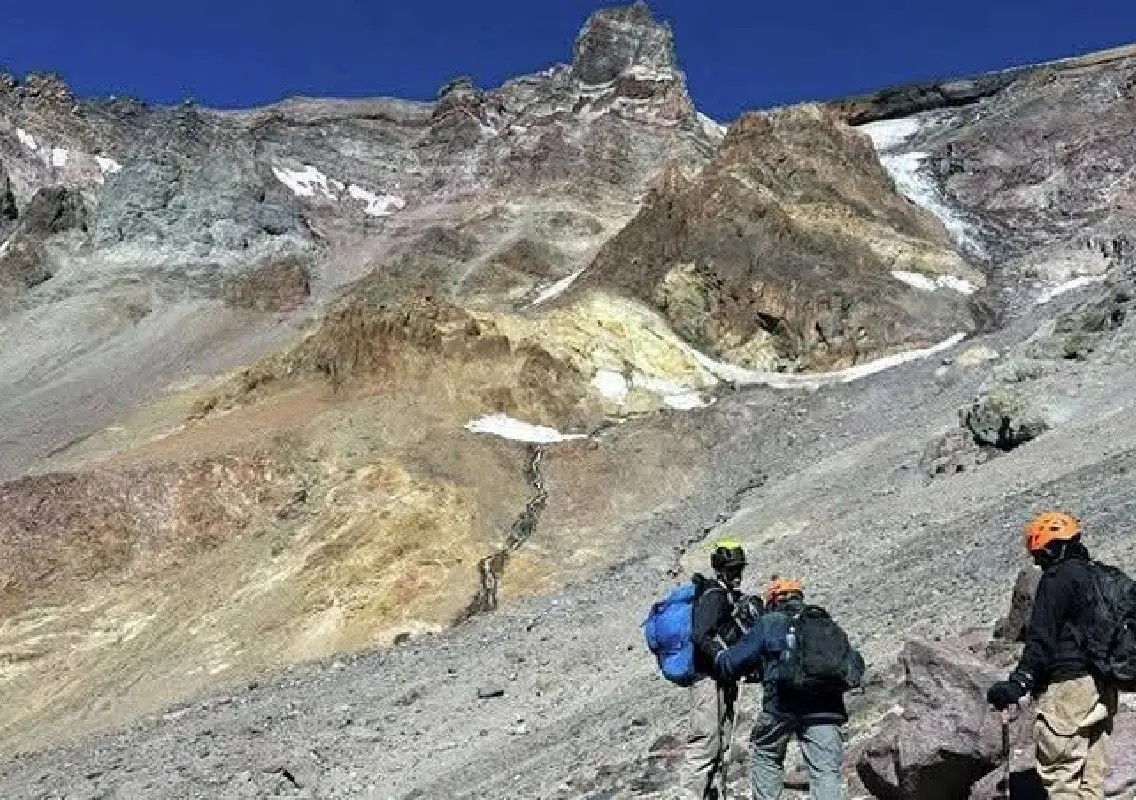


Mount Shasta : Three young men from Roseville, California, were rescued from Mount Shasta after an ill-fated summit attempt left them stranded in a steep canyon, with authorities saying their heavy reliance on artificial intelligence for trip planning contributed to the emergency.
The hikers had used Google’s Gemini AI to research their climb and obtain advice about the route and equipment they would need. However, the information they received reportedly led them to carry less food and water than was necessary for the demanding expedition.
What was planned as a challenging but manageable mountain outing eventually became a multi-day ordeal after the hikers reached the summit much later than recommended, descended in darkness and lost their way.
The incident has prompted renewed warnings from rescue officials that AI tools can be useful for preliminary travel research but should never replace official guidance, experienced judgement and reliable navigation equipment in potentially dangerous environments.
Hikers begin Mount Shasta climb
The three men began their Mount Shasta adventure on August 29. They established a camp at an elevation of about 8,400 feet before setting out for the summit early the following morning.
At around 3 am, the group began its ascent towards the 14,179-foot summit. Their journey took considerably longer than anticipated, and they eventually reached the top at around 7 pm.
This meant the hikers had spent approximately 16 hours travelling from their camp to the summit.
The late arrival was particularly concerning because climbers are advised to turn around by noon. Reaching the summit so late left the group facing much of its descent after darkness had fallen.
Descent turns into a dangerous ordeal
As the hikers began making their way down, they encountered difficulties with navigation. About an hour into the descent, they contacted the Siskiyou County Sheriff’s Office seeking assistance with directions.
However, the group subsequently wandered away from the intended route and entered Mud Creek Canyon.
The terrain in the area proved hazardous. One of the hikers fell and suffered a knee injury, leaving the three men unable to safely continue their journey.
With darkness and difficult terrain making movement increasingly dangerous, the group was forced to spend the night outdoors in a steep drainage area.
They managed to bivouac overnight while awaiting assistance from professional rescuers.
Rescue teams reach stranded hikers
The Siskiyou County Sheriff’s Office coordinated the rescue operation, with US Forest Service climbing rangers eventually reaching the hikers the following morning.
The rescuers helped the three men safely make their way back to the trailhead.
All three were ultimately brought out of the mountain area without further incident.
The successful rescue brought relief to the hikers and their families, but officials used the incident to highlight the importance of preparation when undertaking high-altitude adventures.
The Mount Shasta rescue also demonstrated how quickly a planned day of climbing can turn into an emergency when a group misses critical turnaround times, becomes disoriented and lacks adequate supplies.
AI advice raises safety concerns
According to the report, the hikers relied heavily on Google’s Gemini AI while planning their expedition.
The technology provided information about the route and suggested what equipment to carry. However, the resulting preparations reportedly left the group with insufficient food and water for the conditions they ultimately encountered.
AI systems can generate useful information quickly, but they can also provide inaccurate or incomplete answers. This becomes particularly significant when information concerns activities involving physical danger.
A recommendation that appears reasonable in a general travel-planning conversation may not account for rapidly changing weather, terrain conditions, snow and ice, route closures, altitude, daylight limitations or the experience level of the people undertaking the journey.
For a remote mountain expedition, such omissions can have serious consequences.
Mount Shasta is no ordinary hiking destination
Mount Shasta is a potentially active stratovolcano in northern California and rises to 14,179 feet. It is the second-highest peak in the Cascade Range and the fifth-highest major peak in California. The mountain and surrounding wilderness form part of the Shasta-Trinity National Forest.
Although Mount Shasta attracts climbers and outdoor enthusiasts, its high elevation and challenging terrain mean that preparation is essential.
A delay on the mountain can quickly become a serious problem because daylight, weather and physical endurance all affect a climber’s ability to return safely.
The three hikers’ experience illustrates why a route that appears straightforward in digital information can be very different when encountered on the ground.
Officials urge climbers to verify information
Following the rescue, the Siskiyou County Sheriff’s Office advised future hikers to contact the local US Forest Service Mount Shasta ranger station before beginning an expedition.
Officials also recommended that climbers carry multiple means of navigation and regularly verify that they remain on the intended route.
The advice is particularly relevant as more travellers turn to AI-powered tools to organise holidays, outdoor adventures and itineraries.
AI can assist with gathering information, but it should function as a supporting tool rather than the final authority on safety-critical decisions.
Official park and forest agencies, experienced guides and current local conditions remain essential sources of information for high-risk outdoor activities.
A warning for the growing use of AI
The Mount Shasta incident provides a striking example of the limits of relying on artificial intelligence for real-world decisions.
The hikers were ultimately fortunate that rescuers located them and that their injuries were not more serious. But the circumstances could have produced a far more dangerous outcome, particularly because they were carrying inadequate supplies and had become stranded after dark.
The lesson extends beyond mountaineering. Whether planning a trek, road journey or other adventure, travellers should verify important information through authoritative sources and prepare for unexpected changes.
AI can help people organise information, but it cannot see the mountain conditions in front of a hiker or replace experience, judgement and professional rescue advice.
For anyone planning an expedition to Mount Shasta or another challenging outdoor destination, the message from this rescue is clear: use AI as a tool, but never rely on it alone when safety is at stake.