




Beijing: China is finding ways to access advanced Nvidia artificial intelligence (AI) chips despite strict US export restrictions, raising concerns about the effectiveness of Washington’s efforts to limit Beijing’s technological capabilities. From renting computing power at overseas data centres to alleged chip smuggling networks, several routes are reportedly helping Chinese AI companies obtain access to powerful processors.
The issue has gained renewed attention amid reports involving Nvidia chief executive Jensen Huang and a Chinese executive associated with a Singapore-based company suspected by the United States of involvement in chip smuggling. The controversy has also brought the wider semiconductor trade between the US and China under scrutiny.
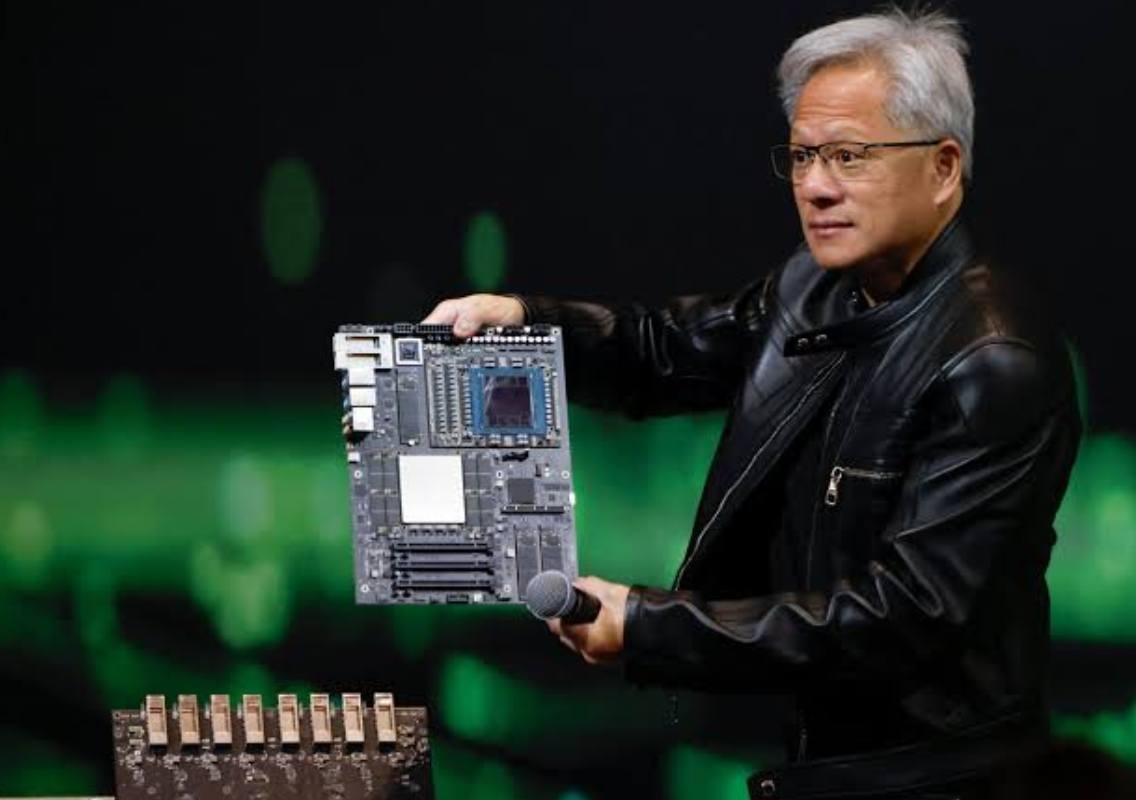
Nvidia’s graphics processing units (GPUs) are among the most sought-after components in the global AI industry. Although originally developed to process graphics for video games, these processors are now essential for training and operating advanced AI models.
Despite restrictions on exports of certain high-performance chips, Chinese technology companies continue to develop competitive AI systems. The progress of firms such as DeepSeek, Moonshot AI and Z.ai has intensified questions about how they obtain the computing resources needed to train increasingly sophisticated models.
Why Nvidia chips are important for artificial intelligence
Nvidia designs specialised processors known as graphics processing units, or GPUs. These chips were initially created to handle the complex calculations required to generate three-dimensional graphics in video games.
Their ability to perform large numbers of calculations simultaneously has made them particularly useful for artificial intelligence. Training an AI model involves processing enormous quantities of data and repeatedly adjusting the model’s parameters. GPUs can handle these computational workloads efficiently.
The launch of ChatGPT in 2022 demonstrated the commercial potential of generative AI and triggered a major investment boom. Governments, technology companies and research institutions began competing to develop more powerful AI systems.
This increased demand for computing infrastructure has significantly benefited Nvidia. Its processors are widely used in data centres operated by major cloud providers and technology companies.
According to the figures cited in the report, Nvidia’s market valuation had reached approximately $4.5 trillion, placing it among the world’s most valuable companies alongside Apple.
The importance of Nvidia’s technology also means that access to its most advanced processors has become a strategic issue. Countries seeking leadership in AI need access to powerful computing resources, making semiconductor supply chains a major part of the global technology rivalry.
Which Nvidia chips does the US restrict?
Washington has imposed restrictions on the export of advanced Nvidia processors to China, arguing that high-performance AI chips could have military and national security applications.
The controls cover powerful products such as Nvidia’s Blackwell and Rubin GPU platforms. The objective is to prevent China from gaining unrestricted access to computing technology that could strengthen its advanced AI capabilities.
The restrictions are also intended to help American technology companies and research institutions maintain their competitive advantage in developing advanced AI systems.
Nvidia chief executive Jensen Huang has repeatedly argued against overly broad restrictions. He has warned that limiting American companies’ access to the Chinese market could encourage domestic Chinese manufacturers to develop alternatives and reduce the global influence of US technology firms.
The US has also eased restrictions on certain previously restricted Nvidia products, including the H200 chip, subject to conditions. According to the supplied report, the arrangement includes a 25 per cent cut of sales for the United States.
However, obtaining approval for shipments remains difficult because of the conditions imposed by Washington. Beijing has also reportedly shown reluctance to purchase H200 processors as its domestic semiconductor industry continues to develop.
This creates a complicated situation for Nvidia. The company wants to retain access to a major market, while both governments are increasingly treating advanced semiconductor technology as a matter of national interest.
How Chinese companies access Nvidia chips
Despite export controls, Chinese AI companies are reportedly continuing to use advanced Nvidia processors to train their models.
Lian Jye Su, chief analyst at Omdia, told AFP that Chinese technology companies were still using cutting-edge Nvidia chips despite the restrictions.
There are several possible routes through which such access can take place. These include alleged smuggling operations and the use of computing resources located outside China.
One method involves renting computing power from data centres in third countries. Instead of physically importing restricted chips into China, companies can access servers equipped with Nvidia GPUs through remote connections.
This arrangement can allow Chinese customers to use powerful processors while the hardware remains physically located in another country.
Stephen Wu, founder of the investment fund Carthage Capital, explained the distinction between the physical location of a chip and the location of the person using it.
According to Wu, US export controls restrict where a chip is shipped rather than necessarily determining who can access its computing capacity.
For example, Nvidia GPUs could be installed in a data centre in Malaysia’s Johor region while a customer in Shenzhen accesses the computing resources remotely.
Such arrangements can create challenges for regulators seeking to control the use of advanced processors. The hardware may remain in a country where its presence is permitted, even as customers elsewhere use its computing power.
Southeast Asian data centres become important
Southeast Asia has emerged as an important location in discussions about access to advanced AI computing resources.
Countries in the region have attracted investment in data centres, cloud computing infrastructure and semiconductor-related businesses. Their geographical proximity to China also makes them relevant to technology companies seeking access to overseas computing facilities.
The report cited comments from White House adviser Michael Kratsios, who said Moonshot AI had accessed high-end Nvidia chips in Thailand.
Such allegations have raised questions about whether overseas data centres could become an indirect route for Chinese companies to access processors that are restricted from direct export to China.
However, the use of overseas computing infrastructure does not automatically establish a violation of export regulations. The legality of each arrangement depends on the location of the hardware, the applicable restrictions, the parties involved and the conditions governing access.
The distinction between permitted cloud computing services and arrangements intended to circumvent export controls is therefore an important part of the debate.
Chip smuggling remains another concern
Apart from overseas data centres, alleged physical smuggling of advanced processors has also attracted attention.
Technology publication The Information reported in December that DeepSeek had developed its new AI model using thousands of chips that were dismantled overseas and transported into China.
The report suggested that dismantling the hardware could make it easier to move restricted processors across borders.
DeepSeek did not respond to a request for comment at the time. Nvidia, meanwhile, told The Information that it had not seen evidence of such smuggling and described the reported method as appearing far-fetched.
Washington has also accused Chinese AI laboratories of training systems to imitate the capabilities of American AI models. These concerns have added another dimension to the debate over access to computing resources and the protection of advanced AI technology.
The allegations surrounding smuggling remain difficult to establish without detailed evidence about the origin, movement and final use of the processors.
Can Chinese-made chips replace Nvidia?
China is also investing heavily in domestic semiconductor technology to reduce its dependence on American suppliers.
Huawei is considered Nvidia’s leading Chinese competitor in the AI chip market, although its products continue to face technological and performance challenges compared with Nvidia’s most advanced processors.
Chinese AI companies are increasingly exploring ways to train models using locally manufactured hardware. DeepSeek is reportedly planning to train its next major AI model on Huawei chips.
Poe Zhao, founder of analysis publication Hello China Tech, said Nvidia processors continued to make advanced AI development faster and easier but were no longer the only option.
The main challenge, he suggested, was cost. Training AI models on Chinese-made chips can require more time and additional engineering work.
Lian Jye Su also said Chinese chips were improving rapidly and expected further collaboration between domestic technology companies.
Huawei announced in September that its next-generation AI chip would be ready in the first quarter of 2027, three quarters earlier than initially planned.
The announcement reflects China’s efforts to accelerate domestic chip development as access to advanced American processors becomes increasingly uncertain.
Why China can afford to use more domestic chips
One strategy for overcoming the performance gap is to deploy larger numbers of domestically manufactured processors.
Stephen Wu said Chinese AI companies could compensate for weaker individual chips by using more processors together. This approach, however, comes with additional electricity and operating costs.
China’s relatively inexpensive electricity and state subsidies for the semiconductor industry could help companies manage some of these expenses.
Using more chips can increase the overall computing capacity available for AI training, although it also creates engineering challenges involving networking, cooling, software compatibility and efficient distribution of workloads.
The long-term success of this approach will depend on how quickly Chinese manufacturers improve chip performance and how effectively AI developers adapt their systems to domestic hardware.
The growing technology rivalry between the US and China
The competition over Nvidia chips illustrates how artificial intelligence has become closely connected to international trade and national security.
Washington wants to preserve its lead in advanced computing by restricting China’s access to certain high-performance processors. Beijing, meanwhile, is trying to maintain its AI development momentum through overseas computing resources, domestic chip production and alternative supply chains.
For Nvidia, the situation presents both commercial opportunities and regulatory risks. China remains an important potential market, but restrictions and geopolitical tensions complicate the company’s ability to sell its most advanced products there.
The effectiveness of US export controls will depend not only on preventing direct shipments but also on monitoring overseas data centres, cloud computing arrangements and possible smuggling networks.
Meanwhile, China’s investment in domestic processors suggests that restrictions could accelerate the development of alternative technologies.
The central question is no longer simply whether China can obtain Nvidia chips. It is whether the country can build an AI industry capable of competing globally even when access to the most advanced American processors remains restricted.
(Except for the headline, this story has not been edited by News Karnataka staff and is published from a syndicated feed.)