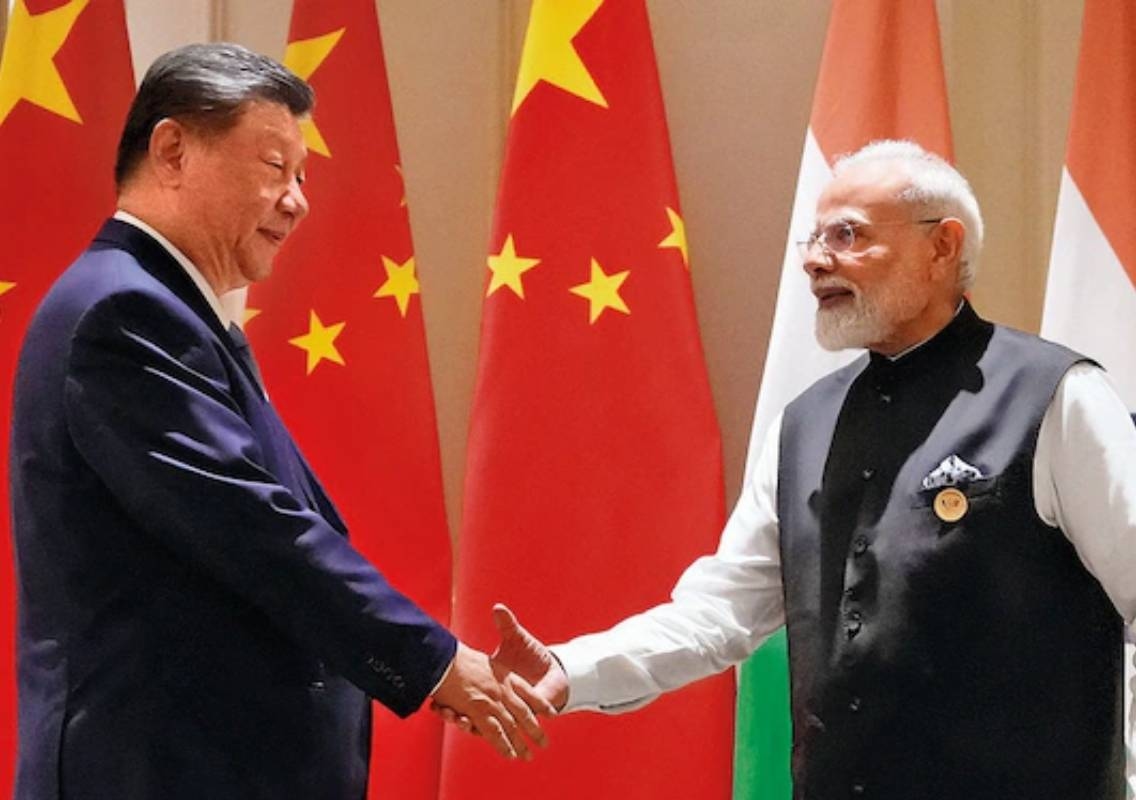


New Delhi: India and China are attempting to rebuild bilateral ties after years of tension following the 2020 Galwan Valley clash, with Prime Minister Narendra Modi and Chinese President Xi Jinping using their September 12 meeting in New Delhi to push for greater stability along the border, stronger economic engagement and the restoration of people-to-people links.
Xi’s visit to India for the 18th BRICS Summit was his first in nearly seven years and his first to the country since the deadly military confrontation along the Line of Actual Control (LAC) in eastern Ladakh in 2020. The meeting at Bharat Mandapam marked another stage in a gradual reopening of diplomatic engagement that began after the two sides reached an agreement on patrolling arrangements in October 2024.
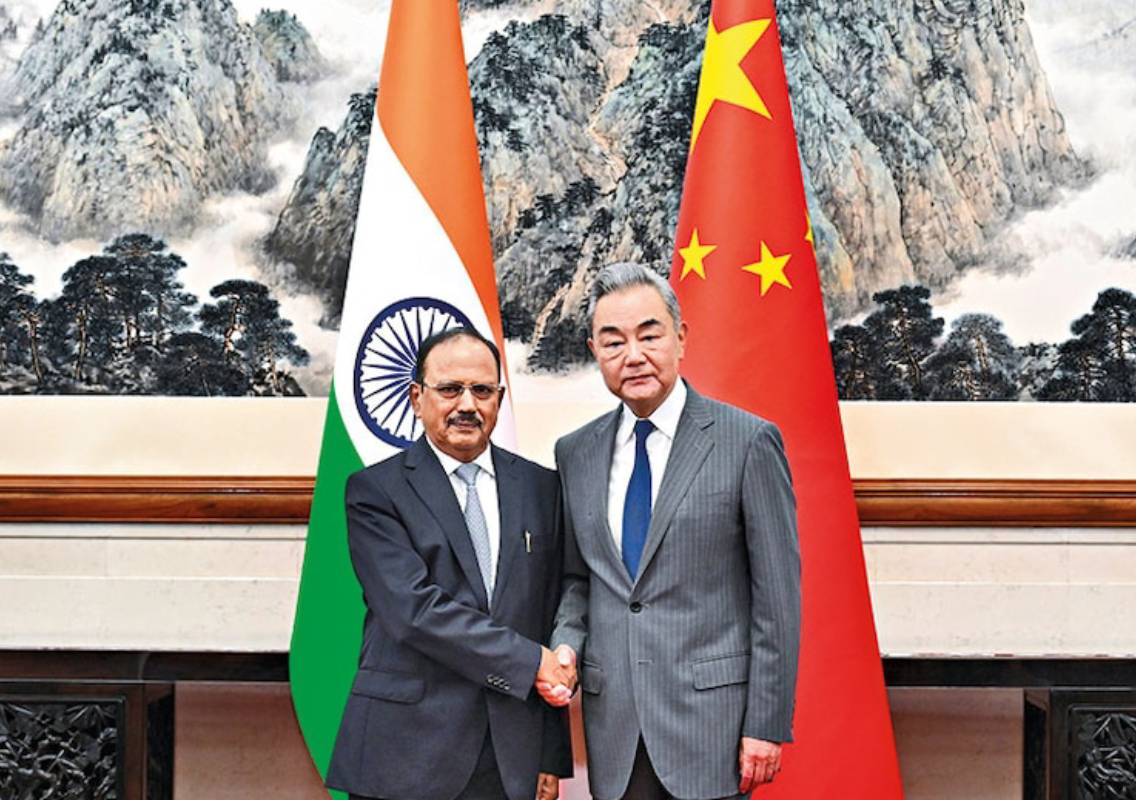
The latest meeting followed the 25th round of talks between India’s National Security Adviser Ajit Doval and Chinese Foreign Minister Wang Yi, who are the Special Representatives for the boundary question. The August 2026 talks produced an eight-point consensus covering boundary negotiations, military communication, border management, trans-border cooperation and river-related issues.
Modi and Xi subsequently reaffirmed that differences between the two countries should not become disputes. India also stressed that peace and tranquillity along the border remain essential for the continued development of bilateral relations.
Border talks move towards an ‘early and substantial harvest’
One of the most closely watched developments is the agreement to advance negotiations towards an “Early and Substantial Harvest” concerning boundary delimitation and border management.
The August consensus calls for an Expert Group on Boundary Delimitation and a Working Group on Border Management under the existing Working Mechanism for Consultation and Coordination on India-China Border Affairs. The first task of both groups is to agree on their respective terms of reference.
The wording is significant because it goes beyond simply maintaining dialogue. Both countries have indicated that they want to move discussions towards concrete outcomes, although the consensus does not amount to a final boundary settlement.
The distinction is important. The India-China boundary remains unresolved across several sectors, and the two countries continue to differ over areas including Ladakh and Arunachal Pradesh.
The latest measures therefore represent an attempt to manage the dispute while keeping negotiations alive rather than an indication that the decades-old boundary question has been settled.
More military communication mechanisms planned
The eight-point consensus also contains practical measures intended to reduce the possibility of misunderstandings along the LAC.
India and China agreed to establish two additional meeting points for General Level Mechanism or Senior Highest Military Commander meetings. They also agreed to create two additional military hotline channels in the eastern and middle sectors of the LAC.
The purpose is to allow military commanders to communicate quickly if tensions emerge on the ground. Such mechanisms become particularly important when both sides maintain significant military deployments close to disputed areas.
The agreement also calls for situations on the ground to be addressed promptly through existing diplomatic and military channels, including the WMCC and local commander-level meetings, with the stated aim of preventing misunderstandings and miscalculations.
These arrangements reflect a practical lesson from the Galwan crisis: even when broader political differences remain unresolved, mechanisms for rapid communication can help prevent local incidents from escalating.
Border trade and pilgrimage links reopen
The easing of tensions has also begun to affect everyday cross-border interactions.
The two countries have welcomed the reopening of three designated border trading points and agreed to strengthen cooperation in border trade and pilgrimage. The Kailash Mansarovar pilgrimage has also resumed after a prolonged interruption.
India and China have additionally agreed to hold another meeting of the Expert-Level Mechanism on Trans-border Rivers. The mechanism is expected to address issues including hydrological data-sharing and the renewal of relevant memoranda of understanding.
For India, cooperation on trans-border rivers has particular significance because several major river systems originate on the Tibetan plateau before flowing into the country.
The reopening of border trade and pilgrimage routes therefore represents more than symbolic diplomacy. It provides channels for practical engagement even as the larger territorial dispute remains unresolved.
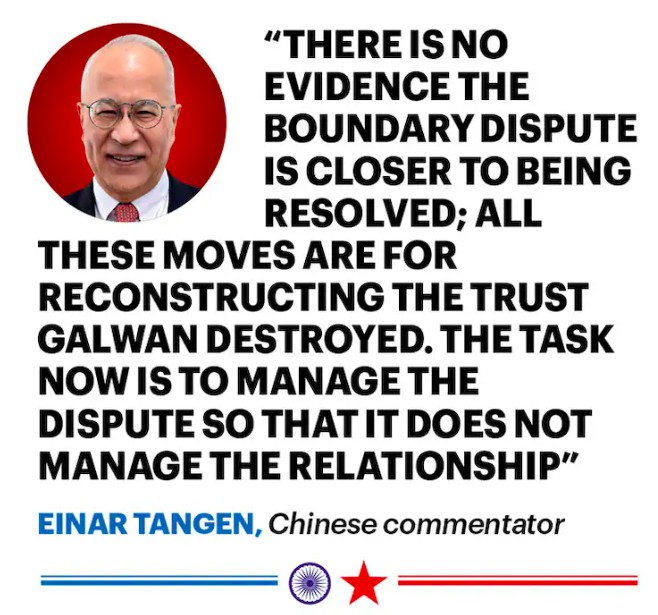
Experts remain cautious about a border breakthrough
The new diplomatic momentum has not removed the fundamental disagreements between the two countries.
The key question is whether the proposed “early and substantial harvest” will produce actual progress on delimitation or primarily create additional institutional mechanisms.
A boundary settlement would require agreement on where the boundary should lie before it could eventually be delineated on maps and physically demarcated on the ground. That remains a politically difficult process.

The history of India-China negotiations also explains the caution. Previous efforts have explored sector-by-sector arrangements and broader package solutions, but differences over strategically important areas have prevented a comprehensive settlement.
The current process is therefore best understood as a renewed attempt to create conditions for negotiations rather than the beginning of an imminent final agreement.
Troop deployments remain a major concern
The border is not the only obstacle to a deeper reset.
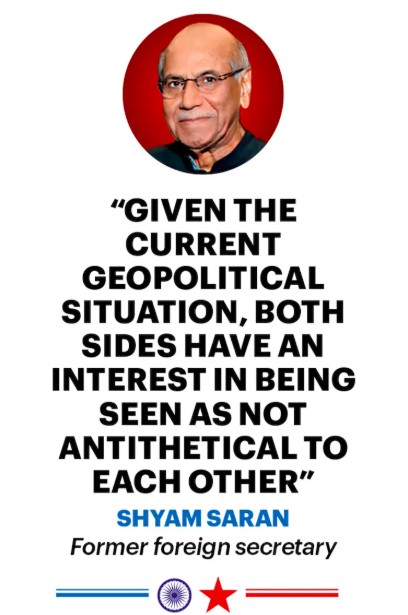
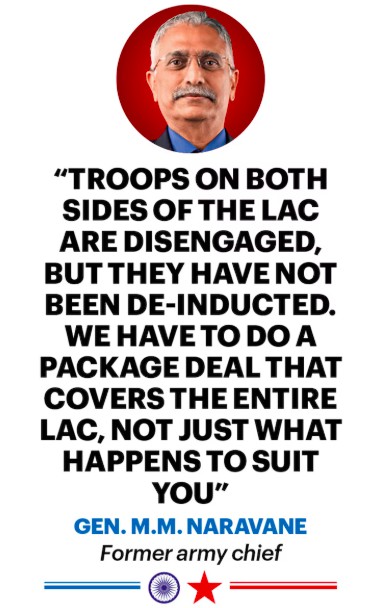
Although disengagement has taken place at several points since the 2020 crisis, questions remain about wider force deployments, de-escalation and the eventual de-induction of troops from the LAC.
This distinction between disengagement and de-escalation remains important. Moving troops away from particular confrontation points does not necessarily mean that the broader military posture has returned to pre-2020 levels.
The two governments have consequently placed considerable emphasis on preventing new confrontations while continuing discussions on the larger boundary question.
For India, sustained peace along the border remains closely connected to the broader relationship. Modi reiterated during his September meeting with Xi that existing agreements and understandings concerning the border must be observed.

Trade is the other major challenge
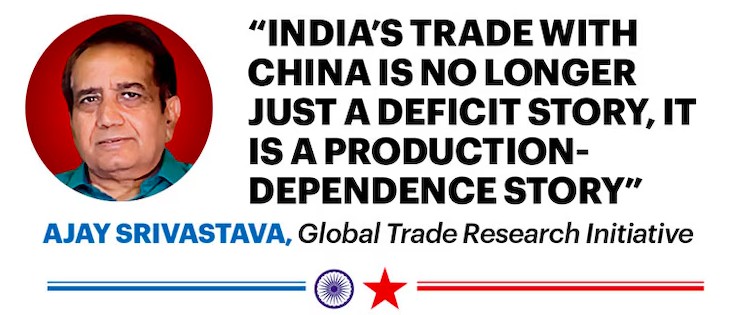
While diplomatic ties are improving, the economic relationship presents a different set of difficulties.
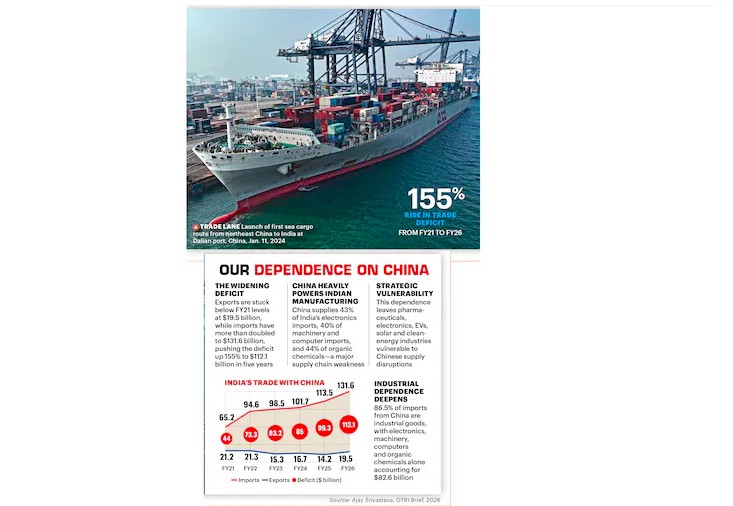
Bilateral trade reached a record level in 2025, but the balance remains heavily tilted towards China. India imported about $131.6 billion worth of goods from China in FY26, while exports to China stood at about $19.5 billion, leaving a trade deficit of roughly $112 billion.
The numbers underline the structural nature of India’s dependence on Chinese industrial supplies.
Chinese products and components play an important role in sectors ranging from electronics and machinery to chemicals, pharmaceuticals, automobiles, electric vehicles and renewable energy.
This creates a difficult policy balance for New Delhi. India wants greater domestic manufacturing capacity and more resilient supply chains, but rapidly reducing imports from China could also affect Indian manufacturers that depend on Chinese components and intermediate goods.
The Modi-Xi meeting acknowledged this challenge, with both leaders agreeing on the need to address structural trade imbalances, supply-chain concerns and the need for meaningful and predictable market access.
India eases some restrictions on Chinese investment
India has also begun recalibrating its approach to foreign investment from countries sharing a land border with India.
Under the revised framework introduced through Press Note 2 of 2026 and subsequent changes to the Foreign Exchange Management rules, investors with non-controlling beneficial ownership of up to 10 per cent from land-border countries can use the automatic route, subject to applicable sectoral conditions and other requirements.
The change marks a shift from the more restrictive framework introduced after the 2020 border crisis.
It does not amount to unrestricted access for Chinese investors. The revised system continues to apply conditions and government scrutiny in relevant circumstances, particularly where the investor or investment structure falls outside the specified automatic-route provisions.
The policy reflects the economic reality that India’s relationship with China cannot be addressed only through restrictions. Chinese capital, technology and industrial supply chains remain part of the wider economic equation.
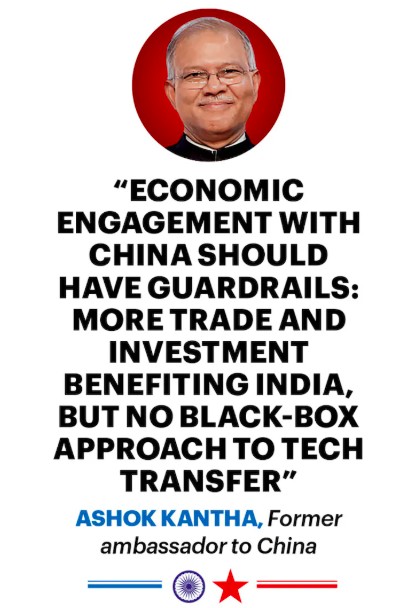
At the same time, concerns over strategic dependence and technology transfer remain central to India’s approach.
Connectivity and people-to-people links return
Another visible part of the thaw is the gradual restoration of connectivity.
Direct air links between India and China have begun returning after a prolonged suspension. The resumption of flights, alongside changes in visa arrangements and the return of the Kailash Mansarovar Yatra, is helping restore channels of interaction that had been sharply reduced after the pandemic and the border crisis.
During their September meeting, Modi and Xi also discussed cultural exchanges, business links and greater mobility between the two countries.
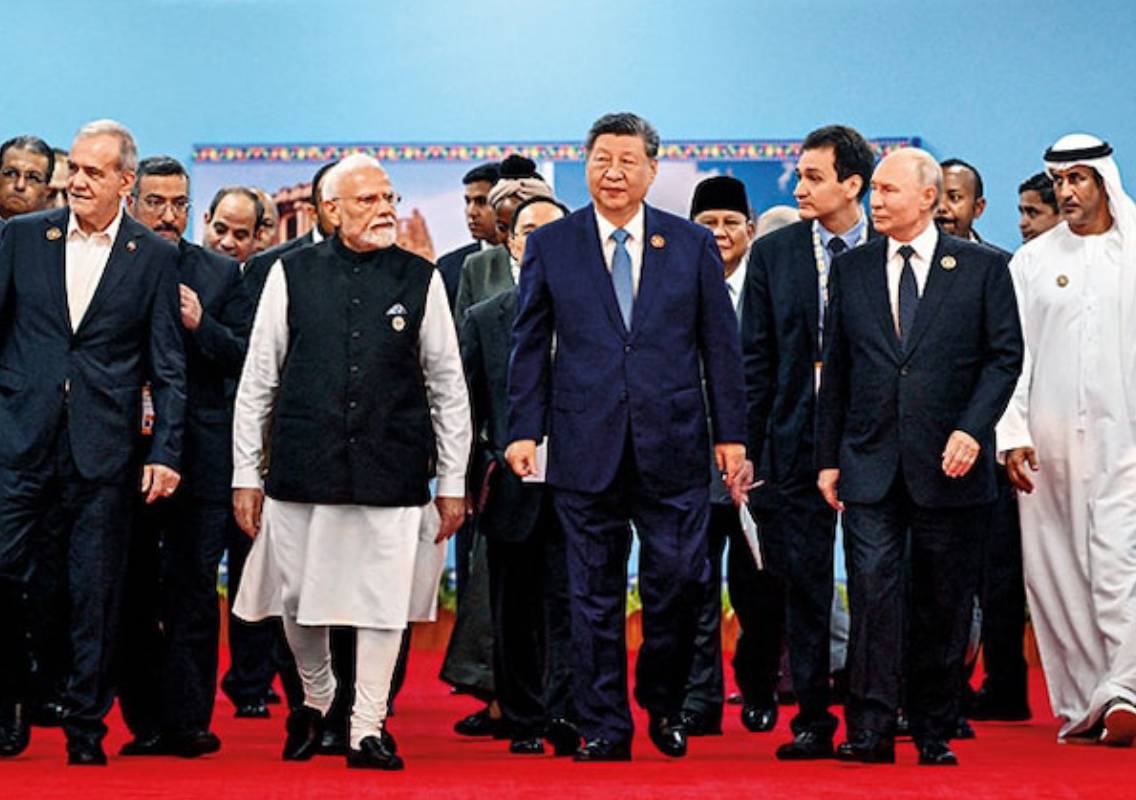
These measures could help rebuild institutional and social contact, but they also face a trust deficit that has accumulated since 2020.
The challenge is not simply restoring flights or visas. It is rebuilding confidence sufficiently for businesses, students, tourists and other groups to regard cross-border engagement as predictable.
A reset, but not yet a resolution
The latest phase in India-China relations therefore contains two parallel developments.
On the border, the two countries are building new mechanisms, reopening communication channels and discussing an early and substantial outcome on boundary delimitation. On the economic front, both sides recognise the need to expand engagement while addressing India’s large trade deficit and supply-chain dependence.
At the same time, the most difficult questions remain unresolved. The boundary dispute has not been settled, military deployments remain a concern, and the trade relationship remains significantly asymmetric.
The September meeting between Modi and Xi is consequently better viewed as another stage in a cautious process of normalisation rather than a definitive breakthrough. Both countries appear to be testing whether greater communication, economic engagement and border-management mechanisms can create enough stability for the relationship to move forward.
The eventual test will be whether these mechanisms translate into sustained peace along the LAC, measurable progress in boundary negotiations and a more balanced economic relationship. Until those issues show concrete movement, the India-China “new equation” remains a work in progress.