


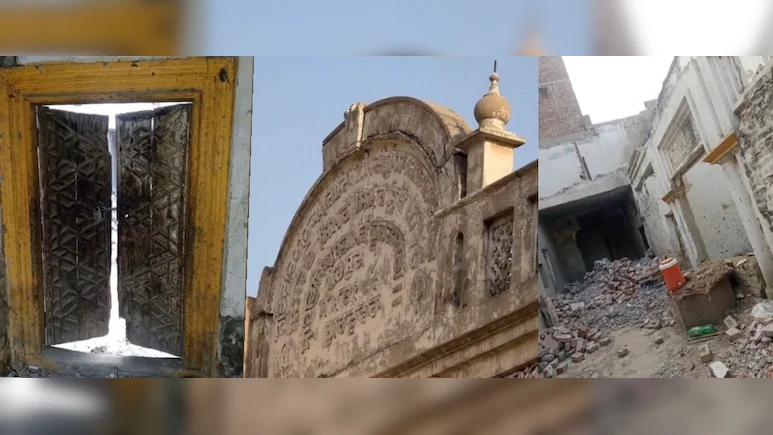


New Delhi: India has strongly condemned the reported demolition of the 125-year-old Gurdwara Sri Guru Singh Sabha Sahib in Farooqabad, Pakistan’s Punjab province, and urged Islamabad to investigate the incident, punish those responsible and restore the historic Sikh shrine.
The Ministry of External Affairs (MEA) described the demolition as a “highly deplorable and targeted act of vandalism” against a revered place of worship. Spokesperson Randhir Jaiswal also expressed concern over reports that local authorities and Pakistan’s Evacuee Trust Property Board (ETPB) had not taken meaningful action following the incident.
The gurdwara, located near Gurdwara Sacha Sauda in Farooqabad, was reportedly demolished during the night of June 24–25, 2026. The incident has raised concerns about the protection of Sikh heritage sites and the safety of religious minorities in Pakistan.
MEA calls demolition a matter of grave concern
In a statement issued on July 1, Jaiswal said India was deeply concerned by reports of the destruction of the historic shrine and the alleged lack of action by the authorities responsible for protecting minority religious properties.
“We strongly condemn this highly deplorable and targeted act of vandalism against a revered Sikh shrine,” the MEA spokesperson said.
He added that the destruction of the gurdwara, along with reports of inaction by local authorities and the ETPB, was a matter of “grave concern”.
The ETPB is a Pakistani government body responsible for managing and safeguarding properties and religious sites belonging to minority communities, including Sikh shrines.
India called on the Pakistani government to conduct a prompt and impartial investigation and bring those responsible to justice. It also demanded that the demolished portions of the gurdwara be restored and reconstructed at the earliest.
The MEA further urged Pakistan to ensure the safety and well-being of minority communities and protect their places of worship. Jaiswal called for an end to what India described as an environment of sectarian violence and religious intolerance.
What happened to the historic gurdwara?
The Gurdwara Sri Guru Singh Sabha Sahib in Farooqabad was reportedly demolished during the night of June 24–25. Media reports described extensive damage to the structure, with images circulating online appearing to show portions of the historic building reduced to rubble.
Reports about the incident attributed the demolition to unidentified individuals. The precise circumstances, those responsible and the motive behind the destruction require investigation.
The shrine’s historical and religious significance has added to the concern among Sikh organisations and community members. Its reported demolition has also drawn attention to the responsibilities of local authorities and the ETPB in protecting religious heritage sites.
India’s statement specifically questioned the reported absence of meaningful action following the incident. However, the MEA’s demand for an investigation and accountability does not, by itself, establish the identities or motives of those responsible.
The Indian government has called for the site to be restored, with the aim of preserving the shrine’s historical importance and enabling the damaged portions to be reconstructed.
Gurdwara’s association with the Singh Sabha Movement
The 125-year-old gurdwara is associated with the Singh Sabha Movement, a major Sikh religious and cultural reform movement that began in Amritsar in 1873.
The movement emerged during a period of significant social and religious change and sought to strengthen Sikh identity, education and religious institutions. It played an important role in shaping modern Sikh religious and cultural life.
The movement also formed part of the wider historical background to the development of Sikh institutions, including the Shiromani Gurdwara Parbandhak Committee (SGPC), which manages several major Sikh shrines.
For the Sikh community, historic gurdwaras are more than places of worship. They can also serve as centres of collective memory, religious learning and cultural identity.
The reported destruction of the Farooqabad shrine has therefore prompted calls not only for accountability but also for the preservation and reconstruction of the heritage structure.
Delhi Sikh Gurdwara Management Committee seeks intervention
Before the MEA issued its statement, a delegation from the Delhi Sikh Gurdwara Management Committee (DSGMC) met officials in New Delhi and submitted a memorandum seeking government intervention.
According to the report cited by The Times of India, the committee urged the Indian government to take steps to secure the protection and complete restoration of the historic shrine.
The delegation’s appeal reflected concerns among Sikh representatives about the future of the site and the need for action to prevent further damage to religious heritage in Pakistan.
The DSGMC’s request also placed the issue before Indian authorities as a matter involving both the preservation of Sikh religious heritage and the protection of minority places of worship across the border.
India’s subsequent statement called on Pakistan to investigate the demolition, prosecute those responsible and rebuild the damaged portions of the gurdwara.
India raises wider concerns over minority protection
The MEA linked its concerns over the Farooqabad incident to what it described as a broader pattern of attacks on religious minorities and their places of worship in Pakistan.
Jaiswal said the incident was not isolated, reiterating India’s position that the protection of minority communities and their religious sites required decisive action.
The statement called on Pakistan to fulfil its obligations to ensure the safety, security and well-being of minority communities. It also urged the government to address sectarian violence and religious intolerance.
Such statements form part of a recurring diplomatic disagreement between India and Pakistan over the treatment of minority communities and the protection of religious sites. India has previously raised concerns about incidents involving religious places and minority rights in Pakistan.
The immediate issue in Farooqabad, however, remains the reported demolition of the historic gurdwara and the need to establish what happened, identify those responsible and determine what steps will be taken to restore the shrine.
Restoration and accountability remain key demands
India’s demands centre on three main actions: a thorough investigation, justice for those responsible and the reconstruction of the damaged shrine.
Restoration would require the relevant authorities to assess the damage and determine how the structure and its historical features could be preserved. The investigation would need to establish the circumstances of the demolition and whether any individuals or officials failed to meet their responsibilities.
The MEA has also called for stronger protection for minority religious sites, arguing that safeguarding places of worship is essential to the security and well-being of religious communities.
As of the statements cited in reports, India had publicly called for an investigation and restoration, while the identities of those responsible and the outcome of any Pakistani inquiry remained unclear.
The demolition has brought renewed attention to the vulnerability of historic religious sites and the importance of preserving Sikh heritage in Pakistan. For the Farooqabad gurdwara, the next steps will be the establishment of the facts, accountability for the destruction and action to restore the shrine.