







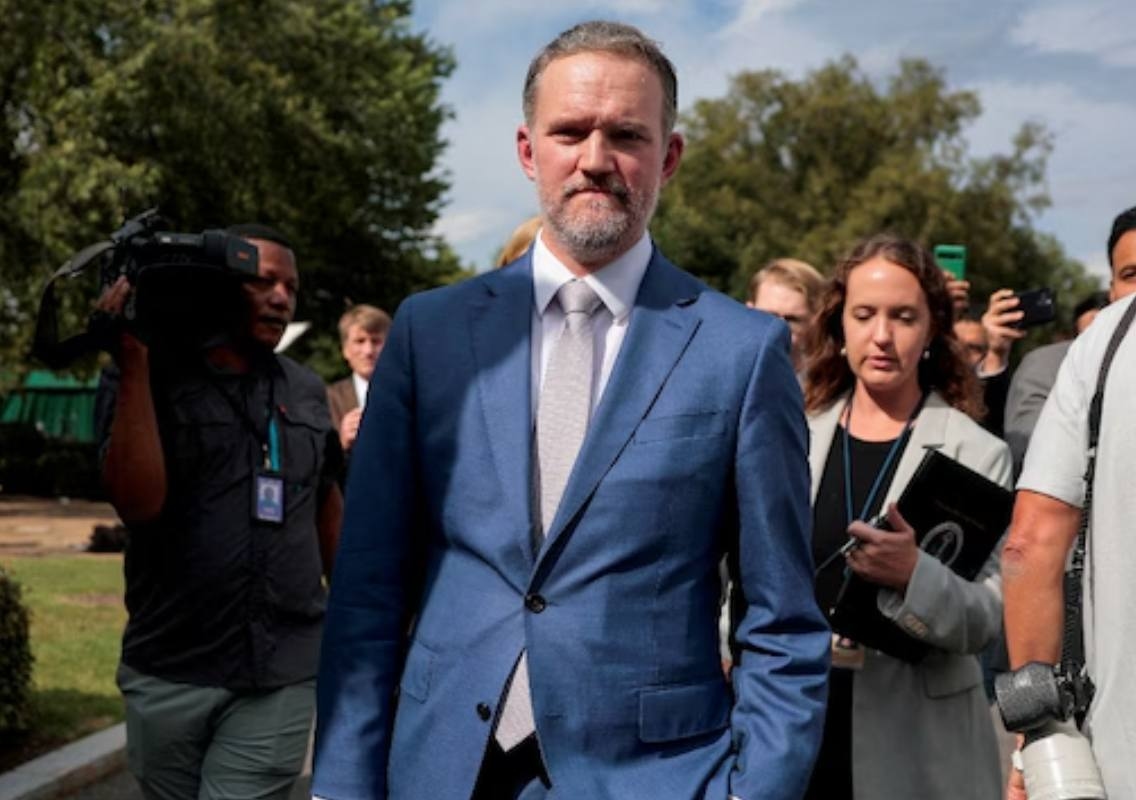


New Delhi: The proposed India-US trade agreement is in the final stages of negotiations, but a deal is not yet imminent, US Trade Representative Jamieson Greer said after meeting Commerce and Industry Minister Piyush Goyal at the G20 Trade Ministers’ Meeting in Milwaukee.
Greer said Washington and New Delhi had identified the remaining issues that need to be resolved and that officials from both countries were continuing discussions. He described his conversation with Goyal as “very constructive” while indicating that the two sides still needed to work through outstanding points before the interim agreement could be concluded.
The comments came shortly after Prime Minister Narendra Modi and US President Donald Trump spoke by phone on September 30. The two leaders reviewed bilateral cooperation covering trade, defence, energy and critical technologies and agreed to remain in close contact.
Greer says trade talks are in final phase
Speaking to reporters after the G20 trade ministers’ meeting, Greer said discussions with India were continuing at both the political and official levels.
“We had a very constructive conversation, minister Goyal and myself,” Greer said, adding that officials from the two countries were meeting while Goyal was in the United States.
Greer described the negotiations as being in the “short strokes”, a phrase he used to indicate that the talks were approaching their conclusion.
However, he cautioned against expectations of an immediate announcement.
“I don’t think there’s something imminent, but we truly have identified the universe of items that are sticking points. We’re working diligently toward them,” he said.
The comments suggest that while the broad contours of an interim agreement have been discussed, specific unresolved issues continue to hold up its finalisation.
India and US continue work on interim agreement
The current negotiations follow a framework announced by India and the US in February for an Interim Agreement on reciprocal and mutually beneficial trade.
The February 7 joint statement said the interim agreement would form part of the broader India-US Bilateral Trade Agreement negotiations and would involve additional market-access commitments. It also outlined proposed tariff and market-access measures for products traded between the two countries.
Prime Minister Narendra Modi had welcomed the framework at the time, describing it as an important step in strengthening the India-US economic relationship and saying it could support investment, technology partnerships and supply chains.
The framework, however, was followed by further negotiations as the tariff environment in the US changed.
The two sides have since been working to reconcile their respective positions on market access and the terms of the interim agreement.
Goyal had earlier described pact as ‘done and dusted’
Greer’s latest comments come days after Goyal gave a more optimistic assessment of the negotiations.
On September 24, Goyal described the India-US trade pact as “done and dusted”, while indicating that its execution depended on India receiving what he described as the right competitive advantage in the US market.
Goyal’s comments highlighted India’s concern about the competitive position of its exporters in the American market.
India competes with several major exporting economies in the US, including countries in the ASEAN region, China and Bangladesh. The terms of the proposed agreement therefore have implications not only for tariff levels but also for the relative competitiveness of Indian products in the US market.
Greer’s comments indicate that despite the progress described by Goyal, the negotiating teams still have unresolved matters to settle.
Modi and Trump may speak again
Greer also indicated that Trump and Modi could speak again “very soon” to review the progress of the negotiations.
The possibility of another conversation comes after the two leaders spoke on September 30 about trade and other areas of bilateral cooperation.
According to the Prime Minister’s Office, Modi and Trump reviewed progress across trade, defence, energy, critical technologies and other areas of mutual interest. They reaffirmed their commitment to advancing the India-US Comprehensive Global Strategic Partnership and agreed to maintain close engagement.
The latest phone call therefore provides another political channel for the two governments as their negotiating teams continue working on the trade agreement.
What are the remaining sticking points?
Greer did not publicly provide a detailed list of the issues that remain unresolved. Instead, he said the two sides had identified the “universe of items” that constituted the sticking points.
This means the latest US assessment does not indicate that negotiations have broken down. Rather, officials are continuing to work through a defined set of outstanding issues.
The difference in the public assessments from Washington and New Delhi also reflects the different stages at which negotiators may view the agreement. While Goyal has said the pact is essentially complete from India’s perspective, Greer has stressed that the remaining issues still need to be resolved before a final agreement can be announced.
The final outcome will depend on how the two sides resolve these outstanding matters and translate the February framework into a completed interim agreement.
Trade deal has wider economic significance
The proposed agreement is being negotiated against a changing global tariff environment and is important for both countries’ trade relationship.
The February framework envisaged tariff reductions and market-access measures covering a range of industrial, agricultural and other products. The official joint statement said India would reduce or eliminate tariffs on several categories of US goods, while the US would apply an 18 per cent reciprocal tariff rate under the framework and remove reciprocal tariffs on certain identified Indian goods subject to the successful conclusion of the interim agreement.
For India, improved access to the US market could have implications for exporters across several sectors. For the US, greater access to the Indian market is part of its broader effort to expand reciprocal trade arrangements.
The negotiations are therefore focused not simply on reaching a political announcement but on determining the detailed terms under which businesses in both countries would operate.
G20 meeting keeps negotiations moving
Goyal’s meeting with Greer in Milwaukee provided another opportunity for the two sides to discuss the agreement directly while the G20 Trade Ministers’ Meeting was under way.
Greer said staff-level discussions were continuing, indicating that negotiations had moved beyond broad political engagement and remained active among officials.
At the same time, his warning that the agreement was not imminent indicates that the final stage could still require additional negotiations.
The next phase is expected to involve continued work by Indian and US officials on the identified sticking points, followed by political review if the negotiating teams are able to bridge the remaining differences.
Final agreement still awaits resolution of key issues
The latest position from Washington is that India-US trade negotiations have reached an advanced stage but have not yet reached the point of an immediate signing.
Greer’s description of the talks as being in the “short strokes” suggests substantial progress, while his reference to unresolved sticking points makes clear that important issues remain on the table.
Goyal’s earlier statement that the pact was “done and dusted” reflects the Indian side’s assessment of the progress made, but the US trade representative’s latest remarks show that the agreement still requires further work before it can be formally concluded.
With Modi and Trump expected to remain engaged and officials continuing negotiations, attention will now remain on whether the two sides can resolve the outstanding issues and finalise the proposed interim trade agreement.