







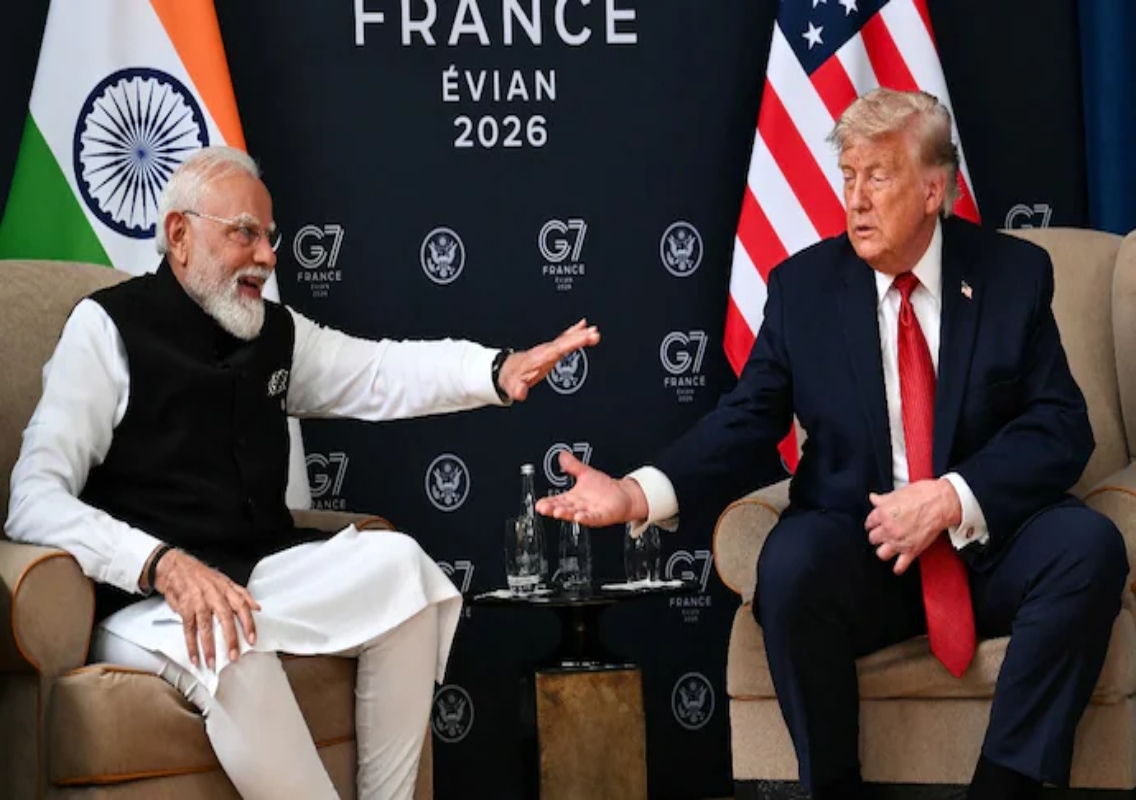


New Delhi: The proposed India-US bilateral trade agreement is more than 90% complete and could be finalised soon, a senior US State Department official has said, signalling movement in negotiations that have remained a key issue in the relationship between the two countries.
The official, speaking to PTI, said Washington and New Delhi were “very close” to completing the agreement, with only a few final issues left to resolve. The official also said the deal could take US-India relations to another level, describing trade as a longstanding sticking point between the two countries.
The comments come as India and the United States continue discussions on the first tranche of their proposed bilateral trade agreement. While the US official described the deal as more than 90% complete, the agreement has not yet been formally signed or announced as final.
US official says deal is 90% plus complete
According to the senior US official, the proposed agreement is “90-per-cent-plus” complete. The remaining issues are being worked out between the two sides, with the official suggesting that an announcement could come soon.
The official did not provide a specific date for signing the agreement. Asked when the deal could be concluded, the official indicated that the two governments were close but said the final details still needed to be settled.
The assessment represents the latest indication from Washington that negotiations have moved substantially forward after months of discussions over tariffs, market access and other trade-related issues.
For India, the final terms of the agreement remain important because preferential tariff treatment for Indian exports has been a key issue in the negotiations.
India has sought preferential tariff access
Union Commerce and Industry Minister Piyush Goyal said earlier in September that negotiations on the India-US free trade agreement had been concluded, while the two countries were fine-tuning the first tranche of the proposed bilateral trade agreement.
Goyal said India was waiting for Washington to provide the necessary framework for preferential tariffs for Indian exports. He also said India wanted its exporters to receive tariff treatment that was lower than that faced by competing countries.
The minister had also said that India would not negotiate against an artificial deadline. He stressed that the government would consider the interests of farmers, fishermen, micro, small and medium enterprises, startups, women entrepreneurs and young people while finalising the agreement.
This means that although the US official has described the negotiations as more than 90% complete, some important issues remain before the agreement can be formally concluded.
Trade has been a longstanding issue
The senior US official described trade as one of the biggest sticking points in the broader India-US relationship.
The official said the completion of the trade agreement could open the way for deeper engagement in other areas, including diplomacy, the Quad and connectivity initiatives.
India and the US have expanded cooperation in areas such as defence, technology, critical supply chains and regional security. Trade negotiations have progressed alongside those broader strategic discussions, but differences over tariffs and market access have remained.
The proposed agreement is expected to provide a framework for greater market access between the two economies, although the exact tariff concessions and sector-specific provisions will depend on the final text.
Rubio’s India visit expected in October
The US official also pointed to upcoming high-level engagements as another sign of continuing interaction between Washington and New Delhi.
US Secretary of State Marco Rubio is expected to visit India in October, according to the official. Prime Minister Narendra Modi is also expected to travel to the United States for the G20 Summit in Florida in December.
The official said these visits could provide additional opportunities for announcements and discussions on the wider bilateral relationship.
However, the exact agenda and outcomes of future meetings remain subject to confirmation by the respective governments.
Quad cooperation also highlighted
The official also highlighted cooperation through the Quad grouping, which brings together India, the United States, Japan and Australia.
According to the official, the foreign ministers of the four countries are expected to meet for the third time this year. The frequency of the meetings was cited as an indication of the importance Washington places on the grouping and of the attention given to it by India, Japan and Australia.
The Quad’s agenda includes cooperation on regional security, critical technologies, resilient supply chains, infrastructure and other areas of strategic importance in the Indo-Pacific.
The US official’s comments placed the trade agreement within this wider framework of bilateral and multilateral engagement rather than treating it as an isolated economic negotiation.
IMEC remains a US-India priority
The India-Middle East-Europe Economic Corridor, or IMEC, was another area highlighted by the US official.
The official described IMEC as a major priority for both Washington and New Delhi but said progress had been affected by instability in the Middle East. According to the official, work on parts of the corridor, including shipping and trucking routes, has already begun, while broader implementation depends on regional conditions.
The proposed corridor involves India, the Middle East and Europe and is intended to improve connectivity and trade through a combination of shipping and rail links.
The US official said countries including Saudi Arabia, Jordan, the United Arab Emirates and Israel would also have roles to play in developing their respective portions of the project.
Tariff uncertainty remains a factor
The progress on the trade agreement comes amid continuing uncertainty over US tariff policy.
India has been seeking preferential treatment for its exports as part of the negotiations. Goyal said earlier that the tariff rate applicable to Indian exports should be lower than those faced by India’s competitors.
The issue is significant for Indian exporters in sectors that depend heavily on access to the US market. The final agreement’s impact will depend on the tariff structure, product coverage, rules of origin and other provisions eventually agreed by the two governments.
India and the US have therefore continued to discuss the remaining details even after much of the broader negotiation has reportedly been completed.
Deal is not yet formally finalised
Despite the latest US assessment that the agreement is more than 90% complete, the trade pact should not be treated as final until both governments formally announce and sign it.
The senior US official said only a few final issues remain, while India’s commerce minister has also previously indicated that the two sides were fine-tuning the first tranche.
The remaining negotiations could determine the final tariff concessions and protections for sensitive sectors. Once an agreement is formally concluded, details of its implementation and timelines would provide greater clarity for businesses and exporters.
Conclusion
The India-US bilateral trade agreement is reportedly more than 90% complete, according to a senior US State Department official, who said the two countries are working through the remaining issues. India has separately stressed the importance of preferential tariff access for its exporters and protection of domestic sectors.
The proposed deal comes amid wider India-US engagement involving the Quad, IMEC and upcoming high-level visits. However, the agreement remains under negotiation and has not yet been formally signed, making the final terms and announcement timeline subject to further discussions.