







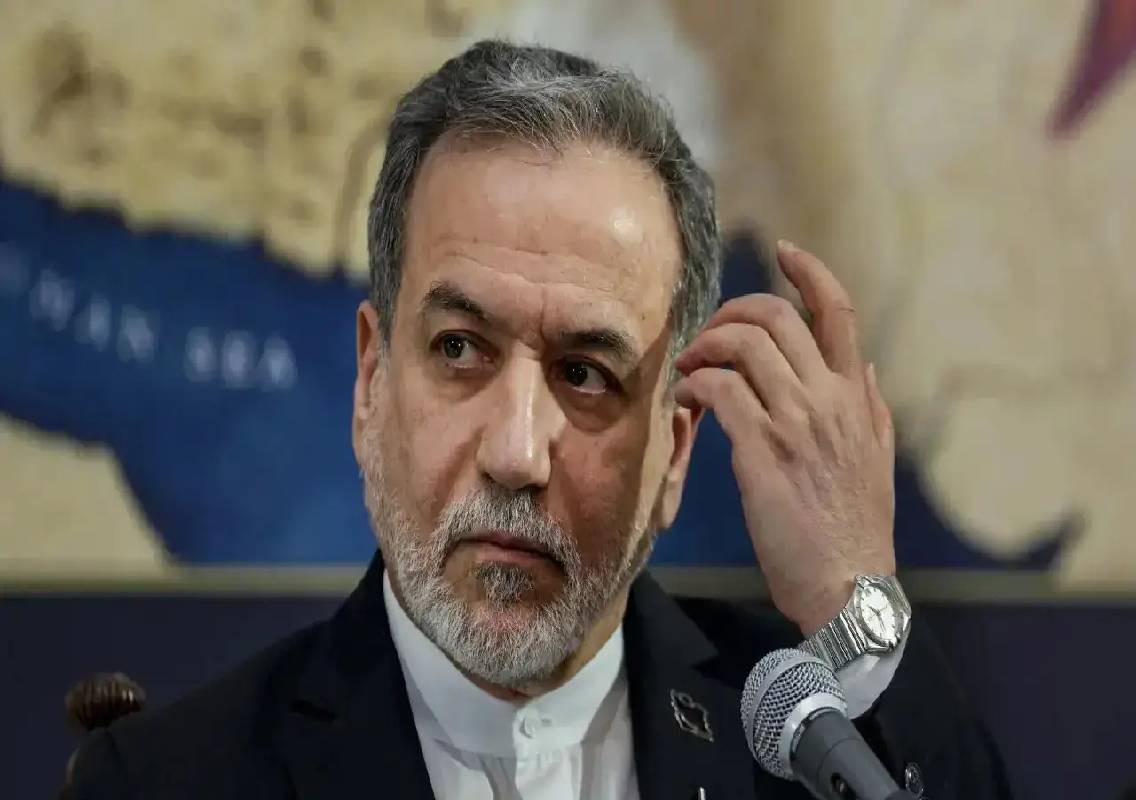


Tehran: Iran has denied that it is holding direct negotiations with the United States, while Foreign Minister Abbas Araghchi said discussions with Oman over arrangements for the Strait of Hormuz are in their final stages. The latest comments underline the difficult diplomatic situation surrounding the strategic waterway, with Tehran insisting that any future arrangement must address its concerns and that a deal with Oman alone would not automatically guarantee a full reopening of the strait.
Araghchi’s remarks come as diplomatic efforts continue amid the ongoing US-Iran conflict and mounting international concern over shipping through the Strait of Hormuz. Iran has been negotiating with Oman, which has played a mediating role, but Tehran says there are currently no direct negotiations with Washington.
The distinction is significant because the United States has been seeking progress on reopening the waterway, while Iran has linked the issue to wider conditions involving Washington.
Iran rejects claims of direct negotiations with US
Araghchi said Tehran is not currently engaged in direct talks with Washington.
According to recent reporting, Iran has maintained that communication with the United States is taking place indirectly through mediators rather than through face-to-face negotiations. Tehran has also argued that Washington’s alleged breaches of an earlier memorandum must be addressed before direct diplomacy can resume.
The position reflects the deep mistrust that has developed between the two countries.
Oman has consequently remained central to the diplomatic process. Muscat has acted as an intermediary between Tehran and Washington while separately holding discussions with Iran over the future administration and maritime arrangements in the Strait of Hormuz.
For now, Iran appears keen to distinguish between its negotiations with Oman and any direct political settlement with the United States.
Oman talks over Hormuz enter final stage
Araghchi said negotiations with Oman concerning the Strait of Hormuz have reached their final stages.
The immediate focus is reportedly on determining a transit route through the strategic waterway. Iran and Oman have already reached an understanding concerning geographic coordinates for a proposed shipping route, according to earlier reporting, with officials working towards a joint announcement.
However, the Iranian position remains that an agreement with Oman would not by itself resolve all questions surrounding the reopening of the strait.
This is an important distinction.
While an Oman-Iran arrangement could establish a mechanism for maritime traffic, Tehran has indicated that broader conditions involving the United States would also have to be addressed before the waterway can return to normal operations.
Strait of Hormuz remains at the centre of dispute
The Strait of Hormuz is one of the world’s most strategically important maritime routes.
Located between Iran and Oman, the narrow waterway connects the Persian Gulf with the Gulf of Oman and the Arabian Sea. A major share of global oil and gas shipments traditionally passes through the strait, making any prolonged disruption a concern for energy markets and importing countries.
The current dispute has therefore extended far beyond Iran, Oman and the United States.
Asian economies, European countries and other energy-importing nations have a direct interest in maintaining safe and predictable maritime traffic through the waterway.
Any arrangement that reduces uncertainty around shipping could therefore have implications for global energy markets and freight movements.
Iran says reopening depends on wider conditions
Iran’s position has become increasingly clear: reaching an agreement with Oman is not necessarily the same as fully reopening the Strait of Hormuz.
Iran’s Revolutionary Guard has separately stated that reopening the waterway depends on whether the United States accepts Iranian conditions. The Guard said on August 8 that the strait’s reopening was not contingent solely on the Iran-Oman discussions.
That statement indicates that significant differences remain despite progress in the Oman talks.
It also complicates expectations that the reported final-stage negotiations will immediately result in unrestricted shipping.
The issue is therefore both technical and political.
What is being discussed with Oman?
The Iran-Oman discussions have focused on the practical administration of maritime traffic.
Earlier reports said the two countries had reached an understanding on the coordinates of a route through the Strait of Hormuz. Iranian officials subsequently indicated that the discussions were moving towards a joint announcement.
The proposed arrangements have generated considerable international attention because of questions about which routes ships would use and what authority would govern traffic.
Reports have suggested that Iran could exercise control over portions of the shipping route, although the precise details remain subject to negotiation and official clarification.
The disagreement over maritime administration is closely connected to the wider question of Iranian sovereignty and security concerns.
Why the US remains important to the Hormuz issue
Although the immediate negotiations are between Iran and Oman, the United States remains central to the dispute.
Washington has been seeking the reopening of the waterway and has previously indicated that progress has been made in discussions involving Oman. However, US officials have also acknowledged that a final agreement had not yet been reached.
Iran, meanwhile, has accused Washington of violating commitments made under an earlier memorandum of understanding.
Tehran has argued that the United States must take steps to address those alleged violations before broader diplomacy can move forward.
This creates a difficult diplomatic sequence: Iran and Oman may reach a maritime arrangement, but Washington and Tehran still need to resolve their larger disagreements.
Mistrust remains a major obstacle
The lack of direct negotiations reflects the depth of mistrust between Iran and the United States.
Iran has repeatedly stressed that it does not want talks to take place under what it considers threats or pressure. Washington, meanwhile, has pushed for an agreement addressing the conflict and the status of the strategic waterway.
The disagreement over the Strait of Hormuz is therefore part of a much wider confrontation.
Even if technical arrangements can be agreed between Iran and Oman, a lasting solution may require broader diplomatic engagement between Tehran and Washington.
That is why Araghchi’s rejection of direct talks is significant.
It suggests that the Oman channel remains active, but the wider US-Iran diplomatic track has yet to reach the point where both sides are prepared to negotiate directly.
Shipping companies face continued uncertainty
For shipping companies, the central concern is safety and predictability.
A formal agreement establishing a recognised transit route could provide greater clarity. However, uncertainty will remain if different parties continue to disagree over who controls the route and under what conditions ships can pass.
The longer uncertainty persists, the greater the potential impact on shipping schedules, insurance costs and energy transportation.
Any reopening would therefore need to provide more than a political announcement.
Commercial operators would require confidence that the route is secure and that the rules governing transit are clear and enforceable.
Global energy markets are watching closely
The Strait of Hormuz has an outsized role in global energy security.
The possibility of prolonged restrictions or uncertainty around the waterway can influence oil and gas markets because traders factor potential supply disruptions into prices.
For countries that rely heavily on imported energy, developments around the strait can have wider economic consequences.
India is among the countries with a significant interest in stability in the Gulf region because of its energy imports and the large Indian community living and working across Gulf countries.
Any sustained disruption to shipping could therefore have implications for India’s energy costs, freight expenses and broader economic environment.
Oman’s diplomatic role grows
Oman’s position as a mediator has become increasingly important during the crisis.
The country has historically maintained diplomatic channels with multiple sides in regional disputes, allowing it to facilitate communication when direct contact is politically difficult.
The current Iran-US confrontation has again placed Muscat in a central diplomatic role.
By negotiating with Iran over the Strait of Hormuz while also maintaining communication with Washington, Oman is positioned to help bridge some of the gaps between the two sides.
However, its ability to deliver a comprehensive settlement remains limited because the most difficult disagreements are ultimately between Tehran and Washington.
A deal is possible, but reopening is not guaranteed
The wording coming from Tehran suggests that an Oman agreement could be close, but expectations of an immediate reopening of the waterway should be treated cautiously.
Iranian officials have made clear that additional conditions remain.
Reports indicate that Tehran wants the United States to address issues linked to the earlier memorandum before the waterway can fully return to normal.
This means that even a successful Iran-Oman agreement may represent only one stage of a larger process.
The distinction between establishing a transit route and guaranteeing unrestricted shipping is particularly important.
What happens next?
The immediate next step is expected to be further discussions between Iran and Oman over the proposed maritime arrangement.
If the two sides finalise their understanding, a joint announcement could provide greater clarity on the route and operational framework.
However, the bigger question will remain how Washington responds.
If Iran continues to reject direct talks while insisting that the US address alleged breaches of the earlier memorandum, negotiations could remain indirect for some time.
At the same time, pressure from energy markets and international shipping interests could encourage all sides to seek a practical arrangement.
Why Araghchi’s statement matters
Araghchi’s latest comments highlight two parallel diplomatic tracks.
The first is the Iran-Oman discussion over the practical management of the Strait of Hormuz. Tehran says this process is nearing completion.
The second is the broader Iran-US relationship, where direct negotiations remain off the table for now.
The two tracks are connected but not identical.
An agreement with Oman could potentially improve maritime arrangements without resolving the fundamental political dispute between Iran and the United States.
That distinction will be crucial in determining whether shipping through Hormuz can return to stable conditions.
Conclusion
Iranian Foreign Minister Abbas Araghchi’s latest remarks indicate that negotiations with Oman over the Strait of Hormuz are approaching a critical stage, but they do not signal a breakthrough in direct US-Iran diplomacy.
Tehran continues to reject direct talks with Washington, while maintaining that indirect communication through mediators remains possible.
At the same time, Iran and Oman are working towards a maritime arrangement that could establish a transit route through the strategic waterway. Yet Iran has stressed that such an agreement alone would not necessarily guarantee a full reopening.
For the international community, the key question now is whether the technical progress between Iran and Oman can be converted into a stable shipping arrangement — and whether that progress can eventually create enough confidence for Tehran and Washington to return to broader negotiations.
For now, the Hormuz deal may be nearing the finish line with Oman, but the larger US-Iran dispute remains unresolved.