







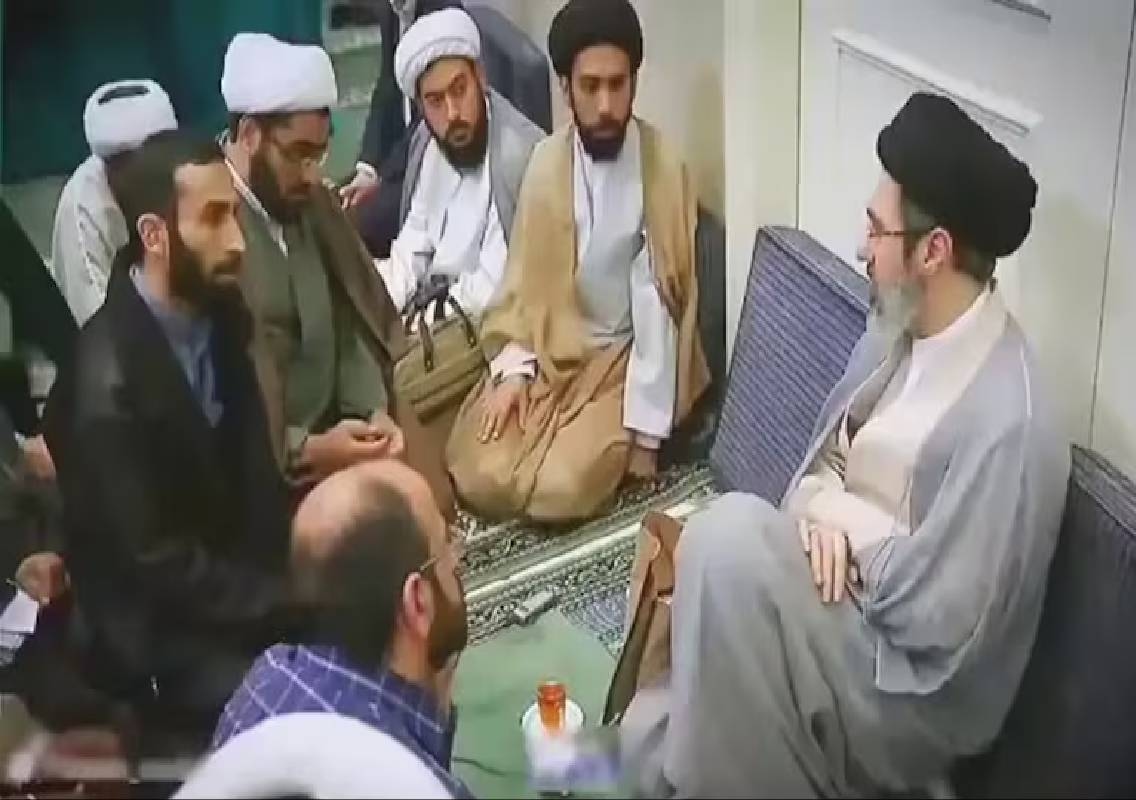


Tehran: Iran has released a rare new video of Supreme Leader Mojtaba Khamenei amid renewed speculation about his health and whereabouts. The footage, released through Iran’s semi-official Mehr News agency, appears intended to counter reports that Khamenei is critically ill following injuries he reportedly sustained during the February 28 US-Israeli attack that killed his father, former Supreme Leader Ayatollah Ali Khamenei.
The release comes after a period of limited public visibility for Mojtaba Khamenei, whose absence has fuelled rumours and conflicting reports about his condition. The development has also drawn attention because US President Donald Trump has previously raised questions about the Iranian leader’s health, while Iranian officials have continued to maintain that he remains in control.
The latest video does not, by itself, independently establish when it was recorded or provide a detailed medical assessment of Khamenei’s condition. However, its release is being viewed as an effort by Tehran to address growing speculation surrounding the Supreme Leader.
Rare footage emerges amid health speculation
The video was released by Iran’s semi-official Mehr News agency and shows Mojtaba Khamenei in what Iranian media presented as a public appearance. According to reports, the footage was released on August 8 as questions continued to circulate about the Supreme Leader’s health.
The timing of the release is significant. Khamenei has remained largely out of public view, and the lack of recent appearances has contributed to speculation about whether injuries sustained during the February attack may have been more serious than previously acknowledged.
Reports have previously said that Mojtaba Khamenei suffered injuries during the attack that killed his father. The reports have described injuries to his face and leg, although details surrounding the extent of those injuries have varied between sources.
The latest footage therefore carries significance beyond its visual content. For Iranian authorities, showing the Supreme Leader publicly can help counter claims that his health has deteriorated severely or that he is unable to perform his duties.
What is known about Mojtaba Khamenei’s health?
Questions about Mojtaba Khamenei’s health have persisted for months, partly because of his limited public appearances.
Iranian officials have previously rejected reports suggesting that he was incapacitated. In May, a senior Iranian official was reported as saying that Khamenei was in “full health” following injuries sustained during the war. Other reports have described him as having suffered injuries to his kneecap and lower back.
At the same time, reports from Israeli and other international media have periodically raised questions about his condition. Some have suggested that he was seriously injured and required medical treatment, while other accounts have questioned whether he remains in full control of the government.
The conflicting claims have made independent verification difficult.
The newly released video offers a visual indication that Khamenei is alive and able to appear on camera, but it does not answer every question about his health. The footage’s date and circumstances are important factors when assessing what it demonstrates.
Trump’s comments add to the speculation
The latest development follows comments and claims from Donald Trump that have added to uncertainty around the Iranian leadership.
Trump has previously questioned the condition of Mojtaba Khamenei, with reports noting that he cited claims surrounding the Supreme Leader’s health. Such comments have received significant attention because Washington and Tehran remain locked in a wider confrontation following the US-Israeli military campaign against Iran.
The White House’s statements and Iranian officials’ responses have formed part of a broader information battle surrounding the conflict. Both sides have sought to project strength while controlling the narrative around their leadership and military capabilities.
The release of the new footage can therefore also be viewed in the context of that information struggle. By putting images of Khamenei into circulation, Tehran has an opportunity to directly challenge reports that portray him as critically ill or incapable of governing.
However, the video should not be interpreted as confirmation or rejection of every claim surrounding his health. A visual appearance can establish that a person is alive and able to appear publicly, but it cannot independently verify the full extent of any injuries or medical condition.
Mojtaba Khamenei’s unusual rise to power
Mojtaba Khamenei became Iran’s Supreme Leader after his father, Ayatollah Ali Khamenei, was killed in the February 28 US-Israeli attack.
His succession marked a major change in Iran’s leadership during an ongoing conflict. The younger Khamenei had previously been a prominent but relatively private figure within Iran’s political and religious establishment.
His appointment also attracted international attention because of his close links to Iran’s security and political establishment. The transition took place under extraordinary circumstances, with Iran dealing with the consequences of the military strikes and the loss of its long-serving Supreme Leader.
Since taking power, Mojtaba Khamenei has remained less publicly visible than many international observers would expect from a national leader. Statements attributed to him have been carried by Iranian state media, but his limited physical appearances have continued to generate questions.
The latest footage is consequently significant because it provides a rare visual appearance of the country’s current Supreme Leader at a time when information about his condition remains contested.
Why the video matters for Tehran
The release of the footage could serve several purposes for the Iranian government.
First, it can reassure supporters inside Iran that the Supreme Leader remains active and capable of performing his duties. Second, it can challenge international reports that have questioned his health. Third, it can demonstrate continuity within Iran’s leadership during a period of severe military and political pressure.
Iran has faced intense scrutiny since the conflict began, with information about senior officials often difficult to independently verify. In such an environment, images of senior leaders can carry considerable political significance.
The timing also matters because the latest reports about Khamenei’s health appeared to have intensified in recent days. The release therefore provides Tehran with an opportunity to respond without relying solely on written statements from officials.
Nevertheless, questions are likely to continue until Khamenei makes a more substantial and independently verifiable public appearance.
Footage does not settle every health question
While the video is important, caution is needed when interpreting it.
The footage reportedly shows Khamenei appearing in good health, but reports indicate that it is undated. That means it cannot independently establish exactly when the recording was made or whether his condition has changed since it was filmed.
This distinction is particularly important because the central question surrounding Khamenei has not simply been whether he is alive. It has also concerned the extent of his injuries, his ability to govern and whether he has been actively participating in Iran’s decision-making process.
Iranian officials have repeatedly said that he remains in control, while external reports have raised different possibilities. The available information therefore remains contradictory.
For now, the new video is best understood as evidence that Tehran wants the public to see Mojtaba Khamenei and as a direct response to speculation about his condition, rather than as definitive medical proof.
A wider information battle
The controversy surrounding Khamenei’s health reflects the broader information environment surrounding the US-Iran conflict.
During wartime, information about political leaders, military operations and casualties can become highly contested. Governments often release selective footage or statements to demonstrate control and counter hostile narratives, while opposing governments and intelligence agencies may present different assessments.
Mojtaba Khamenei’s case has attracted particular attention because of his position as Iran’s Supreme Leader and because his rise to power followed the death of his father during the conflict.
The absence of regular public appearances created a vacuum that allowed rumours to spread. The latest video is an attempt to fill part of that vacuum, but it may not end the speculation completely.
What happens next?
The focus will now be on whether Mojtaba Khamenei makes additional public appearances or delivers a longer, independently verifiable address.
A sustained public appearance could provide stronger evidence about his ability to carry out his duties and could help reduce uncertainty surrounding his health. Conversely, continued limited visibility could ensure that questions about his condition remain part of the wider discussion surrounding Iran’s leadership.
For Tehran, maintaining confidence in the Supreme Leader’s authority is particularly important during an ongoing confrontation with the United States and Israel. For international observers, independently verifying information about his health remains difficult.
The newly released footage is therefore an important development, but it does not conclusively resolve all questions surrounding Mojtaba Khamenei’s medical condition. It does, however, demonstrate that Iranian authorities are actively responding to the growing speculation by putting fresh images of the Supreme Leader into the public domain.