







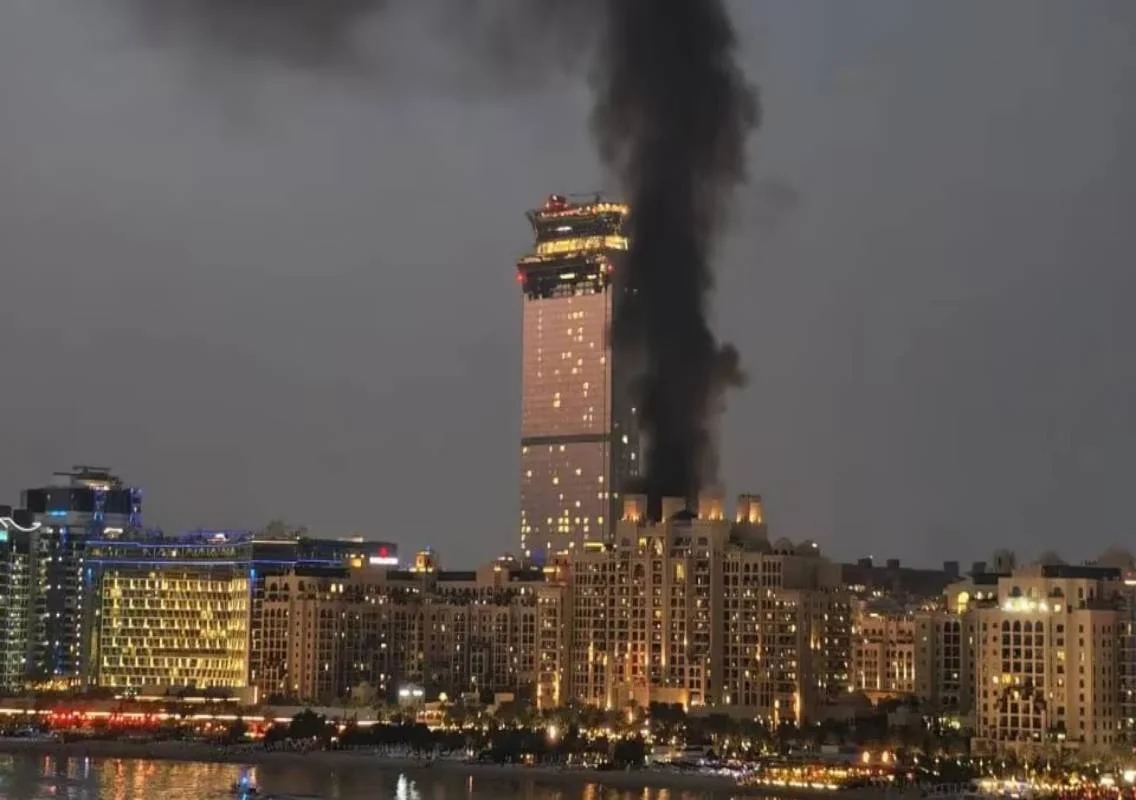


Abu Dhabi: Iran has intensified its retaliatory strikes against the United Arab Emirates (UAE), accusing the Gulf nation of supporting United States military efforts and aligning with Israel, even as the conflict in the Middle East enters its 18th day.
According to the UAE Defence Ministry, Iran has launched a total of 304 ballistic missiles, 15 cruise missiles and 1,627 kamikaze drones targeting the Emirates since February 28. Officials stated that the majority of these aerial threats were successfully intercepted by the country’s advanced air defence systems.
Oil field strike and airspace disruption
On Tuesday morning, an oil field in Abu Dhabi was struck by an Iranian projectile, triggering heightened security concerns across the region. Authorities temporarily shut down airspace for several hours as a precautionary measure.
Despite a noticeable decline in the frequency of attacks in recent days, major urban and economic centres such as Dubai, Abu Dhabi and Sharjah continue to remain high-priority targets. The UAE’s status as a global financial and commercial hub has made it a strategic focal point in the ongoing conflict.
Iran’s justification and strategic messaging
Iran’s Islamic Revolutionary Guard Corps (IRGC) has defended the strikes, claiming that the UAE’s support for US military operations and its participation in the Abraham Accords have made it a legitimate target.
Analysts suggest that beyond military objectives, Iran’s strategy also aims to influence public opinion across the Arab world. By targeting globally recognised cities like Dubai, Tehran seeks to amplify the visibility of its actions and project strength among regional audiences, particularly amid longstanding tensions linked to Palestine and Gaza.
The Iranian leadership has historically leveraged political and ideological narratives to consolidate domestic support and sustain its regional posture.
UAE’s limited offensive options
While the UAE government is reportedly angered by the continued attacks, its military capabilities are largely defensive in nature. Experts note that the Emirates lacks the long-range strike capacity required to directly target Iranian missile infrastructure located deep within mountainous regions such as the Zagros and Alborz ranges.
As a result, there is growing speculation that Gulf nations, including the UAE, may rely on the United States for any potential retaliatory action against Iran.
Regional implications and Strait of Hormuz concerns
Iran’s continued missile and drone campaign is widely seen as a broader message to Gulf nations, signalling that US security guarantees may not be sufficient to deter Tehran’s military reach.
The conflict has also raised alarms over the strategic Strait of Hormuz, a critical global oil transit chokepoint. Any prolonged disruption in the region could have significant economic consequences, particularly for oil-dependent economies.
Iran has reportedly issued an implicit ultimatum to Gulf countries — either distance themselves from US military presence or face continued attacks and economic fallout.
Prolonged conflict and future risks
Although the scale of Iranian attacks has reduced, military observers believe that strikes on Gulf countries and Israel may continue at least until the end of March.
Iran’s broader strategy appears to rely on asymmetric warfare, including the potential use of proxy groups to target US and Israeli interests beyond the immediate conflict zone. There are also concerns that tensions could extend into other critical maritime regions such as the Red Sea.
While Gulf nations face substantial economic and security risks, Iran’s objective may be centred on enduring the military pressure and projecting resilience against its adversaries.
Conclusion
The ongoing escalation between Iran and Gulf nations, particularly the UAE, underscores the fragile security environment in the Middle East. With missile strikes continuing and economic risks mounting, the situation remains volatile.
Unless diplomatic efforts gain traction or there is a significant political shift within Iran, the region could face prolonged instability, with far-reaching consequences for global energy markets and international security.