







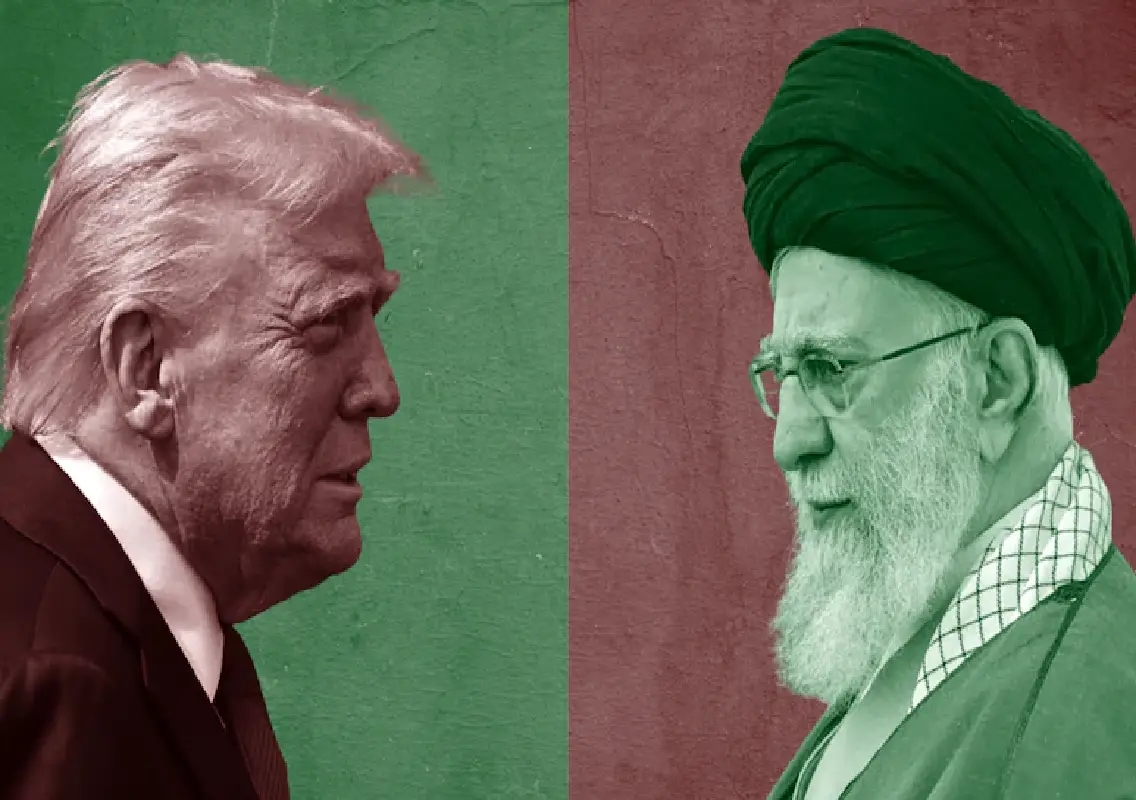


Geneva: The second round of indirect nuclear negotiations between Iran and the United States is underway, but strong remarks from Supreme Leader Ayatollah Ali Khamenei have shifted attention away from diplomacy and towards escalating rhetoric against US President Donald Trump and American military posture.
The talks are aimed at reducing tensions surrounding Tehran’s nuclear programme and exploring the possibility of a fresh framework for limits, monitoring and sanctions relief. Officials on both sides have signalled cautious openness to dialogue, but the political messaging around the negotiations has revealed deep mistrust and strategic signalling.
Just before the talks resumed, Trump said he believed Iran was interested in reaching an agreement and that a diplomatic pathway remained possible. However, Khamenei’s latest public comments suggested resistance to US pressure and scepticism about Washington’s intentions.
Khamenei issues direct warning to Trump
In a series of three consecutive posts on X, Khamenei directly addressed Trump’s earlier comments about US pressure on Iran and the long-standing hostility between the two countries.
Referring to Trump’s statement that the United States had failed for decades to dismantle Iran’s governing system, Khamenei wrote that this amounted to an admission of failure by Washington. He added that such an outcome would continue in the future as well.
He also challenged repeated American claims about unmatched military strength, saying that even the most powerful armed forces can be struck in ways that leave them unable to recover. In a further pointed message, he referenced US naval deployments and warned that while warships are dangerous, the weapons capable of sinking them are more dangerous still.
The remarks were widely interpreted by analysts as deterrent signalling timed to coincide with the diplomatic engagement, reinforcing Iran’s red lines while negotiations continue through intermediaries.
Military movements raise pressure around talks
The renewed diplomatic contacts come alongside reports of an expanded US military presence in nearby waters. According to multiple international media reports, the United States has moved additional naval assets, including aircraft carriers, closer to the region as a precautionary and pressure measure.
Satellite imagery cited by global broadcasters has indicated the presence of the USS Abraham Lincoln strike group in nearby waters. Reports have also said that the USS Gerald R Ford — regarded as the world’s largest warship class — has been ordered toward the broader theatre and could be positioned within weeks.
In response, Iran’s Islamic Revolutionary Guard Corps has conducted maritime drills in a key oil transit corridor, signalling readiness and attempting to demonstrate deterrence capability. Military observers say such parallel shows of strength are typical during high-stakes negotiations but also increase the risk of miscalculation.
Structure and mediation of the negotiations
The current round of talks is being conducted indirectly, with messages passed through mediators rather than direct face-to-face bargaining between American and Iranian negotiators. The process is being facilitated by Omani Foreign Minister Badr Albusaidi, who has previously played a shuttle diplomacy role between the two sides.
The US delegation includes Middle East envoy Steve Witkoff and adviser Jared Kushner, both of whom were involved in earlier backchannel exchanges. Trump has said he remains indirectly engaged and is monitoring developments closely.
Iran’s team is being led by Foreign Minister Abbas Araghchi, who stated before the meetings that his objective was to secure a fair and balanced agreement rather than concede under threats. In a public message, he stressed that capitulation was not under consideration, framing the talks as negotiations between equals.
US signals cautious optimism
US Secretary of State Marco Rubio has described the diplomatic opening as real but difficult. He said there is an opportunity to reach an agreement through diplomacy but cautioned that expectations should remain measured given the complexity of the issues involved.
Key sticking points are believed to include uranium enrichment limits, verification access, sequencing of sanctions relief, and regional security concerns. Previous agreements faltered over compliance disputes and political changes in leadership, making both sides wary of long-term commitments without stronger guarantees.
Diplomatic experts note that indirect formats often slow progress but can help lower political risk, allowing governments to test compromise positions without appearing weak domestically.
Conclusion
The latest round of indirect nuclear talks is proceeding amid a tense mix of diplomacy and deterrence messaging. While negotiators explore possible pathways toward an agreement, Khamenei’s sharp warnings and visible military movements on both sides underline how fragile the environment remains. Whether the process yields a breakthrough or deepens confrontation will depend on how far each side is willing to move beyond rhetoric toward verifiable commitments.