


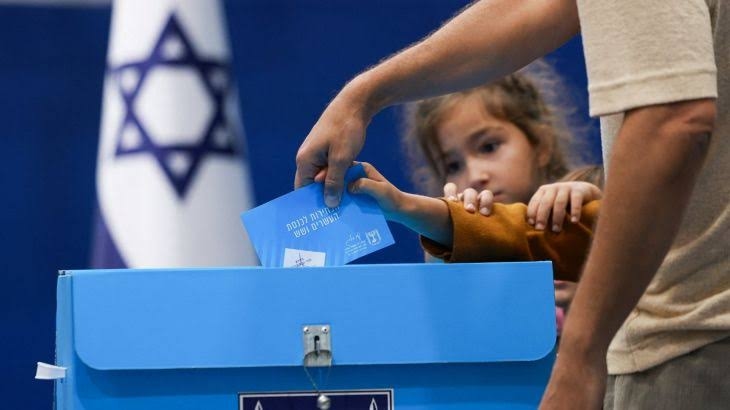


Jerusalem: Israelis are voting on October 27 in a closely watched parliamentary election that could determine the political future of Prime Minister Benjamin Netanyahu after the Hamas-led attack of October 7, 2023, and years of conflict involving Gaza, Iran and other regional adversaries.
The election is the first since the October 7 attack and the wars that followed. Netanyahu is asking voters to judge his leadership by Israel’s military campaigns and the weakening of its regional adversaries. His opponents argue that those achievements cannot erase the security failures that allowed the attack or the government’s handling of the hostage crisis and its aftermath.
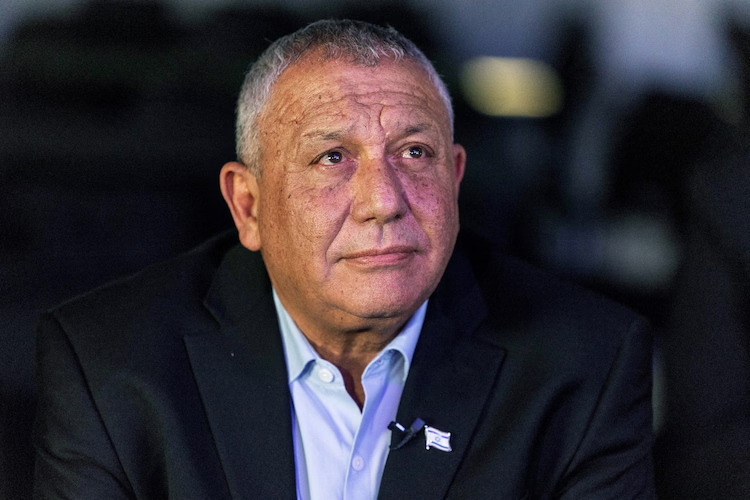
Former military chief Gadi Eisenkot, who leads the centrist Yashar party, has emerged as a principal challenger. Final opinion polls published before the election placed his party ahead of or close to Netanyahu’s Likud, but they also pointed to a divided Knesset in which neither major political camp is assured of a majority.
That distinction is central to understanding the election. Israelis do not directly elect their prime minister. They vote for political parties, and the leader who can secure the support of at least 61 members of the 120-seat Knesset is best placed to form the next government.
The final polls indicated that Netanyahu’s opponents could collectively win more seats than his established allies. However, divisions over security policy, religion, settlements and cooperation with Arab parties could complicate their efforts to form a government. The election result may therefore begin a period of coalition negotiations rather than settle the question of who will govern Israel.
What is at stake for Benjamin Netanyahu?
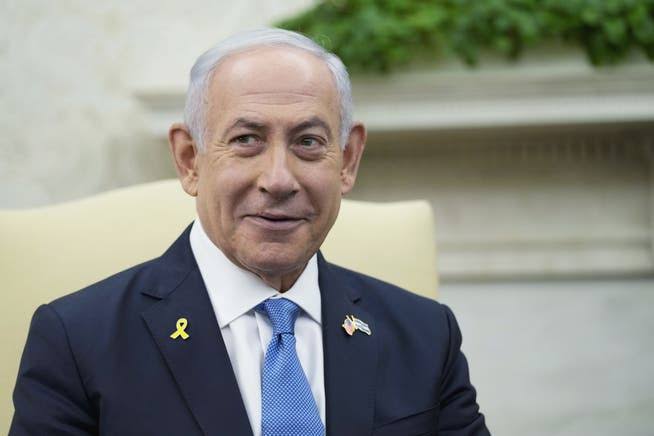
Netanyahu has served as Israel’s prime minister for more than 18 years across three separate periods in office. He is seeking another term in a political contest shaped by questions about national security, accountability and the direction of the country.
For Netanyahu, the election offers an opportunity to present his military record as evidence that Israel has recovered from the strategic shock of October 7. His campaign has highlighted operations against Hamas, the weakening of Hezbollah and military action against Iran.
His opponents have focused on the failures preceding the Hamas attack, arguing that the government must accept responsibility for the intelligence and security breakdown. They have also criticised Netanyahu for resisting an independent state commission of inquiry and for failing to secure an earlier agreement to release the remaining hostages.
The attack remains a defining issue for many voters. An Israel Democracy Institute survey cited in the supplied reporting found that 68% of Jewish Israelis considered October 7 a central factor in deciding which party to support.
The election will also influence the future of Netanyahu’s far-right and ultra-Orthodox allies. Their parliamentary strength could shape decisions on military conscription, judicial reform, settlements in the occupied West Bank and the future of Gaza.
A victory for Netanyahu’s existing coalition would give those parties another opportunity to pursue their policy priorities. A change of government could alter the balance between secular and religious parties, although a new administration would still face major security and diplomatic challenges.
Netanyahu’s corruption trial remains unresolved
Netanyahu is standing trial on charges of bribery, fraud and breach of trust. The proceedings began in 2020, and he denies wrongdoing, describing the cases as politically motivated.
The prosecution’s allegations involve three principal cases.
Case 1000 concerns gifts, including cigars and champagne, allegedly received by Netanyahu and his wife from wealthy individuals. Prosecutors allege that Netanyahu provided political assistance in return.
Case 2000 centres on alleged discussions between Netanyahu and newspaper publisher Arnon Mozes. The prosecution alleges that they discussed arrangements involving newspaper coverage and measures affecting a competing publication.
Case 4000 concerns alleged regulatory benefits provided to telecommunications company Bezeq in exchange for favourable coverage of Netanyahu on the Walla news website. It is the only one of the three cases in which he faces a bribery charge.
Netanyahu has denied the allegations in all three cases. The trial remains unresolved, and no final verdict is available ahead of the election.
Under Israeli law, a sitting prime minister can remain in office while criminal proceedings are underway. The legal cases therefore do not automatically prevent Netanyahu from contesting the election or attempting to form another government.
The proceedings also intersect with the wider debate over judicial reform. Netanyahu’s supporters argue that changes to the judiciary would reduce the influence of unelected judges, while opponents contend that the proposed changes could weaken institutional checks on political power.
Although the corruption cases remain significant, the wars and national security have dominated much of the election campaign.
Who are Netanyahu’s main challengers?
The opposition is made up of parties with different ideological positions, making it difficult to treat them as a single political bloc.
Gadi Eisenkot, a former chief of the Israeli military, leads Yashar. He joined the emergency government formed after October 7 but later left amid disagreements over the direction of the Gaza war.
Eisenkot has campaigned on security experience and government accountability. He has promised to establish a state commission of inquiry into the failures surrounding the Hamas attack. The war has also affected his family personally: his son and two nephews were killed while serving in Gaza.
Former prime ministers Naftali Bennett and Yair Lapid are contesting the election together under the Beyachad, or Together, alliance. Bennett comes from the religious right but presents himself as an alternative to Netanyahu, while Lapid remains a prominent centrist politician.
Avigdor Liberman’s Yisrael Beyteinu combines a hard-line security position with a secular approach to domestic policy. Liberman has said he will not join another Netanyahu-led government.
Yair Golan leads the Democrats, a centre-left party. The party has been more open than some other Jewish opposition parties to cooperation with Arab political groups.
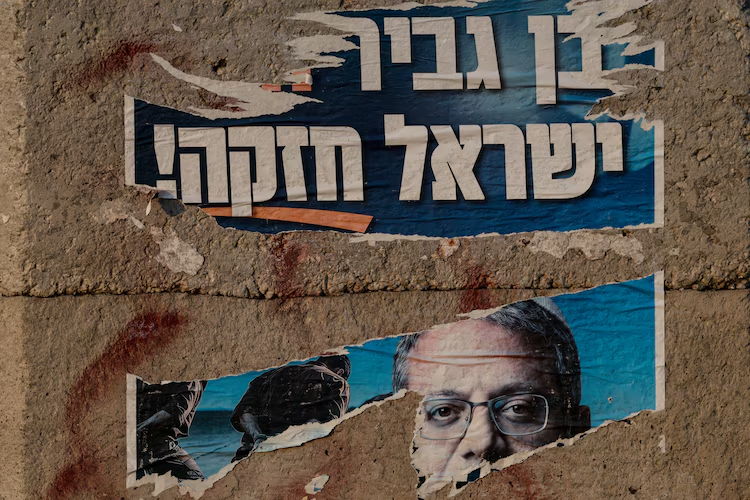
Netanyahu’s established allies include the ultra-Orthodox Shas and United Torah Judaism parties, along with the far-right Otzma Yehudit, led by Itamar Ben-Gvir, and the Religious Zionist Party, associated with Bezalel Smotrich.
Ben-Gvir and Smotrich support expanding Jewish settlements and strengthening Israeli control over the occupied West Bank. Their number of seats could determine how much influence they retain if Netanyahu forms another government.
Smaller parties, including groups associated with Ofer Winter and the Reservists-Economy alliance led by Yoaz Hendel and Yaron Zelekha, could also affect the result. If they cross the electoral threshold, they could win seats and influence the coalition negotiations. If they fall short, they will not receive representation in the Knesset.
What do the final opinion polls show?
The final polls published before election day suggested that Eisenkot’s Yashar could emerge as the largest individual party, with projections generally placing it at around 22–23 seats. Likud was projected to win approximately 19–21 seats, while the Beyachad alliance was forecast to finish third with around 14–15 seats.
However, the polls did not show a clear path to a majority for either of the main camps.
One Channel 13 projection placed the change bloc at 54 seats and Netanyahu’s coalition at 50, with predominantly Arab parties projected to win 16 seats. A Channel 12 poll put the opposition parties at 56 seats, Netanyahu’s allies at 50 and Arab parties at 14. The figures varied across surveys, reflecting uncertainty about smaller parties and their ability to cross the electoral threshold.
These are projections, not election results. They indicate possible seat distributions but cannot establish which leader will become prime minister.
Israel’s electoral threshold is 3.25% of valid votes. Parties that fail to reach it do not receive seats, and their exclusion can change how the remaining seats are distributed. That makes support for smaller parties particularly important in a closely divided contest.
The final outcome will depend not only on which party wins the most seats but also on how the parties perform collectively and which combinations they are willing to support after voting ends.
Why coalition negotiations matter so much
Israel’s parliamentary system uses nationwide proportional representation. Voters choose party lists rather than individual constituency candidates, and seats are allocated according to each party’s share of the vote, subject to the electoral threshold.
Because political support is divided among multiple parties, no single party has ever won the 61 seats required to govern alone. Governments have therefore depended on coalitions.
After the results are established, Israel’s president consults the elected parties and asks the lawmaker considered most likely to assemble a majority to form a government. That person does not necessarily have to lead the largest party.
Smaller parties can consequently exercise considerable influence. A party with only a handful of seats may determine whether a coalition reaches the required majority. In return, it may seek ministerial positions, budget commitments or policy concessions.
This system also makes coalition-building difficult when parties disagree on fundamental issues. Israel’s opposition includes politicians from the nationalist right to the centre-left, with differing views on religion, the judiciary, settlements and relations with Palestinian political groups.
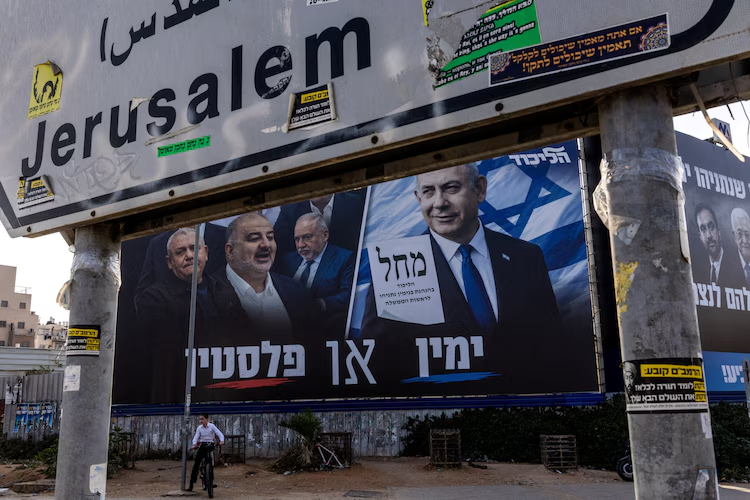
The country experienced repeated elections between 2019 and 2022 after parties struggled to form stable governments. If the current election produces another deadlock, Israel could face renewed negotiations or another election.
Could Arab parties determine who governs?
Arab political parties could become important in the coalition arithmetic because polls have projected them to win a significant share of the 120 Knesset seats.
Mansour Abbas’s Ra’am party previously crossed a major political divide by joining the coalition that removed Netanyahu from power in 2021. That experience demonstrated that Arab parties could influence government formation, although cooperation remains politically contentious.
Eisenkot has not completely ruled out working with Arab parties, but he has attached conditions relating to their positions on Hamas and Israel’s security. Other opposition leaders face pressure from voters who oppose relying on Arab lawmakers to form a government.
Netanyahu has used the prospect of such cooperation to challenge the opposition’s credibility, arguing that his rivals would depend on Arab parties to govern.
Turnout among Palestinian citizens of Israel could also affect the final balance. Their priorities include violent crime and public safety in their communities, alongside national questions involving the war and relations with the Palestinian population.
Even if Arab parties win enough seats to become pivotal, their influence will depend on whether other parties are prepared to work with them and what terms any arrangement would involve.
Military service and judicial reform divide voters
Security is not the only issue shaping the campaign. Military conscription and the relationship between religion and the state have become major sources of political tension.
Most Jewish Israeli men and women are subject to compulsory military service, while ultra-Orthodox men studying in religious seminaries have historically received exemptions. The arrangement has become increasingly contentious after years of war and repeated reserve deployments.
Netanyahu relies on ultra-Orthodox parties that want to protect exemptions for religious students. Eisenkot and much of the opposition support a broader obligation to undertake military or national service.
The dispute carries practical consequences for the armed forces, as well as political implications for any coalition that depends on ultra-Orthodox support.
Judicial reform is another dividing line. Netanyahu’s government has pursued changes that would give politicians greater influence over judicial appointments. Supporters argue that the reforms would make the judiciary more accountable, while critics say they would undermine judicial independence.
The next government will determine whether the changes are implemented, amended or reversed. The election will therefore shape not only Israel’s security policy but also the balance of power among its political institutions.
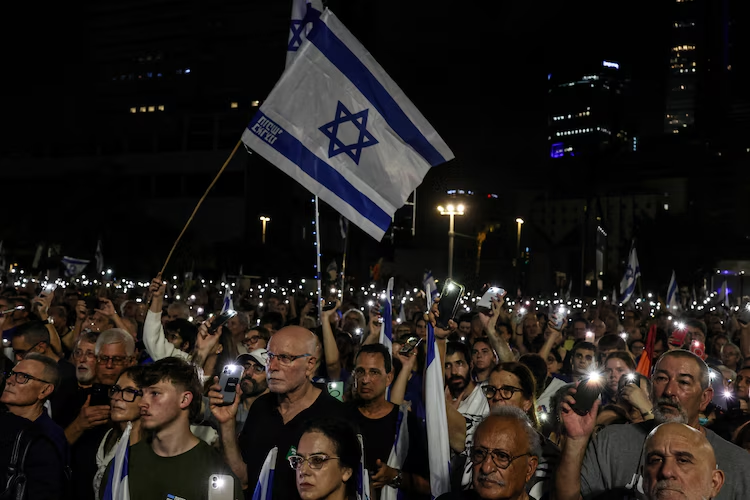
Israel’s economy faces the cost of prolonged war
Israel’s economy has shown resilience despite years of conflict, but the financial consequences of the wars remain substantial.
The technology sector, artificial intelligence and defence-related industries have helped support economic activity. The stock market and the shekel have also performed strongly in periods during the conflict.
However, market performance does not necessarily reflect the pressures experienced by households and businesses. Housing, food and other everyday expenses remain important concerns, while reserve-duty deployments have disrupted employment and placed additional pressure on families and smaller businesses.
Defence spending has risen sharply, increasing the burden on public finances. Higher military expenditure and a larger budget deficit could eventually require difficult choices over taxation and civilian spending.
Economic concerns also intersect with the political debate over military service. A more equal distribution of service obligations could affect employment and the availability of personnel, while continued conflict would place further pressure on government spending.
For voters, the question is whether the next government can manage the security situation while addressing the cost of living and the financial consequences of prolonged war.
Gaza remains central to Israel’s security debate
The future of Gaza is another major issue, although much of the domestic campaign has focused on security objectives rather than a fundamental change in Israel’s approach to Palestinian statehood.
Netanyahu has argued that Israel should not withdraw its forces or allow reconstruction to proceed until Hamas is disarmed. Eisenkot has said Hamas should no longer govern Gaza within 18 months, whether through a framework supported by US President Donald Trump or through further military action.
Bennett has also supported maintaining Israeli positions in Gaza until Hamas gives up its weapons. The leading candidates therefore share the objective of preventing Hamas from continuing to govern the territory, but differ over how to achieve it and what should follow.
The election has offered no clear path towards Palestinian statehood. Netanyahu, Eisenkot and Bennett have all opposed a Palestinian state in the foreseeable future, although Eisenkot has opposed Israeli annexation of the West Bank.
A change of government could affect Israel’s military tactics, relations with Western allies and its response to settlement expansion and settler violence. However, a different government would not automatically produce a major shift in policy towards Palestinian statehood.
The humanitarian consequences of the Gaza war and the future governance of the territory remain major international concerns, even as the Israeli election campaign concentrates largely on security and political leadership.
Iran and relations with Washington loom over the election
Iran has been central to Netanyahu’s political identity for years. He has presented military action against Tehran and the weakening of its regional allies as evidence that Israel has restored its deterrence after October 7.
The confrontations with Iran have also brought economic and security costs, including higher defence spending and the prospect of renewed fighting.
Netanyahu’s challengers have similarly called for preventing Iran from developing a nuclear weapon, but they differ on the means of achieving that objective.
Eisenkot has argued that military gains should be converted into diplomatic arrangements and stronger relations with Western allies. Netanyahu has emphasised continued pressure and Israel’s ability to act militarily.
US President Donald Trump has publicly endorsed Netanyahu, urging Israelis to vote for him and praising his leadership during the wars. The endorsement reinforces Netanyahu’s argument that his relationship with Washington is an asset, while also bringing the role of the United States into an election already shaped by regional conflict.
The next government will have to manage relations with Washington while addressing Iran, Gaza and Israel’s international standing.
What happens after the election?
Several scenarios remain possible once the votes are counted.
Netanyahu could form another government if Likud and its allies secure enough support, including through agreements with smaller parties. However, the final polls suggested that his established bloc could fall short of the 61 seats required for a majority.
An Eisenkot-led government could bring together Yashar, Beyachad, Yisrael Beyteinu and the Democrats. It would still need additional support, potentially from smaller parties or Arab lawmakers, depending on the final seat distribution and the terms on which cooperation is possible.
A broader unity government involving Likud and opposition parties is another possibility, although disagreements over Netanyahu’s leadership, the October 7 inquiry, military conscription and judicial reform could make negotiations difficult.
If no leader can assemble a workable majority, Netanyahu could remain caretaker prime minister while parties attempt to negotiate another arrangement. A prolonged deadlock could ultimately lead to another election.
The result will establish the composition of the next Knesset, but the subsequent negotiations will determine who can govern and what compromises will be required.
For Netanyahu, the vote is a test of whether his military record and political alliances can outweigh public anger over October 7 and the unresolved controversies surrounding his government. For Eisenkot and the wider opposition, the challenge is to translate their combined support into a coalition despite differences over policy and leadership.
The election may therefore decide more than which party finishes first. It will determine whether Israel continues under Netanyahu or enters another period of political realignment, with security, military service, judicial reform and the future of Gaza likely to remain at the centre of the national debate.