







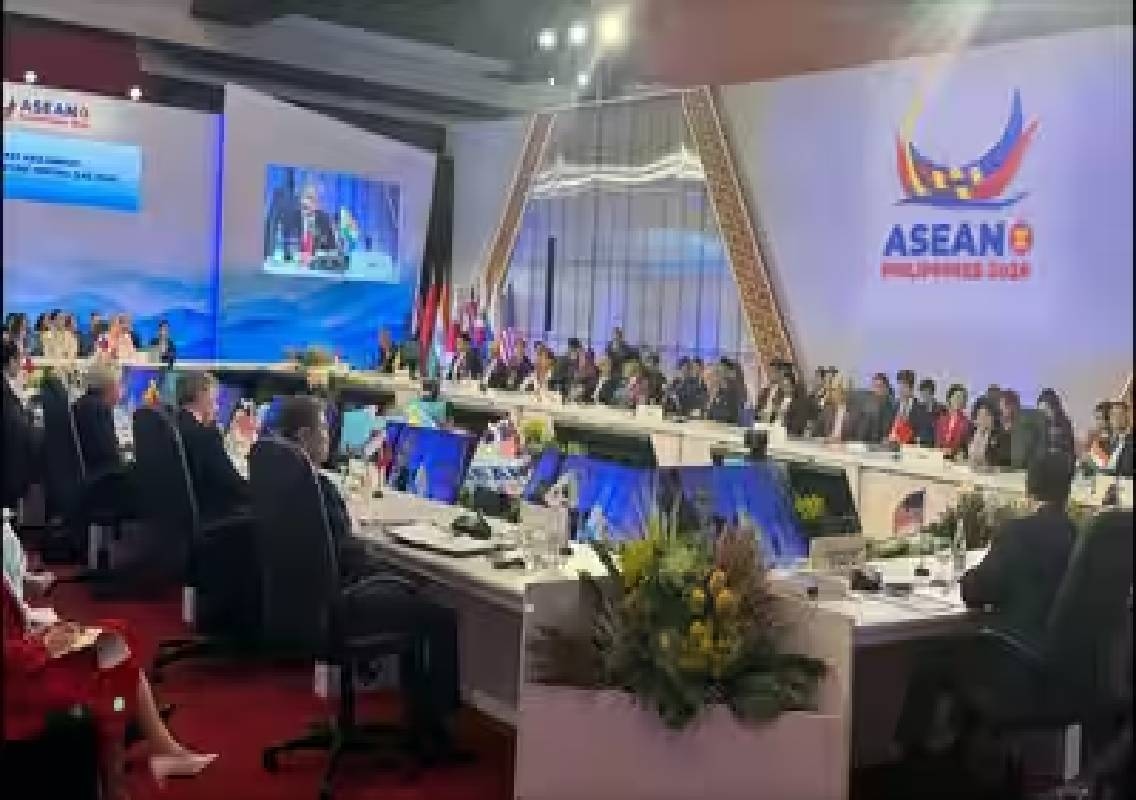


Manila: External Affairs Minister S. Jaishankar has strongly condemned attacks on civilian shipping and critical infrastructure, calling them “unacceptable” as tensions in the Middle East continue to disrupt global maritime trade and energy supplies. Addressing the 21st East Asia Summit (EAS) in Manila, Jaishankar stressed the need to uphold international maritime law and ensure the safety of commercial shipping routes.
His remarks come against the backdrop of escalating conflict in West Asia, where attacks on merchant vessels and disruptions in key sea lanes, including the Strait of Hormuz, have heightened concerns over global trade, energy security and regional stability.
‘Attacks on civilian shipping cannot be tolerated’
During his address at the summit, Jaishankar said attacks targeting civilian shipping, seafarers and critical infrastructure violate international norms and pose a serious threat to global commerce.
He emphasised that maritime routes must remain safe and open, urging countries to strictly adhere to international maritime law and work together to safeguard freedom of navigation.
Calls for stronger maritime cooperation
The External Affairs Minister highlighted the importance of regional cooperation in addressing emerging maritime security challenges.
He reiterated India’s support for a free, open, inclusive and rules-based Indo-Pacific, while stressing the need for stronger collaboration among regional partners to enhance maritime safety, disaster resilience and counter-terrorism efforts.
Jaishankar also underlined the central role of ASEAN in maintaining peace and stability across the Indo-Pacific region.
Middle East tensions impact global trade
Jaishankar’s remarks come as the ongoing conflict in West Asia continues to affect international shipping and energy markets.
Recent attacks on merchant vessels and oil tankers in strategic waterways have raised fears of supply disruptions, pushing up crude oil prices and increasing risks for global trade. The Strait of Hormuz and the Red Sea remain critical maritime chokepoints through which a significant portion of the world’s energy supplies passes.
The conflict has also prompted several countries to step up efforts to secure commercial shipping and maintain the uninterrupted flow of trade.
India reiterates support for international law
Jaishankar said respect for international law remains essential to ensuring peace and stability in the maritime domain.
He noted that protecting commercial shipping is not only a regional concern but also vital for the global economy, particularly for developing countries that depend heavily on uninterrupted trade and energy supplies.
On the sidelines of the summit, the minister also held bilateral meetings with representatives from Oman, the United Kingdom, the Netherlands and the Philippines to discuss regional developments and strengthen strategic cooperation.
Focus on stability in the Indo-Pacific
India has consistently advocated freedom of navigation, peaceful resolution of disputes and adherence to international law across the Indo-Pacific.
Jaishankar’s latest remarks reinforce New Delhi’s position that maritime security is fundamental to regional prosperity and global economic stability, particularly at a time of heightened geopolitical tensions.