







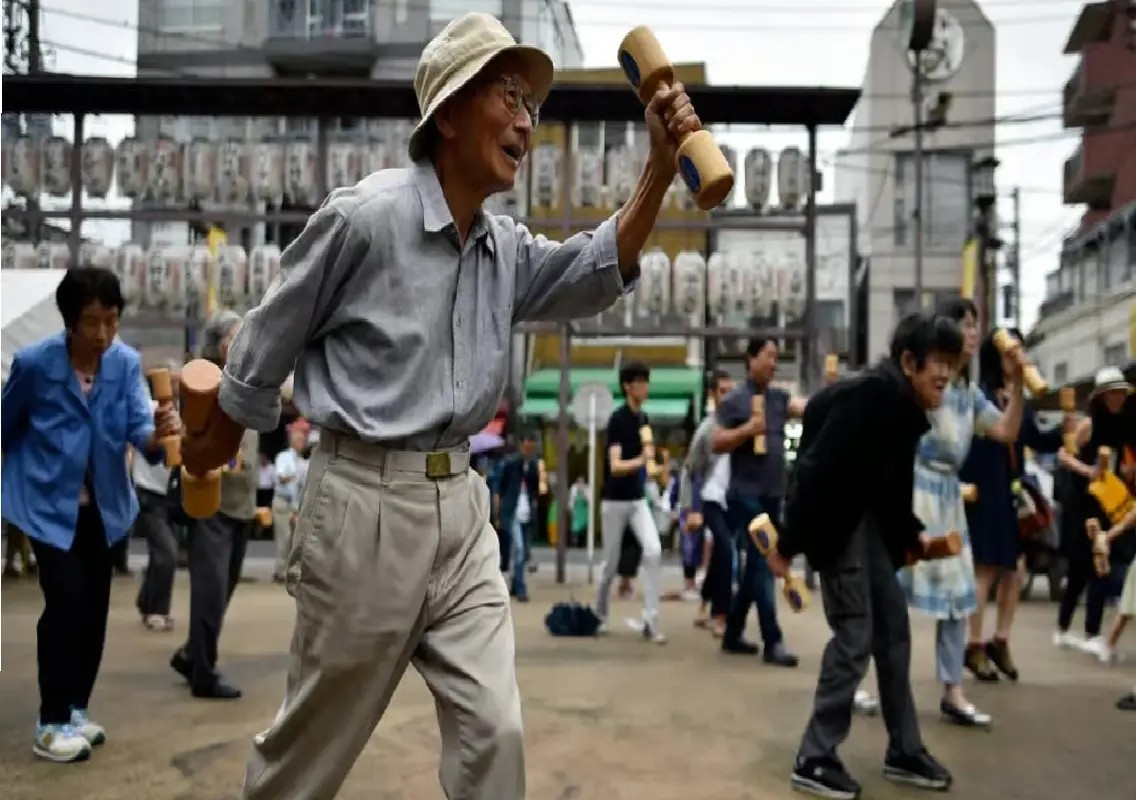


Tokyo: Japan has recorded more than 100,000 people aged 100 or above for the first time, highlighting the country’s remarkable longevity while also underlining the growing challenge posed by its rapidly ageing population.
According to Japan’s Health Ministry, the country now has 107,677 centenarians, with women accounting for nearly 88% of the total. The number has increased dramatically from just 153 when the government began its centenarian survey in 1963.
Women make up majority of centenarians
The oldest woman in Japan is reportedly 114-year-old Kishimoto Fuyo from Kyoto City, while the oldest man is 112-year-old Kato Hikaru from Kumamoto.
Health Minister Kenichiro Ueno welcomed the figures, saying that advances in medicine and technology had helped more people live longer, healthy and active lives. At the same time, he acknowledged the pressure that an ageing population places on the country’s social security system.
Experts have linked Japan’s high life expectancy to several factors, including a traditional diet rich in fish, vegetables and rice, relatively low consumption of saturated fats, and an active lifestyle. Walking, cycling, using public transport and regular stretching are common among older people.
Low birth rate deepens demographic challenge
Japan’s longevity, however, comes alongside a declining birth rate. The country’s total fertility rate fell to a record low of 1.14 last year, well below the replacement level of around 2.1 children per woman.
People aged 65 and above already account for around 30% of Japan’s population and are projected to approach 40% by 2070. The country’s population is also expected to fall to around 87 million by then, from its peak of 128 million in 2008.
The government has introduced various subsidies and programmes to encourage childbirth, but birth rates have continued to decline. Experts point to several factors, including fewer marriages and the rising cost of raising children.
Longevity brings new challenges
Japan has also developed products and technologies aimed at supporting its ageing population, ranging from powered exoskeletons to specialised eyewear.
The government’s latest centenarian figures were released ahead of Respect for the Aged Day, when people reaching 100 are traditionally honoured.
However, officials and researchers continue to examine the accuracy of historical longevity records. A 2010 government audit, for instance, found hundreds of thousands of people listed in family registries as being 100 or older who could not be accounted for.
Japan’s record number of centenarians therefore presents a striking picture of improved longevity — while also highlighting the economic and social questions created by a shrinking and ageing population.