







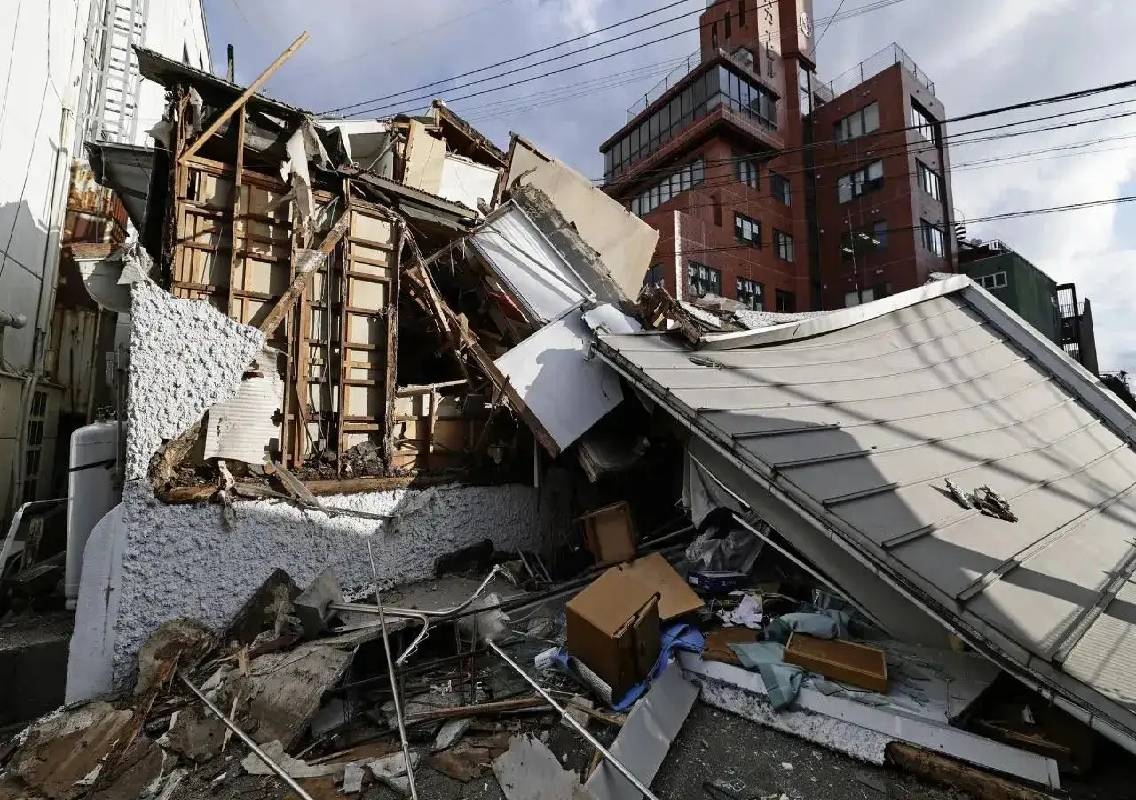


Tokyo: The death toll from the powerful 7.1-magnitude earthquake that struck Japan’s Kumamoto Prefecture has risen to 13, as rescue teams continue searching for survivors trapped beneath the rubble of a partially collapsed shopping mall and other damaged buildings. The quake, which hit Kyushu on Tuesday afternoon, caused widespread destruction, disrupted transport services, triggered power outages and forced hundreds of thousands of residents to evacuate.
One of the worst-hit locations was the Aeon Mall in Kashima Town, where an explosion suspected to have been caused by a gas leak following the quake led to the collapse of part of the building. Emergency workers, firefighters and Japan’s Self-Defense Forces have been deployed to carry out rescue operations.
Death toll climbs to 13
Authorities confirmed that at least 13 people have died, while dozens of others sustained injuries. Rescue teams are continuing to search through the debris of the shopping mall and other damaged structures amid fears that more people may still be trapped.
Hospitals across Kumamoto have treated nearly 90 injured people, while officials warned that the casualty count could increase as search operations continue.
Mall collapse after suspected gas explosion
The earthquake was followed by an explosion at the Aeon Mall in Kashima Town, causing part of the second floor to collapse.
Officials are investigating whether a gas leak triggered the blast after the earthquake. Several people were rescued from the building, while emergency responders continue to search unstable sections of the structure.
Massive rescue and evacuation efforts
Prime Minister Sanae Takaichi expressed condolences to the victims’ families and said the government was mobilising every available resource for rescue and relief operations.
More than 200,000 residents were advised to evacuate in Kumamoto and neighbouring areas as authorities warned of strong aftershocks and possible landslides. The Self-Defense Forces have joined local emergency services in rescue efforts.
Infrastructure and industries affected
The earthquake caused extensive damage to roads, buildings and public infrastructure. Rail services were suspended, flights at Kumamoto Airport were disrupted, and tens of thousands of households experienced power outages.
Several major manufacturers, including semiconductor and automobile companies with facilities in the region, temporarily halted operations to inspect their plants for damage. Authorities said no abnormalities had been reported at nearby nuclear facilities.
Authorities warn of aftershocks
The Japan Meteorological Agency has urged residents to remain vigilant, warning that strong aftershocks could continue over the coming days.
Officials also cautioned that heavy rainfall could increase the risk of landslides in quake-hit areas, complicating rescue operations.
Conclusion
Japan’s latest earthquake has left at least 13 people dead and caused extensive damage across Kumamoto Prefecture. As rescue teams continue searching for survivors, authorities remain focused on relief operations while warning residents to stay alert for aftershocks and secondary hazards.