







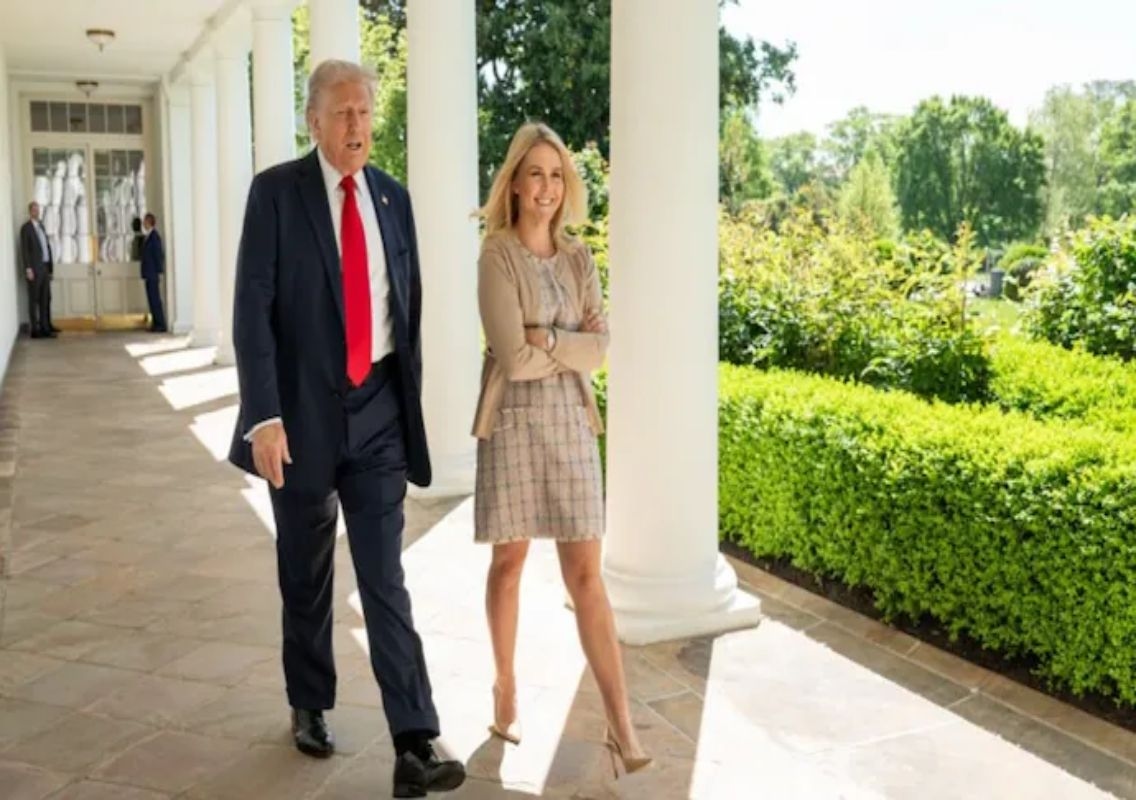


Washington: White House Press Secretary Karoline Leavitt will step down from her role at the end of August, US President Donald Trump has announced, bringing an end to her tenure as one of the most prominent public faces of his administration. Leavitt, who became the youngest person ever to serve as White House press secretary, will continue working with Trump as an outside communications adviser.
The 28-year-old press secretary said she was leaving the demanding White House position to spend more time with her two children. Her departure comes after around 18 months in the role, during which she became closely associated with Trump’s political messaging and frequently faced reporters during White House briefings.
Karoline Leavitt says family influenced decision
Leavitt recently returned to the White House after maternity leave following the birth of her second child, a daughter, in May.
In a post on X, she described her time as press secretary as the “honour and adventure of a lifetime” but said that balancing motherhood with the demands of the position had become increasingly difficult.
Leavitt said that returning to work after her daughter’s birth made her realise that she could not be the mother she wanted to be while continuing to devote the constant time, energy and attention required by the White House press secretary’s job.
Her decision therefore appears to be primarily driven by her desire to spend more time with her family rather than a break with the Trump administration.
She is not, however, leaving Trump’s political orbit.
Leavitt will remain an adviser to Trump
Although Leavitt is leaving her official White House position, she is expected to remain involved in Trump’s political operation.
She will continue working as an outside communications adviser and is expected to remain connected to the wider Make America Great Again movement. This means Trump will retain access to a trusted political ally even after she leaves the administration’s formal press operation.
Trump himself praised Leavitt after the announcement, calling her one of the best White House press secretaries in the history of the office.
In a post on Truth Social, Trump highlighted her work in his administration as well as her contribution to his 2024 presidential campaign. He described her as a leader in the White House and praised her efforts on issues he associated with his administration’s political agenda.
The arrangement allows Leavitt to step away from one of the most demanding jobs in the administration without completely ending her political relationship with Trump.
Youngest-ever White House press secretary
Leavitt made history when she became the youngest person ever appointed White House press secretary.
She joined Trump’s 2024 presidential campaign and subsequently served as its transition spokesperson before being selected to lead the White House press operation. She took office in January 2025 at the age of 26.
Her tenure was closely identified with Trump’s communication strategy.
Leavitt became a prominent defender of the president and frequently engaged with reporters during White House briefings. Her combative exchanges with members of the press became a regular feature of the administration’s media operation.
Her departure therefore represents a change for a White House press office that has been closely associated with her public style and approach.
White House media strategy changed under Leavitt
Leavitt’s tenure also coincided with significant changes in the White House’s relationship with the news media.
Working with White House communications director Steven Cheung, she helped implement changes to the administration’s approach to press access. The White House moved away from some traditional arrangements in which the White House Correspondents’ Association played a central role in determining the rotating press pool.
The administration instead expanded access to podcasts, newsletters and newer digital outlets and created a dedicated “new media” seat in the briefing room.
Trump’s supporters viewed these changes as an adaptation to a changing media landscape. Press freedom advocates, however, raised concerns that giving the administration greater control over access could favour outlets that were more sympathetic to the president.
Leavitt became one of the key public representatives of that changing media strategy.
Her departure comes amid scrutiny of White House security
Leavitt’s exit also comes at a time when the Trump administration is facing scrutiny over a reported security operation during the president’s visit to a NATO summit in Turkey in July.
The Washington Post reported that the Secret Service moved Trump between aircraft in a catering truck while journalists and staff remained on another plane, amid concerns about a possible Iranian assassination threat.
The reported arrangement represented a departure from the usual practice of ensuring that journalists travelling with the president were aware of his movements.
The episode adds another layer of scrutiny around the White House as Trump prepares to replace one of his most recognisable communications officials.
However, there is no indication in the report that Leavitt’s decision to leave her post is connected to that security controversy. Her own explanation has focused on balancing the responsibilities of the position with motherhood.
What happens to Trump’s press operation now?
The immediate question following Leavitt’s departure will be who takes over the White House press secretary’s responsibilities.
The position requires a combination of political loyalty, media experience and the ability to represent the president during high-pressure briefings and breaking news events.
Leavitt’s tenure demonstrated how central the role remains to a modern US presidency. The press secretary is not merely responsible for answering journalists’ questions but also serves as a key communicator of the administration’s political priorities.
Trump’s decision to retain Leavitt as an outside adviser suggests that he continues to value her political and communications skills, even though she will no longer occupy the official White House position.
It also means her influence on Trump’s messaging may continue beyond the briefing room.
A significant change for the Trump administration
Leavitt’s departure marks the end of a relatively short but highly visible period at the White House podium.
At 28, she became a prominent figure in Trump’s second administration and developed a reputation as one of his strongest defenders. Her frequent confrontations with reporters and direct presentation of the administration’s position made her a familiar face to audiences following US politics.
Her decision to leave while remaining an outside adviser is also notable. It allows Trump to maintain a relationship with a trusted political communicator while giving Leavitt greater flexibility to focus on her family.
For the White House, however, the challenge will be finding a successor who can maintain its current communications strategy while handling the intense scrutiny that comes with representing Trump publicly.
Conclusion
Karoline Leavitt will leave her position as White House press secretary at the end of August after around 18 months in the high-profile role. She cited the difficulty of balancing the demands of the job with raising her two children, particularly after returning from maternity leave.
Her departure does not mark a complete break with Donald Trump. Leavitt is expected to continue working with him as an outside communications adviser and remain involved with the broader MAGA movement.
As the youngest person ever to hold the White House press secretary position, Leavitt leaves behind a tenure marked by an assertive communication style, frequent clashes with journalists and significant changes to the administration’s approach to media access.
The next appointment will determine whether Trump’s White House maintains that approach or uses the change to reshape its communications strategy.