







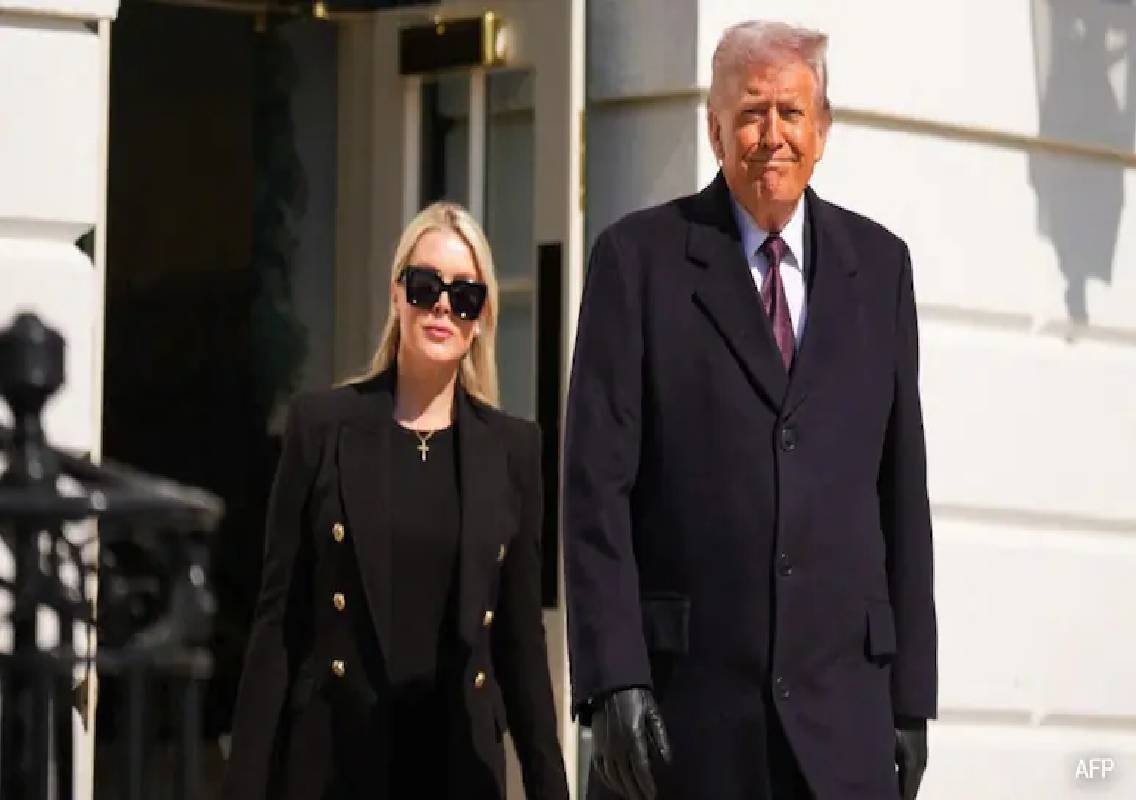


Washington: White House Press Secretary Karoline Leavitt emerged as one of the most prominent public voices of the Donald Trump administration on issues involving India, including trade, Russian oil, immigration and the India-Pakistan conflict. Her role became particularly visible as Washington and New Delhi navigated tariff negotiations and disagreements over the US president’s claims about the India-Pakistan ceasefire.
Leavitt, who became the youngest person to serve as White House press secretary, is set to leave the position at the end of August 2026. Trump has said she will remain a senior adviser and an influential voice within the Republican Party.
Leavitt’s growing role in the Trump administration
Leavitt was not a policymaker, but her position placed her at the centre of the administration’s communication strategy.
During Trump’s second term, she became one of the White House’s most recognisable public messengers, regularly defending the administration’s policies and responding to questions from journalists.
Her statements covered a wide range of issues, but several were directly relevant to India and Indian interests, particularly US tariffs on Indian goods, India’s purchase of Russian oil and the India-Pakistan conflict.
Her prominence also reflected Trump’s reliance on trusted aides to communicate his administration’s position on sensitive foreign-policy issues.
What Leavitt said about India-US tariffs
One of Leavitt’s most significant interventions involving India came during the Trump administration’s trade negotiations with New Delhi.
According to NDTV, in February 2026, the Trump administration reduced its tariff on Indian goods from 25 per cent to 18 per cent as part of a new trade arrangement. Leavitt publicly praised the agreement and linked it to India’s position on Russian oil.
She said India had committed to no longer purchasing Russian oil and would instead source crude from the United States, potentially including oil from Venezuela.
Leavitt also said Prime Minister Narendra Modi and Trump had discussed major investment commitments, claiming India had agreed to investments worth $500 billion across sectors including energy, transportation and agriculture.
Her remarks presented the trade arrangement as a major achievement for the Trump administration.
Russian oil became a major point of tension
India’s purchase of Russian crude has remained a sensitive issue in relations with Washington.
The Trump administration has repeatedly criticised countries that continue buying Russian energy, arguing that such purchases support Moscow.
For India, however, Russian oil has been an important source of relatively affordable crude, particularly after Western sanctions disrupted traditional energy markets.
Leavitt’s statements therefore placed India’s energy purchases at the centre of the wider US-India trade conversation.
Her comments also reflected Washington’s broader effort to encourage India to purchase more American energy products.
Leavitt and Trump’s India-Pakistan ceasefire claim
Leavitt also became one of the administration’s most visible voices on the India-Pakistan conflict and Operation Sindoor.
Following the May 2025 conflict, Trump repeatedly claimed that he had helped broker an agreement between India and Pakistan to end the fighting.
Leavitt reinforced that narrative, including in July 2025 when she said Trump deserved consideration for the Nobel Peace Prize for helping end several conflicts, including tensions between India and Pakistan.
The Trump administration maintained that the US president had played a role in encouraging the nuclear-armed neighbours to stop fighting.
However, India has consistently rejected the suggestion that Washington mediated the ceasefire.
According to NDTV, New Delhi maintained that it had made clear to Washington that Islamabad wanted a ceasefire and that India would not accept third-party mediation.
Why the India-Pakistan issue mattered
The disagreement over the ceasefire narrative became an important diplomatic point between India and the United States.
While Washington highlighted Trump’s role, India’s position was that the cessation of hostilities was reached directly between the two countries.
The difference in narratives meant that comments from senior Trump officials, including Leavitt, received significant attention in India.
As White House press secretary, Leavitt was effectively responsible for communicating the administration’s position to the international media, making her comments particularly consequential.
Leavitt’s departure from the White House
Trump announced that Leavitt will leave her position at the end of August.
The 28-year-old press secretary recently became a mother for the second time, giving birth to a daughter named Viviana in May.
Trump said he understood and respected her decision to spend more time with her young family.
However, her departure does not mean she will completely disappear from Trump’s political circle.
The US president said Leavitt would become one of his top outside advisers and remain an influential voice within the Republican Party.
A significant political transition
Leavitt’s departure comes at a politically important moment for Trump.
The administration is approaching the November midterm congressional elections, while Trump is facing declining poll numbers and Republicans are preparing for a potentially difficult electoral contest.
Her continued role as a senior adviser means Trump will retain access to a trusted communicator who has already demonstrated her ability to defend his policies publicly.
For India, her future role could also remain relevant because trade, energy, immigration and US relations with Pakistan are likely to continue forming part of Washington’s foreign-policy discussions.
From Trump’s first term to the White House podium
Leavitt’s association with Trump began during his first presidency, when she worked in the White House press operation.
Her experience with Trump’s political communication style helped establish her as a trusted member of his team.
She later became a prominent Republican spokesperson before returning to the White House as press secretary during Trump’s second term.
That background helped her navigate an administration in which messaging and direct communication with the public have remained central to Trump’s political strategy.
Why her India-related comments drew attention
Leavitt’s statements mattered because the press secretary is often the public face of the White House during major policy debates.
Her comments on India therefore offered insight into how the Trump administration wanted its position on New Delhi to be understood.
From tariffs and energy purchases to the India-Pakistan conflict, her statements frequently reflected broader Trump administration priorities.
At the same time, India’s differing position on issues such as Russian oil and the 2025 ceasefire demonstrated that the relationship was not without disagreements.
What comes next for Leavitt
Although she is leaving the press secretary’s office, Leavitt is expected to remain close to Trump.
His decision to retain her as a senior adviser suggests he continues to value her political judgement and communication skills.
Her future influence could extend beyond the White House, particularly as Republicans prepare for the midterm elections.
For India, the key question will be whether her future role continues to involve foreign-policy communication or whether she focuses primarily on domestic Republican politics.
Conclusion
Karoline Leavitt became an important public voice for the Trump administration on issues affecting India-US relations, including tariffs, Russian oil and the India-Pakistan conflict. She strongly communicated Trump’s claims about his role in the India-Pakistan ceasefire, despite New Delhi’s rejection of the US mediation narrative.
As Leavitt prepares to leave her White House press secretary position at the end of August, Trump has indicated that she will remain a senior adviser and influential Republican voice.
Her departure marks a change at the White House podium, but her close association with Trump means she is likely to remain part of the political conversation — including on issues that matter to India and the wider US-India relationship.