







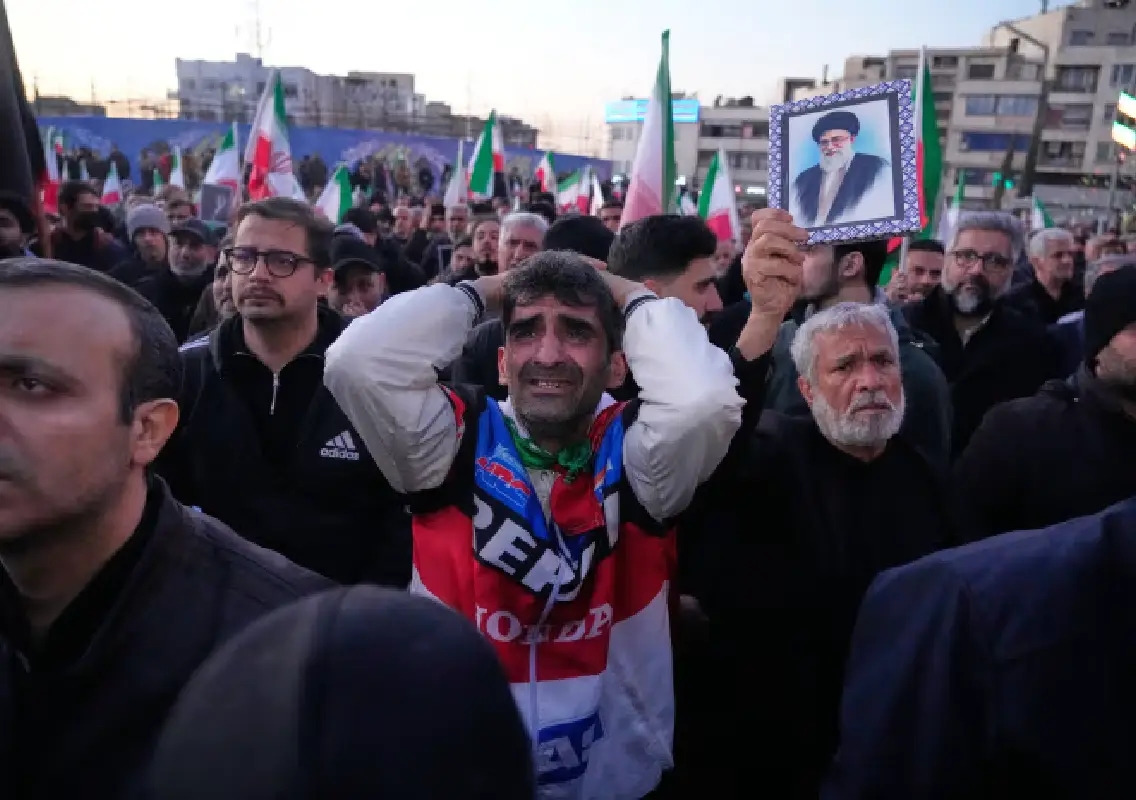


Deadly pro-Iran protests erupted across Pakistan following the killing of Ayatollah Ali Khamenei, triggering violent confrontations, casualties and widespread unrest in parts of South Asia and the Middle East.
In Karachi, hundreds of demonstrators stormed the United States consulate, chanting anti-American slogans and setting a small fire at the premises. Security forces responded with gunfire after protesters reportedly attempted to breach restricted areas. At least 10 people were killed and more than 30 injured in the clash, officials confirmed.
Violence was also reported in Gilgit-Baltistan and Islamabad, where confrontations between protesters and law enforcement resulted in additional fatalities and injuries. Authorities imposed heightened security measures in sensitive zones to prevent further escalation.
Unrest spreads beyond Pakistan
In Baghdad, hundreds of protesters waving flags gathered near the Green Zone, attempting to breach the heavily fortified area that houses the United States Embassy in Baghdad. Iraqi security forces used teargas to disperse stone-throwing demonstrators and prevent entry into the diplomatic compound.
Khamenei, who led Iran for 36 years, was a central figure in shaping the country’s regional policies and overseeing Iran-backed militias. His leadership significantly influenced geopolitical dynamics across West Asia. (Read more about him on Wikipedia: https://en.wikipedia.org/wiki/Ali_Khamenei)
Region on edge
His death has left the region on edge, with fears of further unrest and possible diplomatic fallout involving the United States and its allies. Analysts warn that the vacuum in Iran’s leadership could intensify political instability across neighbouring countries.