







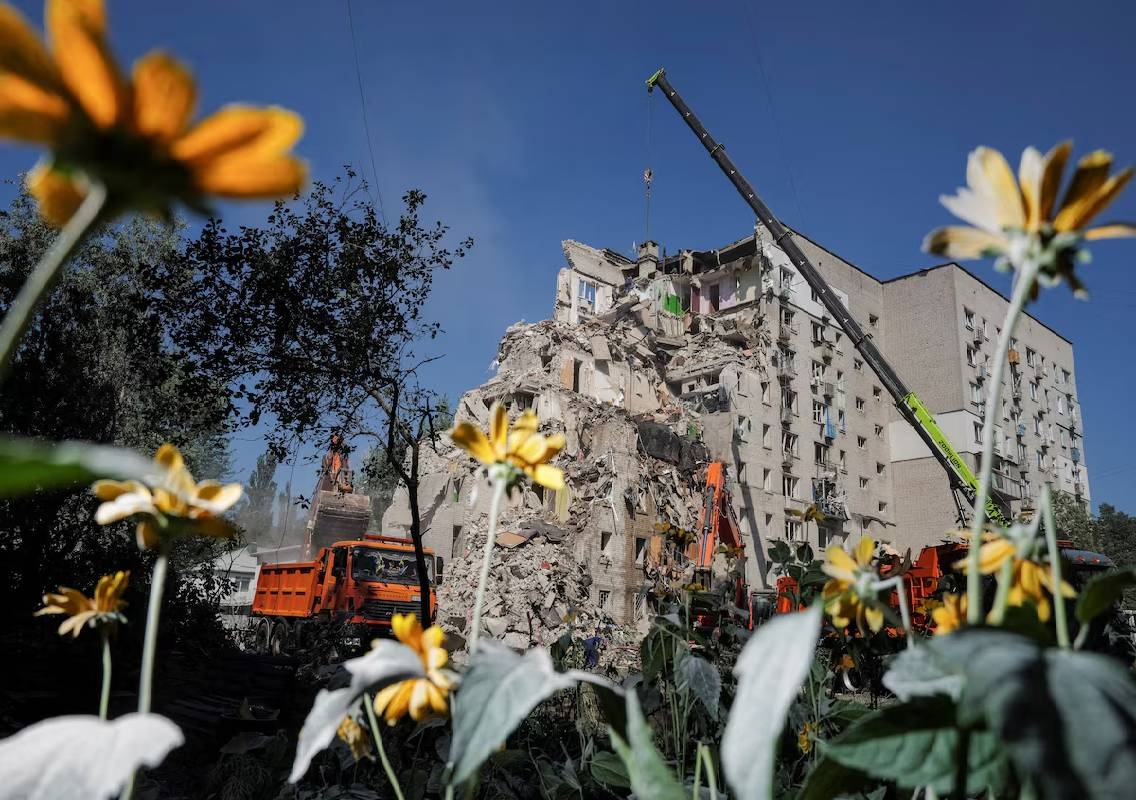


Kyiv: Ukraine observed a day of mourning on Friday after one of the deadliest Russian aerial assaults on the capital this year killed at least 30 people and injured 92 others. Rescue teams continued searching through the rubble of collapsed buildings for a second consecutive day as authorities feared more victims could still be trapped beneath the debris.
According to Kyiv Mayor Vitali Klitschko, the large-scale missile and drone attack caused widespread destruction across the Ukrainian capital, damaging residential neighbourhoods and critical infrastructure. Flags were flown at half-mast across the city as residents paid tribute to those who lost their lives in the strike.
The latest attack comes as the Russia-Ukraine war enters its fifth year, with both sides intensifying long-range strikes amid stalled diplomatic efforts and continued fighting along the 1,200-kilometre frontline.
Rescue operations continue amid fears of more casualties
Emergency workers remained at multiple impact sites across Kyiv on Friday, using heavy machinery and specialised equipment to remove concrete slabs and twisted metal in the hope of finding survivors.
Mayor Klitschko said the parents of a 10-year-old boy who survived the attack and remains hospitalised were still missing. A 15-year-old girl also remained unaccounted for as search teams continued combing through the debris.
Forensic experts were deployed to help identify victims recovered from heavily damaged buildings, highlighting the severity of the destruction caused by the missile barrage.
Officials warned that the casualty toll could rise as rescue efforts progressed.
Day of mourning declared across the capital
Kyiv authorities declared Friday an official day of mourning in honour of those killed in the attack.
Public buildings lowered their flags, while memorials and moments of silence were held across the city. Residents placed flowers and candles near damaged residential complexes as emergency personnel continued recovery operations.
The attack has been described as the deadliest strike on Kyiv since the beginning of 2026, underlining the growing intensity of Russia’s aerial campaign against Ukrainian cities.
Russian strike follows escalation in cross-border attacks
The latest assault comes amid increasing cross-border attacks by both Russia and Ukraine.
In recent months, Ukrainian forces have intensified long-range drone operations targeting Russian energy facilities and military infrastructure deep inside Russian territory. These attacks have reportedly disrupted fuel supplies in parts of Russia and placed additional pressure on its energy sector.
Russia has responded with larger and more frequent missile and drone strikes against Ukrainian cities, including Kyiv and other major population centres.
Moscow said the latest attack was carried out in retaliation for Ukrainian drone operations inside Russian territory.
Zelenskyy accuses Russia of targeting civilians
Ukrainian President Volodymyr Zelenskyy strongly condemned the attack, accusing Russia of deliberately targeting civilian infrastructure instead of seeking an end to the conflict.
In his evening address, Zelenskyy said Russia had “no argument left for its war other than its ballistic missiles,” adding that President Vladimir Putin remained focused on destroying residential areas rather than pursuing peace.
According to the Ukrainian President, more than 100 residential buildings suffered damage during Thursday’s attack, making it one of the most destructive bombardments of the year.
The extensive damage included apartment blocks, public infrastructure and civilian facilities spread across several districts of the capital.
Sumy region also hit in overnight attack
While rescue efforts continued in Kyiv, another Russian drone strike targeted Ukraine’s northern Sumy region overnight.
According to Ukraine’s Prosecutor General’s Office, four people, including a woman and her toddler daughter, were killed after a drone struck a residential house.
Authorities have launched investigations into both attacks, documenting the destruction and collecting evidence for possible future war crimes proceedings.
Frontline remains largely unchanged
Despite the renewed wave of aerial attacks, fighting continues along the extensive frontline stretching roughly 1,200 kilometres across eastern and southern Ukraine.
Military analysts note that Ukrainian forces have managed to slow Russian advances significantly in recent months and have reportedly regained limited territory in certain sectors.
However, neither side has achieved a decisive breakthrough, leading to increased reliance on long-range missile and drone attacks away from the battlefield.
The continued exchange of strikes has further complicated efforts to revive negotiations aimed at ending the conflict.
Conclusion
The latest Russian attack has left Kyiv grieving while underscoring the continuing humanitarian cost of the prolonged war. As rescue teams continue searching for missing residents and investigators assess the full extent of the damage, Ukraine faces another painful reminder that major civilian centres remain vulnerable to large-scale aerial attacks. With both Russia and Ukraine escalating long-range operations, prospects for a near-term de-escalation remain uncertain.