







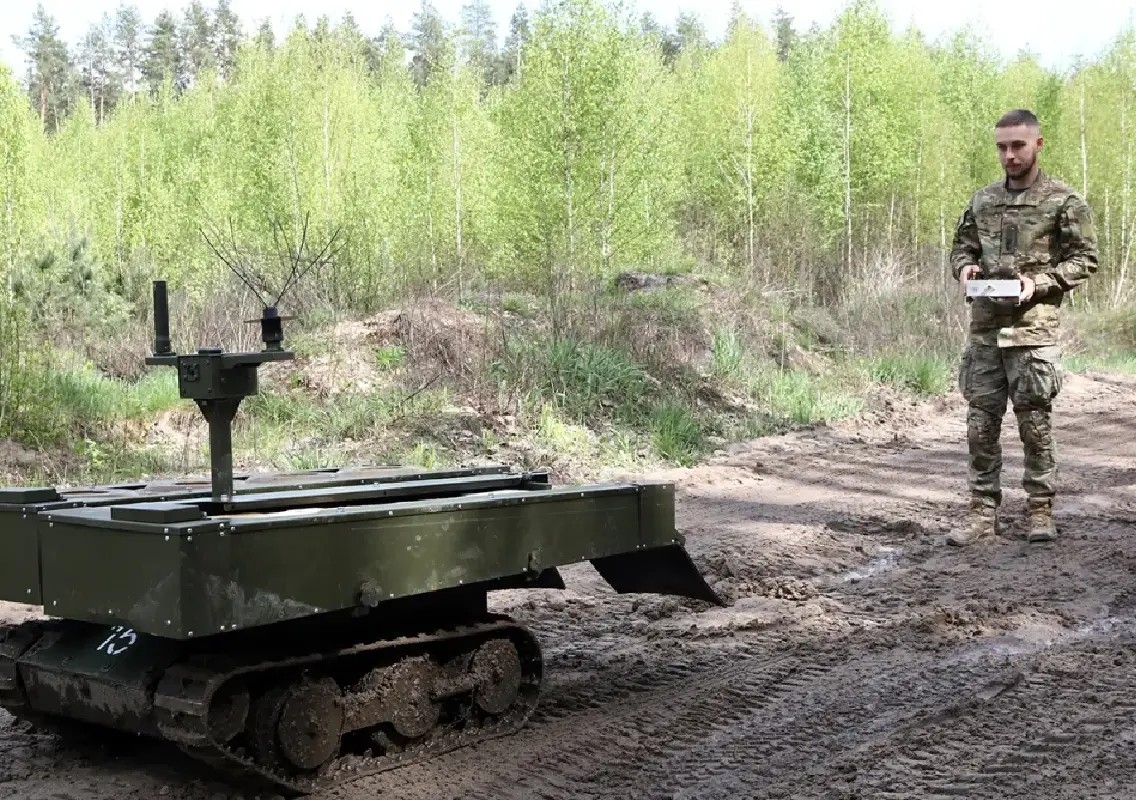


Ukraine is dramatically expanding its use of battlefield robots as the war with Russia enters a new technological phase, with thousands of unmanned ground vehicles now carrying out missions in some of the conflict’s most dangerous areas.
According to recent reports, Ukrainian forces are increasingly relying on robots to transport ammunition, evacuate wounded soldiers, lay mines and even engage enemy positions, reducing the need to expose troops to life-threatening conditions.
Robots replacing soldiers in high-risk missions
The move comes as modern battlefields become saturated with surveillance and attack drones, creating vast “kill zones” where even routine movements can be detected and targeted. Ukrainian commanders say sending a human driver to deliver supplies near the front line often carries a high risk of death, making robotic alternatives increasingly valuable.
Ground robots, once limited to carrying explosives, have evolved into versatile battlefield machines capable of transporting cargo, conducting reconnaissance, supporting combat operations and rescuing injured personnel.
Massive expansion planned
Ukraine contracted around 25,000 ground robots during the first half of 2026 and aims to deploy as many as 50,000 by the end of the year. Officials say more than 280 companies are now producing over 550 different robot models for military use.
President Volodymyr Zelenskyy has repeatedly highlighted the role of robotics and unmanned systems in protecting soldiers’ lives, with Ukrainian-made robots reportedly completing tens of thousands of missions this year alone.
A glimpse into the future of warfare
Military analysts believe the growing use of robots and artificial intelligence in Ukraine is offering a preview of future conflicts. From supply delivery and casualty evacuation to armed combat roles, unmanned systems are becoming central to military operations.
While human soldiers remain essential, Ukraine’s experience suggests that the battlefield of the future may increasingly be fought by machines operating alongside people, particularly in areas too dangerous for troops to enter.