







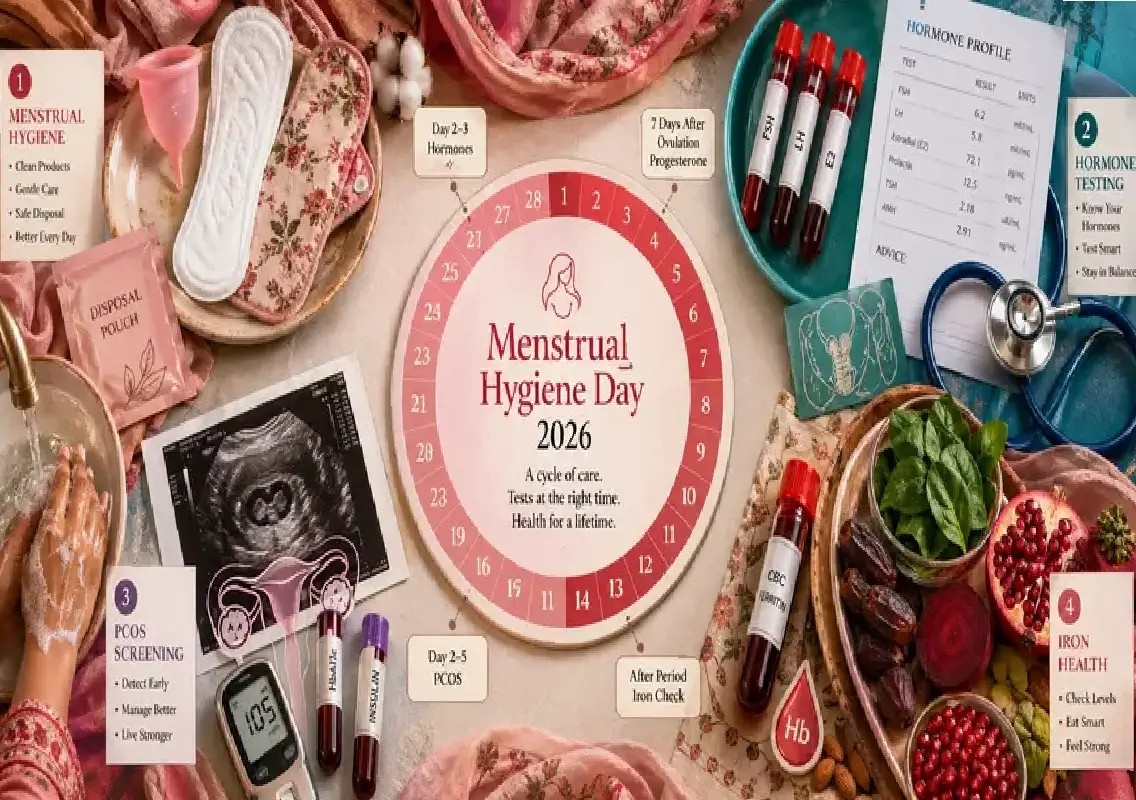


Menstrual Hygiene Day (MH Day) is being observed across the world on May 28 with a renewed call to build a “period-friendly world” where menstruation is treated with dignity, openness and proper healthcare support.
The global movement, marked under the message “Together for a #PeriodFriendlyWorld”, focuses on ending stigma and ensuring that women and girls have access to menstrual products, education, healthcare services and safe sanitation facilities.
MH Day has evolved into a major international awareness campaign over the past decade, bringing together governments, organisations, educators, healthcare workers, activists and communities to address menstruation-related challenges.
Breaking silence around menstruation
Organisers say no single institution can solve menstrual health challenges alone, making collective action essential. Through awareness drives, social media campaigns, workshops and community events, the movement encourages open conversations around periods and menstrual wellbeing.
The campaign also pushes governments, global agencies and corporate organisations to adopt stronger menstrual health policies and improve access to affordable hygiene products and infrastructure.
Focus on education and dignity
Experts stress that lack of menstrual awareness and facilities continues to affect education, health and confidence among girls in several regions. In many communities, taboos and misinformation surrounding menstruation remain major barriers.
The movement advocates for better menstrual education in schools and safer sanitation facilities to ensure girls do not miss education due to period-related challenges.
Global movement encourages participation
Individuals and organisations across the world are being encouraged to participate in Menstrual Hygiene Day activities through campaigns, discussions and awareness programmes.
The initiative also highlights the role of influencers, community leaders and health advocates in promoting positive conversations around menstrual health.
Organisers say creating a period-friendly world requires year-round advocacy, stronger public health investment and continued efforts to normalise menstruation in society