







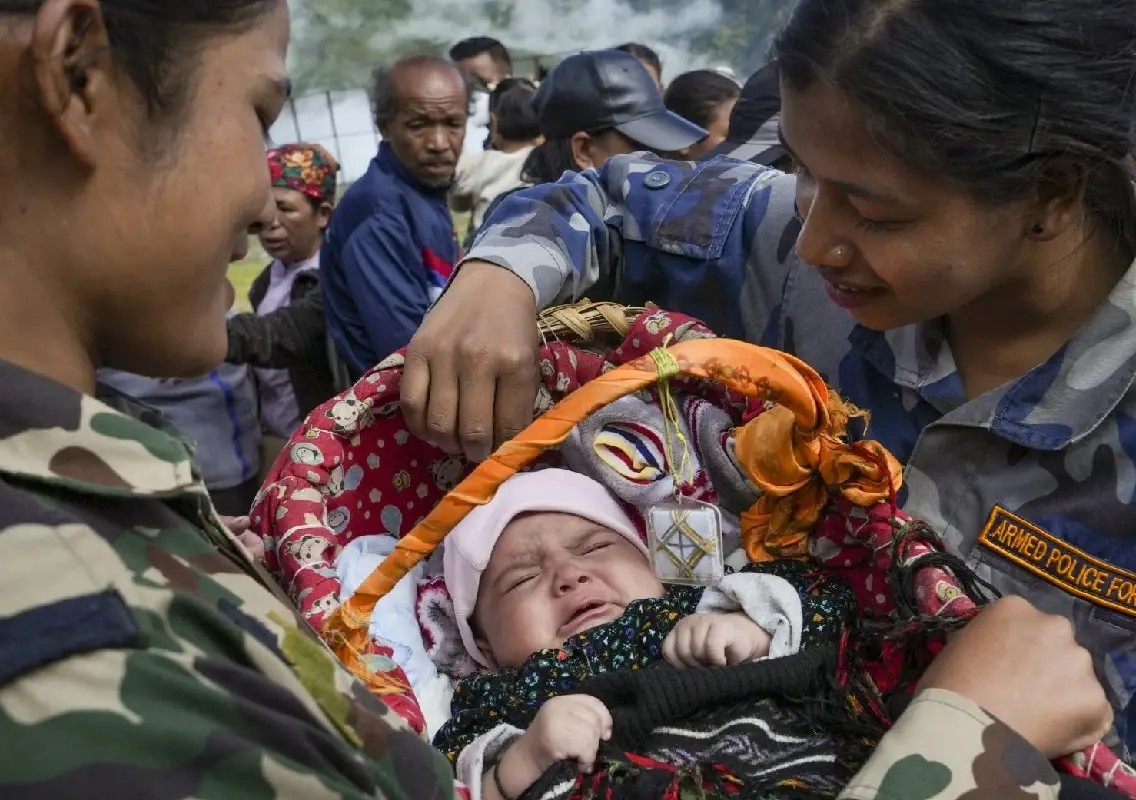


Kathmandu: Survivors of Nepal’s devastating floods are facing fresh difficulties in relief camps, with some struggling to obtain essential medicines and cash even as authorities provide food and other basic supplies.
More than 4,500 displaced people are staying in 38 relief centres after the August 26 floods, which destroyed homes, roads, bridges and other critical infrastructure across affected areas.
Medicine shortage adds to survivors’ hardship
Suresh Kumar Karanjit, staying at a relief centre in Devighat in Nuwakot district, said he had lost his younger brother in the floods and was unable to find the specific medicine prescribed for his heart condition.
After struggling to obtain money for his regular medicine, he sold a carton of noodles received as relief for 400 rupees.
“We have been living here for a week. The relief materials are being provided, which is good. But there is a lack of medicine,” he said.
Authorities provide medical support
Nepal’s disaster chief Dharam Raj Uprety said health centres staffed by doctors and supplied with medicines had been established at each relief shelter.
Authorities are also focusing on hygiene and sanitation to reduce the possibility of disease outbreaks among people living in crowded temporary shelters.
However, the continuing shortage of specific medicines remains a concern for survivors with existing health conditions.
Communities find new ways to stay connected
The destruction of roads and bridges has also left several communities cut off from normal transport routes.
In Bidur town along the Trishuli River, residents have been using a temporary zip line to cross between riverbanks. Nepal Army personnel have been helping people use the makeshift crossing safely.
Meanwhile, rescue operations continue at hydropower projects along the Trishuli River, where hundreds of workers are feared trapped inside tunnels.
Around 900 people are believed to be trapped in tunnels connected to six hydropower projects. Specialised teams from India, China and the United States are assisting with rescue efforts.
At the Trishuli-3A project, workers have been manually clearing the upper section of a tunnel, although further rock blasting and debris removal are needed before heavy machinery can reach the site.
The disaster has killed more than 1,200 people in Nepal, while thousands remain missing and displaced.