







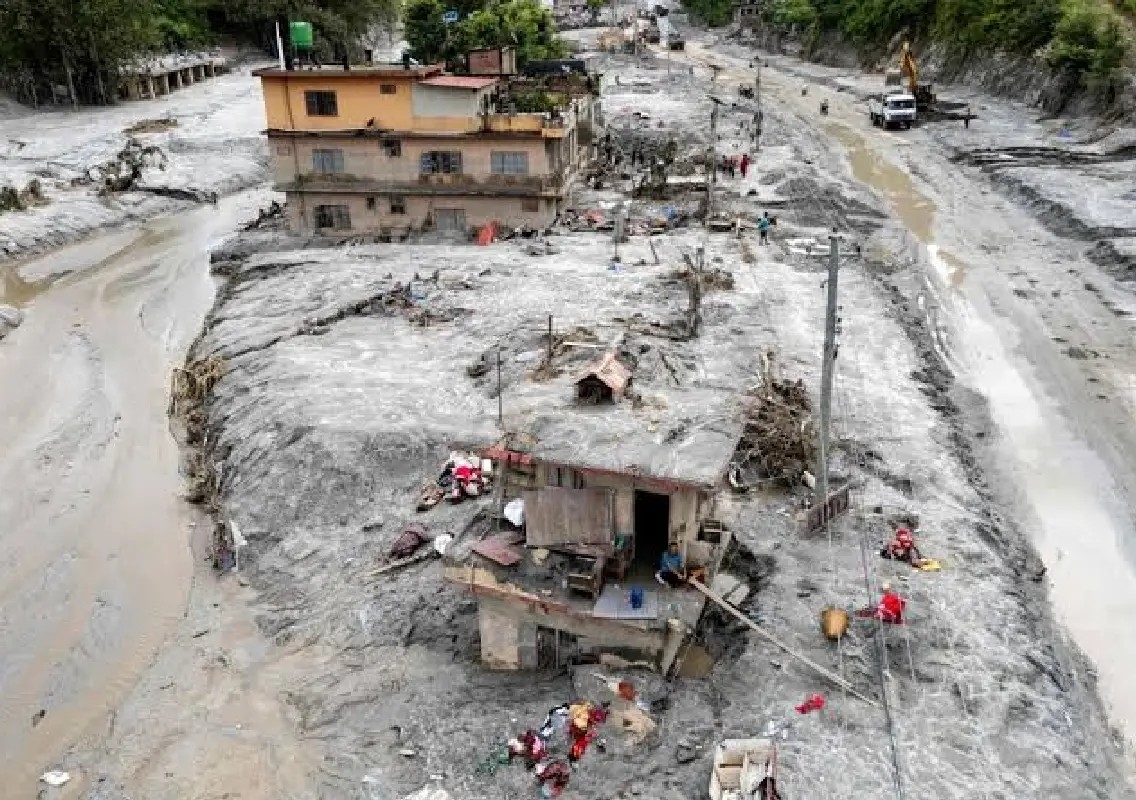


Nepal is seeking climate-linked justice from wealthy nations after devastating flash floods along the Bhotekoshi River caused widespread destruction and left thousands of people dead or missing.
More than 1,100 bodies have reportedly been recovered, while nearly 4,500 people remain missing following the disaster, which sent a massive surge of freezing water, rocks and debris through communities along the Nepal-Tibet border.
The disaster has renewed attention on the unequal impact of climate change, with Nepal arguing that a country that contributes very little to global greenhouse gas emissions is facing some of its most devastating consequences.
Nepal says the world must share the responsibility
Foreign Minister Shishir Khanal said Nepal would no longer view the response simply as a request for humanitarian assistance.
He said the country would take the issue of climate justice to international forums and seek financial compensation from major emitters for losses caused by climate-related disasters.
According to Khanal, Nepal is paying a heavy price for a global crisis it did little to create. Rapid glacier melting and increasingly severe mountain disasters are adding to the risks faced by Himalayan communities.
Nepal’s Finance Ministry has also reportedly sent a formal climate compensation claim to international partners.
A disaster far beyond immediate relief
The destruction has affected homes, infrastructure and livelihoods, while rescue and recovery efforts continue in difficult mountainous terrain.
Nepal has also approached the board of the Fund for Responding to Loss and Damage, seeking urgent financial assistance. The mechanism was established internationally to support vulnerable developing countries dealing with the effects of climate change.
The full economic and non-economic cost of the floods is yet to be established, but officials have warned that the damage is beyond Nepal’s immediate response capacity.
Why the Himalayan crisis matters to the region
Nepal says the consequences of disappearing Himalayan glaciers would extend far beyond its borders.
The country’s glaciers feed major river systems on which millions of people across South Asia depend. Any long-term disruption to these water sources could affect drinking water, agriculture, energy and livelihoods across the region.
The devastating floods have therefore become more than a national disaster. For Nepal, they are also a reminder of the growing climate risks facing vulnerable countries — and a call for greater responsibility from nations with much higher historical emissions.